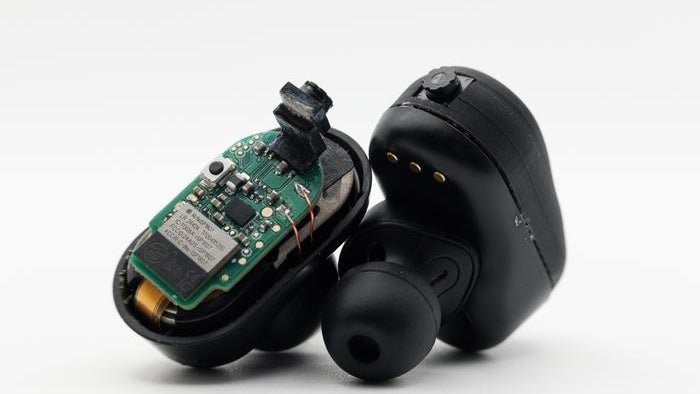
While the technology industry remains fixated on the face as the primary real estate for wearable AI, a research project out of academia is testing a different hypothesis: that the next meaningful advance in ambient computer vision might happen at the ear. The system, called Vuebuds, integrates miniature cameras into existing Sony noise-canceling earbuds, enabling the hardware to capture visual information and describe the wearer's surroundings in real time through audio feedback powered by generative AI.
The project positions these modified earbuds as a discreet alternative to smart glasses — most notably the camera-equipped Ray-Ban Meta glasses that have attracted consumer attention over the past two years. By embedding high-resolution sensors into a form factor people already wear for hours each day, the researchers sidestep two persistent obstacles that have dogged face-mounted wearables: social friction and ergonomic compromise.
The Form Factor Problem in Wearable AI
The history of face-worn computing devices is littered with cautionary examples. Google Glass, launched in 2013, became a cultural shorthand for technological overreach before it was quietly shelved as a consumer product. The core issue was less about capability than about social acceptability — the visible camera lens prompted discomfort among bystanders and earned early adopters the label "Glassholes." More recent efforts from Meta and Snap have made progress by disguising the technology inside conventional-looking eyeglass frames, but the fundamental tension remains: a camera pointed outward from someone's face carries an implicit social signal that many people find intrusive.
Earbuds carry no such baggage. Wireless in-ear headphones have become one of the most widely adopted personal electronics categories globally, worn in offices, on public transit, and during exercise without drawing attention. The Vuebuds concept exploits this normalcy. A camera embedded in an earbud is far less conspicuous than one mounted on a glasses frame, and the device does not require the wearer to adopt an unfamiliar accessory. The bet is that social invisibility is itself a design advantage — one that could accelerate adoption in ways that smart glasses have struggled to achieve.
There are obvious technical trade-offs. A camera positioned at ear level captures a different field of view than one aligned with the eyes. Occlusion from hair, hats, or head movement could limit reliability. Whether the system can match the visual fidelity and contextual accuracy of glasses-based solutions under real-world conditions is an open engineering question. But the researchers appear to be arguing that "good enough" vision from a socially invisible device may be more useful in practice than superior vision from a device many people refuse to wear.
Audio-First Interfaces and the Ambient Computing Trajectory
The Vuebuds project also reflects a broader shift in how ambient computing is being conceived. The dominant paradigm of the smartphone era placed the screen at the center of every interaction. Augmented reality glasses attempt to preserve that visual-output model by overlaying information onto the world. An earbud-based system, by contrast, defaults to audio as the primary output channel — narrating the environment rather than annotating it visually.
This audio-first approach aligns with the trajectory of voice assistants and large language models, which are increasingly capable of delivering complex information through natural speech. If the interface is a spoken description rather than a heads-up display, the sensor does not need to be co-located with the eyes. It simply needs a reasonable vantage point and a reliable AI pipeline to interpret what it captures.
The implication is worth sitting with. If earbuds can serve as a viable sensor platform for real-world context, the case for dedicated augmented reality hardware narrows. It does not disappear — visual overlay has applications that audio cannot replicate — but it shifts from a presumed necessity to one option among several. The question is no longer only whether AI can see the world for its user, but where on the body that capability needs to live, and what social cost the wearer is willing to accept for it.
With reporting from t3n.
Source · t3n