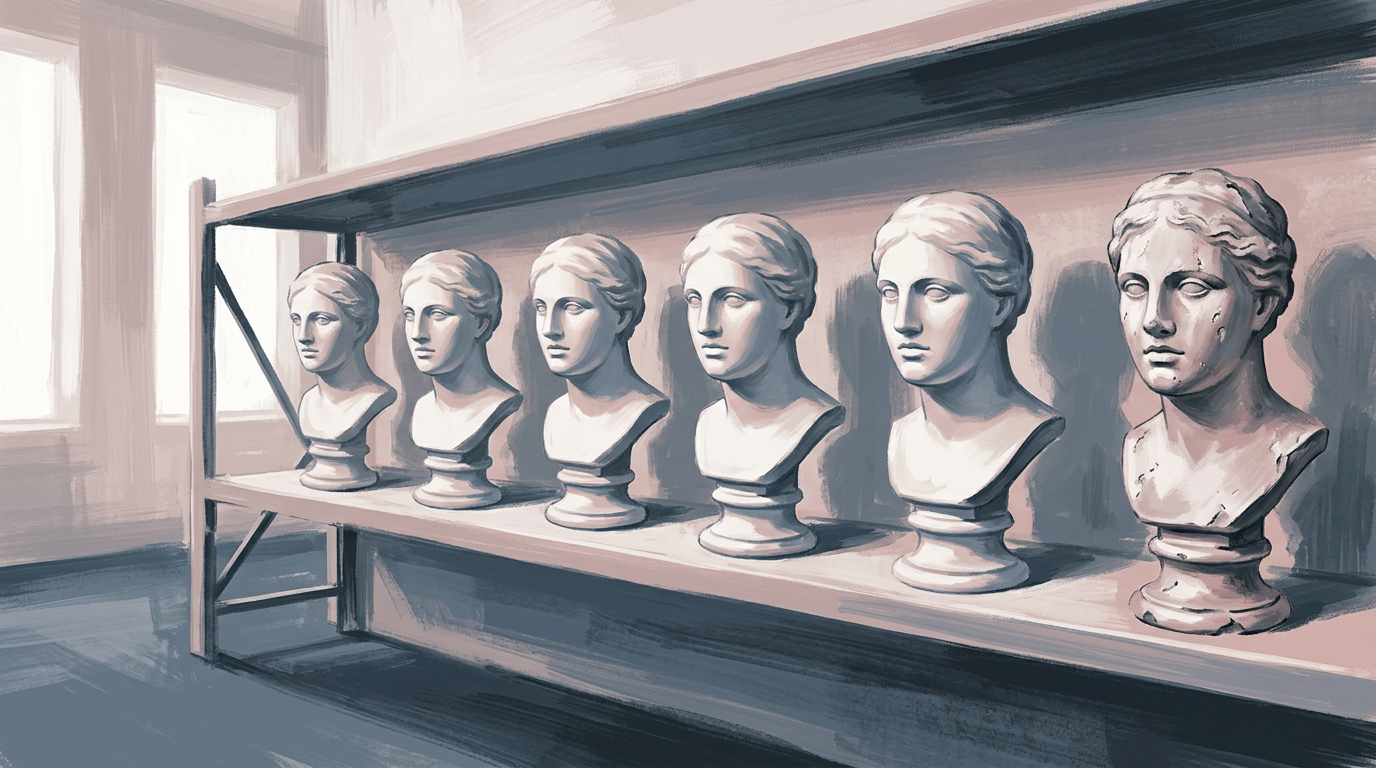
The tools of cosmetic transformation have never been more accessible. Dermal fillers, laser resurfacing, orthodontic aligners, injectable neurotoxins — procedures once confined to the affluent or the famous now sit within reach of a broad consumer class, marketed through social media with the casualness of a skincare routine. The cumulative effect is visible in any scroll through a photo feed: a population that is, by conventional metrics, more uniformly attractive than at any prior point in history. Yet rather than producing collective admiration, this surplus of beauty appears to be generating something closer to fatigue.
The observation is not new in kind, but it has reached a new intensity. What was once a niche critique of Hollywood homogeneity now applies to ordinary social environments — university campuses, corporate headshots, dating platforms. The democratization of cosmetic intervention has not diversified the aesthetic landscape. It has narrowed it.
The algorithmic face
At the center of this convergence sits what cultural critics have termed the "Instagram face": a composite of plumped lips, contoured cheekbones, smoothed skin, and wide-set eyes that owes less to any single ethnic or regional beauty tradition than to the logic of platform optimization. The features that perform well on camera — symmetry, luminosity, a certain geometric proportion — are precisely the features that cosmetic technology is best equipped to deliver. The feedback loop is tight: users see what garners attention, seek to replicate it, and in doing so reinforce the template for the next cohort.
This dynamic mirrors patterns familiar from other domains where network effects produce standardization. Just as global fast fashion compressed regional clothing styles into a narrow band of trends, the combination of algorithmic distribution and accessible cosmetic tooling is compressing physical appearance into a narrow band of outcomes. The paradox is structural: the more people gain access to beauty modification, the less distinguishing any single modification becomes. Beauty, treated as a commodity, follows the same deflationary logic as any commodity produced at scale.
The cultural cost is subtler than mere visual monotony. When a particular arrangement of features becomes attainable through purchase and maintenance rather than inheritance or accident, it ceases to function as a signal of individuality. It becomes, instead, a signal of participation — evidence that its bearer has access to the same clinics, the same tutorials, the same reference images. The face stops telling a story and starts confirming a transaction.
The appeal of the unpolished
Historically, aesthetic movements tend to generate their own counter-reactions. The ornamental excess of the Victorian era gave way to modernist austerity. The airbrushed perfection of 1990s supermodel culture eventually yielded to the "heroin chic" backlash and, later, to campaigns built around unretouched imagery. If the pattern holds, the current saturation of manufactured symmetry may already be seeding demand for its opposite.
Some early indicators point in this direction. Certain corners of fashion and visual culture have begun to foreground faces and bodies that diverge from the algorithmic template — gap teeth, asymmetric features, visible skin texture. Whether this constitutes a genuine shift in taste or merely a temporary aesthetic novelty marketed to consumers tired of the mainstream remains an open question. The distinction matters: one represents a structural revaluation of human variety, the other a brief detour before the template reasserts itself.
What makes this moment different from previous cycles is the depth of the infrastructure supporting the current ideal. Past beauty standards were enforced largely through media imagery and social pressure — forces that could be resisted or ignored at relatively low cost. Today's standard is reinforced by a commercial ecosystem of clinics, apps, filters, and financing plans that makes conformity frictionless and deviation conspicuous. Reversing direction requires pushing against not just a cultural preference but an economic apparatus with strong incentives to maintain the status quo.
The tension, then, is not simply between beauty and its absence, or between polish and imperfection. It is between a system optimized for convergence and the persistent human appetite for distinction. Whether the fatigue now visible in cultural commentary translates into a broader recalibration of taste — or whether it remains a literary sentiment expressed by those already secure enough to opt out — is the question that will define the next chapter of this particular negotiation between technology, commerce, and the face in the mirror.
With reporting from Dagens Nyheter.
Source · Dagens Nyheter