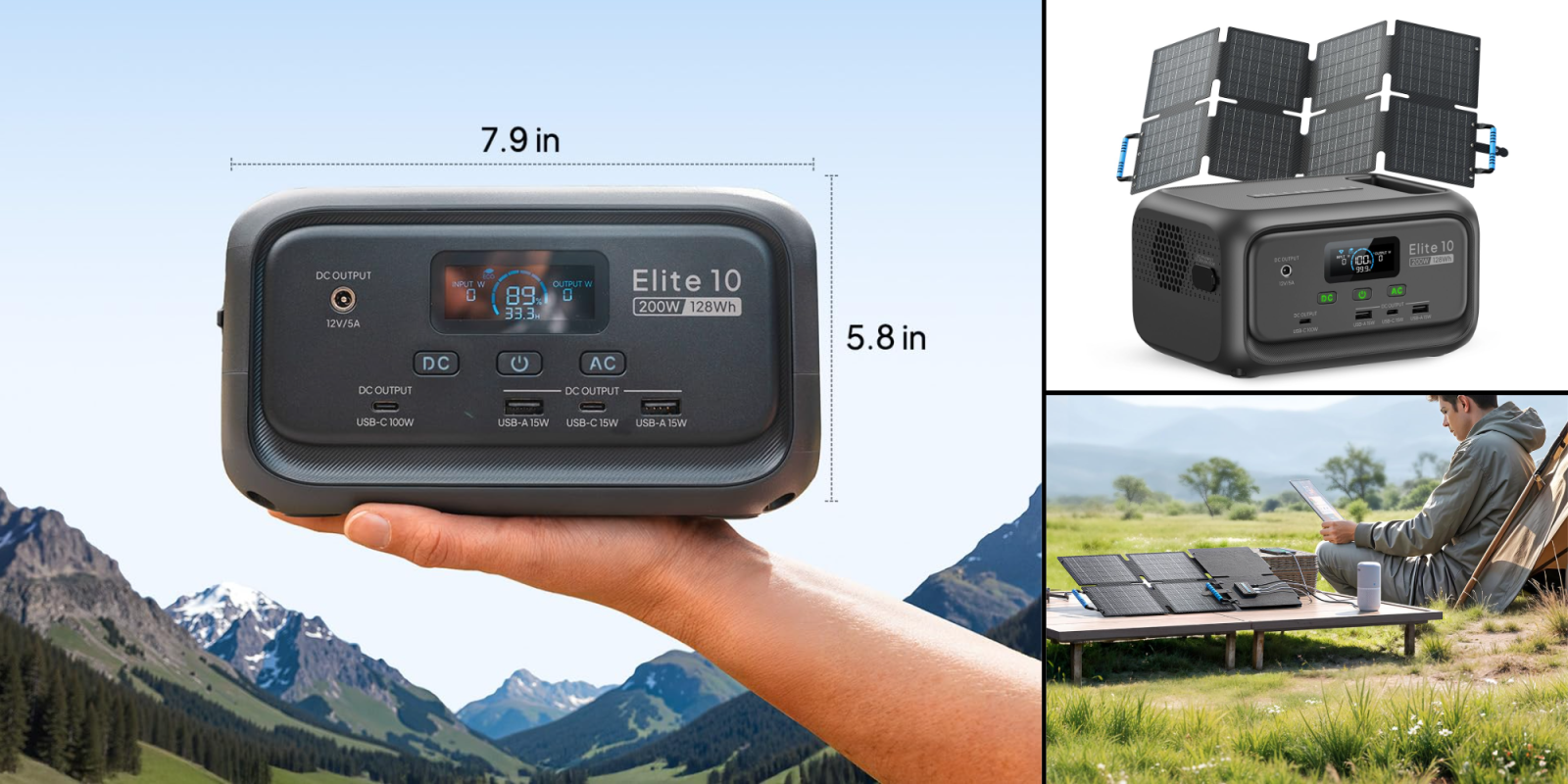
The consumer energy market is shifting in ways that rarely make headlines but steadily reshape daily life. A new generation of portable solar bundles, battery-powered yard tools, and electric bicycles is reaching price points that place decentralized green technology within reach of a broad consumer base — not just early adopters or sustainability enthusiasts. Recent retail trends tracked by Electrek illustrate the pattern: compact power stations paired with solar panels, cordless lawn equipment replacing gas-powered equivalents, and e-bikes with increasingly sophisticated feature sets are all moving down the cost curve simultaneously.
The convergence is not coincidental. Lithium iron phosphate (LFP) battery cells, which offer longer cycle life and greater thermal stability than older lithium-ion chemistries, have become the default in portable power stations. Manufacturing scale in China has driven cell costs down steadily over the past several years, and those savings are now filtering into finished consumer products. A unit like the Bluetti Elite 10 — a 128Wh power station bundled with a 60W solar panel — is modest in absolute capacity, but it represents something structurally significant: an entry-level price for off-grid renewable energy that competes with the cost of a few tanks of gasoline for a portable generator.
The Quiet Displacement of Small Engines
The electrification of yard maintenance may lack the drama of the electric vehicle race, but its cumulative environmental and behavioral impact is substantial. Two-stroke and four-stroke engines in leaf blowers, string trimmers, and lawn mowers have long been disproportionate sources of hydrocarbon emissions relative to their size. The California Air Resources Board has noted that operating a commercial leaf blower for one hour can produce emissions comparable to driving a modern car hundreds of miles — a comparison that helped drive California's ban on the sale of new gas-powered small off-road engines, which took effect in 2024.
Brands like Worx are now bundling cordless tools at price points that undercut or match their gas equivalents when factoring in fuel and maintenance costs over a product's lifespan. The performance gap that once kept professionals and serious homeowners loyal to combustion engines has narrowed considerably. Brushless electric motors deliver consistent torque without the throttle lag and pull-start frustration of small engines. The result is a displacement pattern familiar from other technology transitions: once the cheaper, simpler option reaches adequate performance, adoption accelerates and rarely reverses.
Micro-Mobility as Utility Infrastructure
Electric bicycles occupy a different but related niche in this decentralization trend. Products like the Aventon Aventure 3 — a fat-tire e-bike with integrated smart features — are positioned not as recreational accessories but as functional transportation. In dense suburban and urban environments, an e-bike with a range of several dozen miles can absorb a meaningful share of short car trips: commutes, errands, school runs.
The policy environment in the United States remains fragmented. Some states offer purchase incentives or rebates for e-bikes; others have yet to classify them consistently for road use. In Europe, where cycling infrastructure is more mature, e-bike adoption has already reached a scale that measurably affects urban traffic patterns and public transit ridership. The American trajectory is slower but directionally similar, driven less by policy than by economics: an e-bike costs a fraction of a car to purchase, insure, and operate.
What ties these three categories — portable solar, electric yard tools, micro-mobility — together is not a single technology but a shared economic logic. Each substitutes a fossil-fuel-dependent product with an electric alternative that has reached cost parity or better, while offering lower maintenance complexity. The transition does not require grid upgrades, government subsidies, or behavioral sacrifice. It requires only that the next purchase be marginally more attractive than the last one.
The question worth watching is whether this bottom-up electrification of the domestic sphere generates its own momentum — creating households that think in terms of watts and charge cycles rather than gallons and oil changes — or whether it plateaus once the easiest substitutions are made and harder ones, like home heating and long-distance transport, remain stubbornly tied to legacy infrastructure.
With reporting from Electrek.
Source · Electrek