The digital ecosystem for cinephiles has long been defined by the tension between the vastness of the streaming database and the intimacy of the curated recommendation. MUBI, through its editorial arm Notebook, has consistently positioned itself as a bastion of the latter, favoring human insight over algorithmic drift. The platform's recent venture into serialized visual art — a series titled "Funnies" — signals a deliberate expansion of what film criticism can look like in a digital publishing environment.
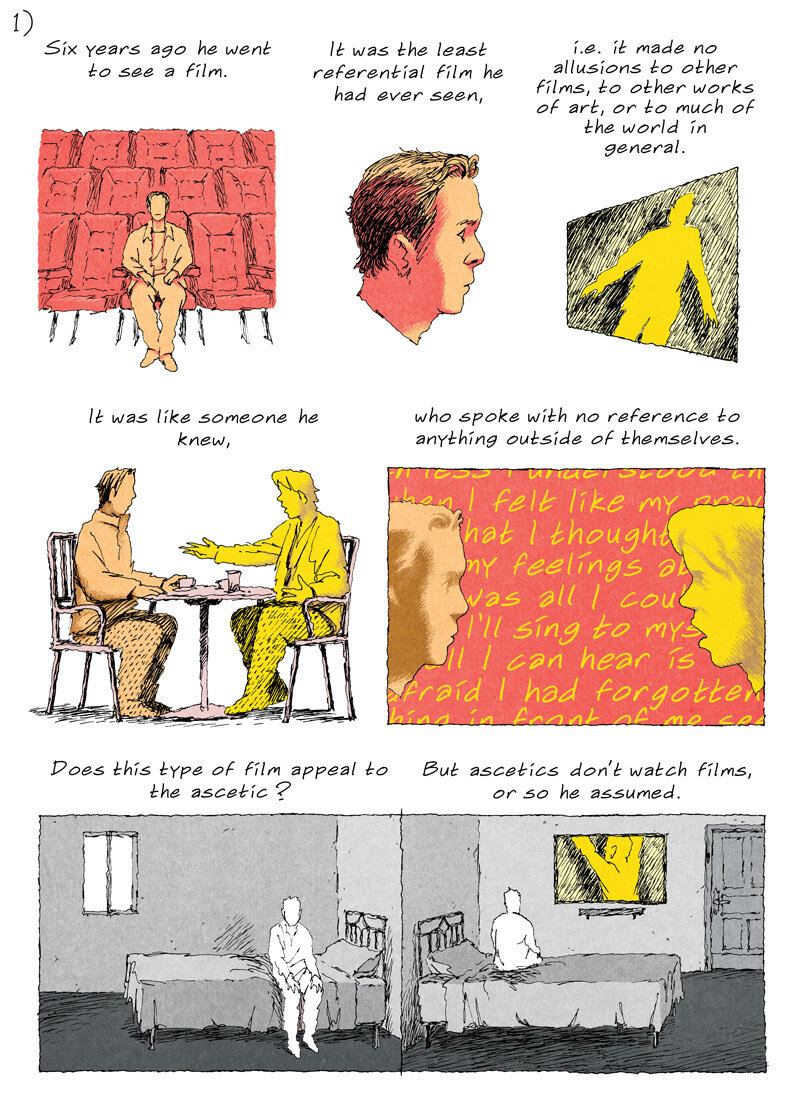
The four installments, collectively subtitled "Four Films," appeared throughout March 2026 in MUBI's "Weekly Edit" newsletter. Each comic strip attempts to translate the temporal, kinetic experience of watching a film into the static, sequential language of graphic panels. The project sits at an unusual intersection: part illustration, part criticism, part curatorial gesture.
The Newsletter as Editorial Space
The choice of distribution channel matters as much as the content itself. Email newsletters have experienced a sustained revival over the past several years, driven in part by a desire among both publishers and readers to escape the attention economy of social media feeds. For platforms built around taste and curation — MUBI being among the most prominent — the inbox offers something algorithmic timelines cannot: a bounded, sequential reading experience that rewards deliberate engagement.
By embedding serialized comics within its newsletter rather than publishing them as standalone web features, Notebook treats the inbox as a specific editorial environment with its own rhythm. A weekly comic strip arriving alongside film recommendations and short essays creates a cadence familiar to readers of legacy print magazines, where illustration and criticism coexisted as complementary modes of address. The format also imposes constraints — panel size, load time, the scroll behavior of email clients — that shape the visual language in ways distinct from a gallery page or a print broadsheet.
This approach echoes earlier experiments in digital publishing where outlets integrated original illustration into editorial products to differentiate themselves from the undifferentiated mass of text-based content. The distinction here is that MUBI's effort is explicitly serialized, building a visual narrative across weeks rather than offering one-off accompaniments to written pieces.
Graphic Art and the Boundaries of Film Criticism
Film criticism has historically been a literary enterprise. From the Cahiers du Cinéma essays that shaped the French New Wave to the long-form analyses found in contemporary outlets, the written word has served as the dominant medium for engaging with cinema intellectually. Visual approaches to criticism — video essays, annotated screenshots, diagrammatic analyses of shot composition — have gained ground in the digital era, but the comic strip remains an unusual choice.
The comic form brings its own critical vocabulary. Sequential panels impose decisions about pacing, framing, and ellipsis that mirror the editorial choices a filmmaker makes in the cutting room. A comic strip about a film is, in a sense, a re-editing of that film's emotional and visual logic into a different grammar. Whether the "Funnies" series succeeds as criticism, as homage, or as something else entirely depends on how one defines the boundaries of critical practice — boundaries that digital publishing has been steadily redrawing.
The broader question the series raises is whether visual and graphic modes of engagement can carry analytical weight comparable to the written essay, or whether they function primarily as affective complements — mood boards for films rather than arguments about them. The history of comics criticism, from Art Spiegelman's work at RAW to more recent graphic journalism, suggests the medium is capable of both. Whether a four-part serialized strip embedded in a weekly newsletter can achieve that density is a different proposition.
What remains clear is that the discourse around cinema continues to fragment across formats, platforms, and sensory registers. MUBI's experiment with the "Funnies" series does not resolve the tension between curation and scale, or between image and argument. It does, however, place a quiet bet that the readers most worth reaching are those willing to sit with a comic panel the way they might sit with a long take — attentively, without rushing toward a conclusion.
With reporting from MUBI Notebook.
Source · MUBI Notebook