Fast food has long served as the physical staging ground for Hollywood's most expansive intellectual properties. Starting May 4—the informal holiday known as Star Wars Day—Burger King will launch a comprehensive collaboration with the Star Wars universe, specifically timed to the upcoming theatrical release of The Mandalorian and Grogu. The initiative represents a significant logistical undertaking in themed branding, transforming standardized packaging into collectible artifacts and, in the process, illustrating how deeply the mechanics of franchise management have embedded themselves into consumer retail.
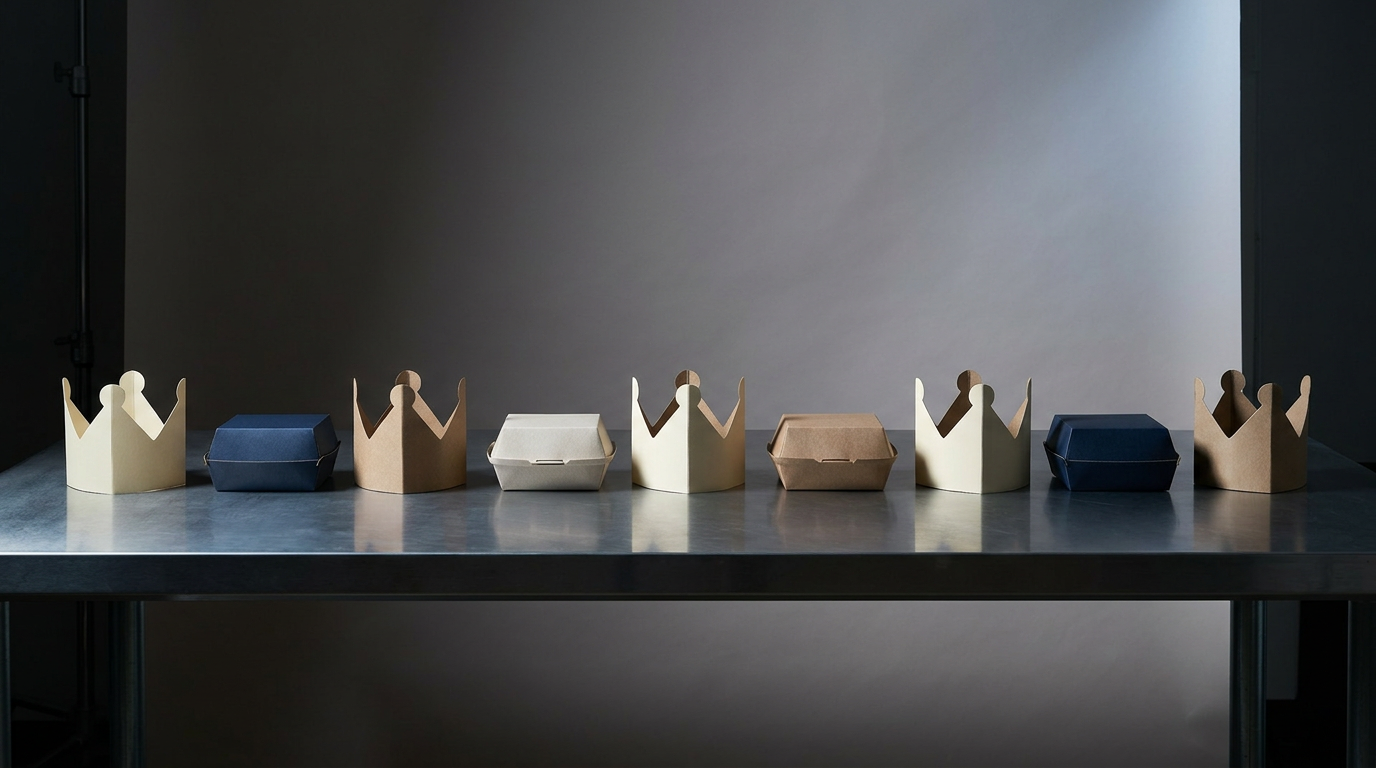
The rollout includes a reimagining of the chain's visual identity, from its iconic cardboard crown—now modeled after a Mandalorian helmet—to specialized cartons and cups themed after the Empire and the series' titular protagonists. On the menu, the "BBQ Bounty Whopper" and "Garlic Chicken Fries" attempt to translate the aesthetics of the Outer Rim into flavor profiles, accompanied by a "Blue Cookie Shake" that leans into the franchise's penchant for otherworldly culinary palettes. A preliminary Mandalorian-themed kids' menu will debut on April 28 at participating U.S. locations, with the broader campaign following days later.
The QSR-Hollywood Pipeline
The quick-service restaurant industry and major film studios have maintained a symbiotic relationship for decades. McDonald's Happy Meal tie-ins with Disney properties through the 1990s and 2000s established the template: mass-produced collectibles distributed through a network of tens of thousands of locations, reaching audiences that traditional advertising could not. The model works because fast-food chains offer something studios cannot easily replicate on their own—daily, physical touchpoints with millions of consumers across wide demographic bands.
Burger King's Star Wars campaign fits squarely within this tradition, but the scope of the visual overhaul—extending to crowns, cups, cartons, and multiple menu items—suggests an escalation in ambition. Where earlier collaborations often limited themselves to a toy in a box, the current approach treats the entire restaurant experience as a branded environment. Every surface becomes a media channel. The strategic logic is straightforward: in a fragmented attention economy, physical packaging offers something a digital ad cannot—tangibility, collectibility, and the minor social currency of novelty.
For Burger King's parent company, Restaurant Brands International, the calculus extends beyond a single promotional window. Themed campaigns of this scale tend to drive short-term traffic increases, particularly among families and younger consumers. The kids' menu launch ahead of the main rollout functions as a deliberate sequencing choice, building anticipation within a demographic that responds to serialized engagement.
Franchise Management as Perpetual Motion
From Lucasfilm's perspective—and by extension, Disney's—the Burger King partnership is one node in a broader infrastructure designed to sustain cultural relevance between major releases. The Star Wars franchise has historically excelled at this form of ambient marketing, maintaining visibility through merchandise, theme park attractions, television series, and retail collaborations even during years without a theatrical event.
The Mandalorian property, and Grogu in particular, occupies a distinctive position within that ecosystem. The character's rapid ascent to merchandising ubiquity following the Disney+ series demonstrated how a single visual icon—compact, expressive, easily reproduced on plush toys and coffee mugs—can function as an economic engine independent of narrative complexity. A Grogu-branded shake or a helmet-shaped crown does not require the consumer to have watched every episode; it requires only recognition, which the character has achieved at saturation levels.
This dynamic raises a question that extends well beyond a single fast-food promotion. As franchise IP increasingly operates as a form of ambient cultural infrastructure—present on packaging, apparel, apps, and restaurant counters—the line between entertainment and consumer product becomes difficult to locate. The food, in these collaborations, is almost incidental. What is being sold is participation in a narrative universe, distributed through the most mundane of channels. Whether that ubiquity strengthens the underlying franchise or gradually dilutes its cultural weight remains an open tension, one that each new theatrical release is forced to answer.
With reporting from Fast Company.
Source · Fast Company