When Danielle Snyder Shorenstein relocated from New York to San Francisco in 2021, she carried with her a career's worth of instincts about design, branding, and consumer desire. Attending Golden State Warriors games with her husband, Shorenstein — co-founder of the jewelry brand Dannijo — noticed something that fashion insiders might call a market gap and economists would call a pricing inefficiency: the merchandise available to fans bore almost no relationship to how those fans actually dressed. The offerings were utilitarian, logo-forward, and largely undifferentiated. For a consumer segment accustomed to curated wardrobes, the experience of shopping for team gear felt like stepping into a parallel retail universe where aesthetics had been deliberately set aside.
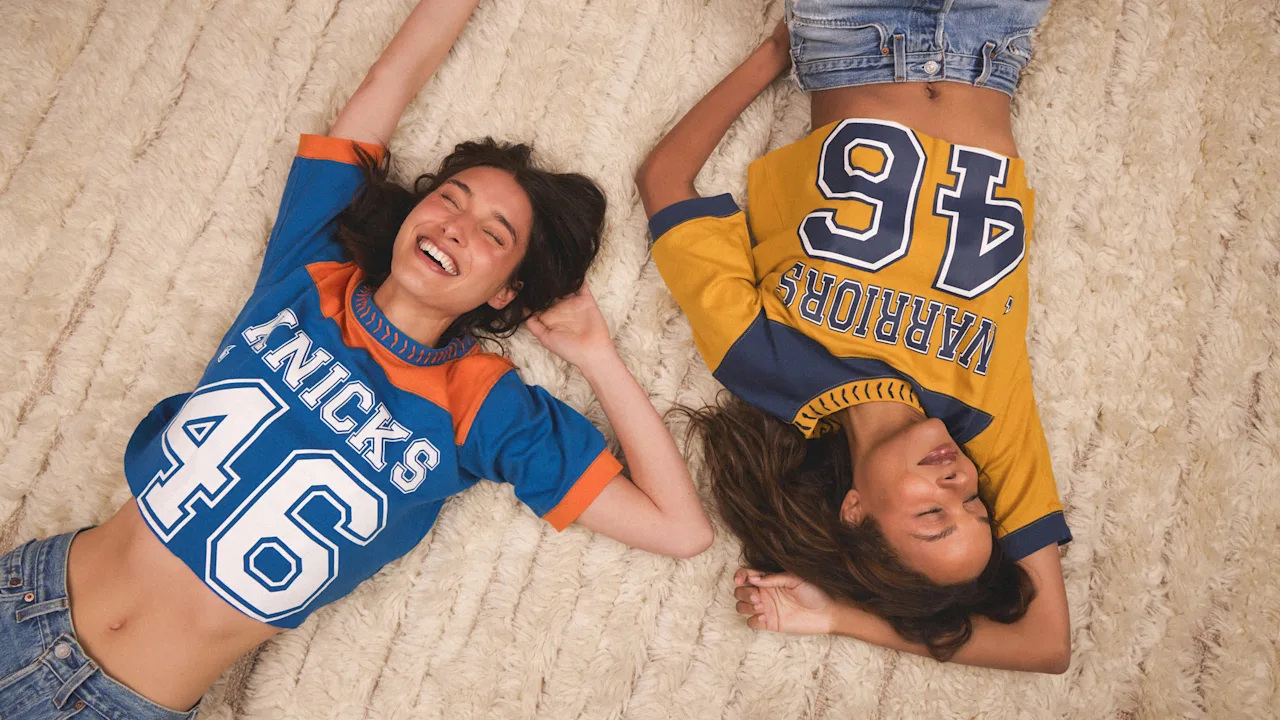
The response began as personal improvisation. Shorenstein started deconstructing official jerseys, adding crochet collars and crystal embellishments — essentially treating licensed apparel as raw material for something closer to runway-adjacent design. The reaction, first in arena corridors and then through social media direct messages, was immediate. Players' partners and fellow fans wanted to know where the pieces came from. That organic demand became the founding thesis for DannijoPro, the brand Shorenstein launched with her sister Jodie Snyder Morel to bridge the gap between high fashion and professional sports fanwear.
A demographic the industry overlooked
The traditional sports merchandise model has operated on a remarkably stable set of assumptions for decades. Teams license their logos and color palettes to manufacturers, who produce standardized apparel — jerseys, caps, hoodies — designed primarily for visibility and brand recognition rather than style. The approach has been commercially successful, generating substantial revenue across leagues. But it has also been built around a relatively narrow conception of the fan: someone whose primary purchase criterion is team affiliation, not design quality or fashion sensibility.
That conception has grown increasingly outdated. The demographics of live sports attendance have shifted. Women now represent a growing share of ticket buyers and television audiences across major professional leagues. Meanwhile, the broader culture has moved toward a blurring of contexts — athleisure made gym clothes acceptable in restaurants; streetwear made sneakers acceptable at galas. The stadium, in this continuum, is no longer a space where personal style is expected to be suspended. Yet the merchandise ecosystem has been slow to adapt. Most licensed apparel still defaults to unisex sizing, bold primary-color blocking, and minimal design variation. DannijoPro's bet is that this lag represents not a niche opportunity but a structural one.
The brand's approach — treating official sports logos as design elements to be integrated into garments with luxury-level finishing — sits at the intersection of two powerful trends. One is the ongoing convergence of sports and fashion, visible in everything from NBA tunnel walks functioning as de facto fashion shows to Formula 1 paddock culture becoming a fixture of style media. The other is the broader premiumization of fan culture, where consumers increasingly seek products that signal both allegiance and taste.
Where the stadium meets the runway
DannijoPro is not the first venture to sense this opportunity. In recent years, several designers and brands have experimented with elevated sports merchandise, and major leagues have pursued collaborations with fashion houses to reach new audiences. What distinguishes the Snyder sisters' approach is its origin story — rooted not in a licensing strategy or a corporate partnership deck, but in the lived frustration of a fashion-literate consumer who could not find what she wanted to wear to a game.
That authenticity carries commercial weight. In a market where consumers are increasingly skeptical of top-down brand collaborations, a product born from genuine personal need can command credibility that a boardroom-conceived capsule collection cannot. The challenge, as with any brand operating at the intersection of two established industries, lies in navigating the licensing structures of professional sports leagues — systems designed for mass production, not artisanal embellishment — while maintaining the design integrity that defines the brand's appeal.
The larger question DannijoPro raises is whether the sports merchandise industry is approaching an inflection point similar to what happened in hospitality, airlines, and food retail: sectors where a monolithic, one-size-fits-all product offering eventually fragmented into tiers, with premium segments capturing disproportionate margin. The ingredients are present — a shifting fan demographic, a culture that rewards personal style in every context, and a supply side that has yet to respond. Whether the transformation comes from insurgent brands like DannijoPro or from the leagues themselves remains an open tension worth watching.
With reporting from Fast Company.
Source · Fast Company