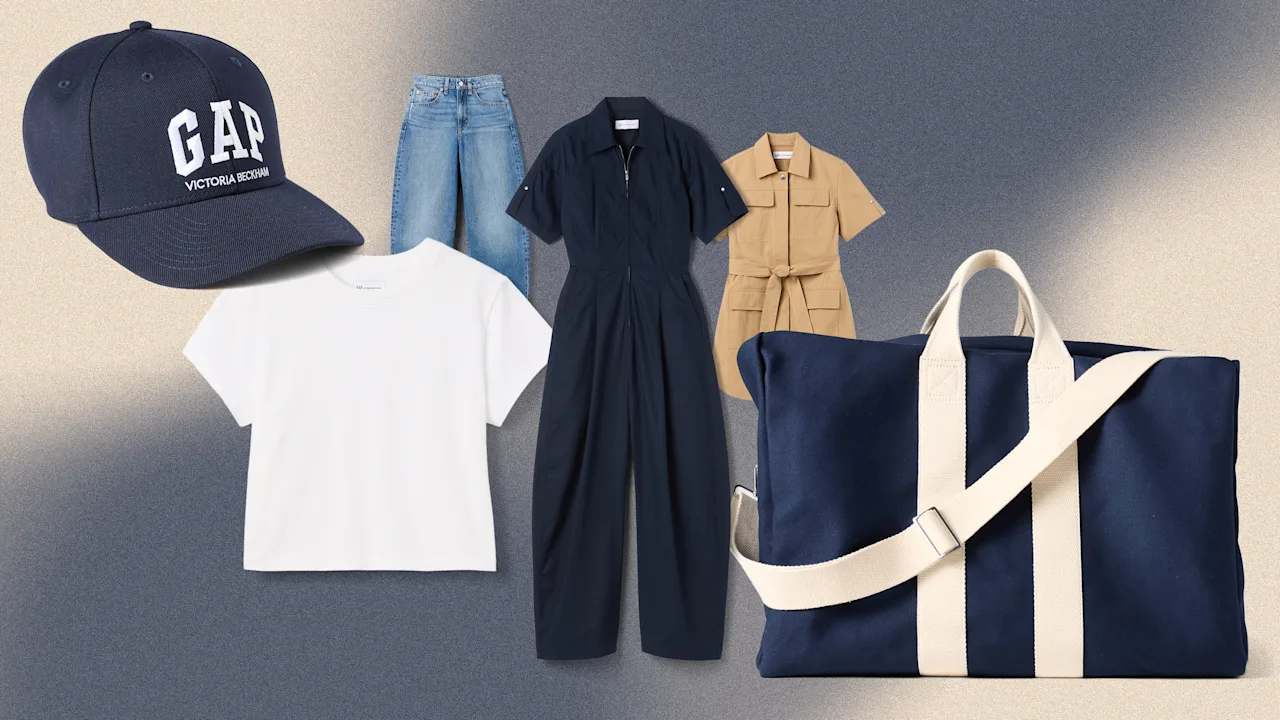
Gap is attempting a difficult maneuver: reclaiming the cultural center while appealing to a discerning, high-fashion audience. The American retail giant has announced a multi-season partnership with Victoria Beckham, a move designed to bridge the gap between mass-market utility and the refined, minimalist aesthetic of the British designer. The first 38-piece collection, scheduled to launch on April 24, signals a strategic pivot toward what the brand calls "elevated polish." With items ranging from $34 to $328, the line positions itself as a gateway to luxury for the everyday consumer.
The collaboration marks a continuation of Gap's recent series of high-profile partnerships intended to restore the brand's relevance in a fragmented fashion landscape. By tapping Beckham — whose own label has successfully transitioned from celebrity venture to respected luxury house — Gap is betting that its customers are ready for a higher price point and a more sophisticated silhouette. The multi-season nature of the deal, rather than the limited-run drops that have become industry standard, suggests something more ambitious than a marketing moment.
The Logic of Accessible Luxury
The concept of "accessible luxury" is not new in retail, but its execution remains notoriously difficult. The term describes products that borrow the design language, materials, or brand associations of high-end fashion while remaining within reach of a broader consumer base. Brands that attempt it risk alienating both ends of the spectrum: core customers may balk at higher prices, while luxury consumers may dismiss the offering as aspirational imitation.
Gap's recent history illustrates both the promise and the peril of this approach. The brand spent much of the 2010s in a prolonged identity crisis, losing ground to fast-fashion competitors on one side and direct-to-consumer upstarts on the other. Its earlier collaboration model — limited-run capsules with designers like Sandy Liang and labels like Awake NY — generated cultural buzz but did not, on its own, resolve the deeper question of what Gap stands for in a market that has moved well beyond the khaki-and-white-tee uniformity of the 1990s.
The Beckham partnership represents a different bet. A multi-season commitment implies integration into Gap's broader design philosophy rather than a one-off halo project. CEO Mark Breitbard has described the pairing as "natural," pointing to Beckham's ability to bring refinement to casual staples. The framing matters: Gap is not positioning this as a guest appearance but as an evolution of its own identity.
A Crowded Middle and the Power of Institutional Memory
The strategic context is worth examining. Legacy retail brands across the apparel sector face a structural squeeze. Ultra-fast fashion platforms have compressed trend cycles to days rather than seasons, competing ruthlessly on price and speed. At the other end, niche boutique labels and direct-to-consumer brands have captured consumers who prize distinctiveness and narrative over scale. The middle — where Gap has historically lived — has hollowed out.
Gap's response draws on a resource that newer competitors lack: institutional memory. The brand's cultural footprint in the 1990s and early 2000s was substantial enough that it still carries associative weight with a broad demographic. The high-low collaboration model leverages that residual equity, pairing nostalgia for Gap's democratic ethos with the credibility of a designer known for precise tailoring and understated British sensibility.
Whether this formula can sustain itself beyond the initial collection cycle is the central question. Limited-run collaborations generate scarcity-driven demand that multi-season lines, by definition, cannot replicate. The $34-to-$328 price range is wide enough to invite scrutiny at both ends — whether the lower-priced items feel genuinely designed rather than branded, and whether the higher-priced pieces can justify their cost against Beckham's own mainline offerings.
The tension at the heart of Gap's strategy is familiar to any legacy brand attempting reinvention: how to signal change without abandoning the broad accessibility that defined the brand in the first place. Beckham's involvement lends credibility, but credibility and commercial durability are different things. The first collection will reveal whether Gap has found a sustainable middle path — or merely a more sophisticated way to generate a headline.
With reporting from Fast Company.
Source · Fast Company