The Hybrid Pivot: Scaling Beyond the Digital Storefront
For roughly a decade, the direct-to-consumer model served as the organizing principle of modern brand-building. By selling directly through owned digital channels, founders could capture higher margins, accumulate first-party customer data, and bypass the gatekeeping power of traditional retail buyers. Venture capital flowed freely into DTC startups, and the playbook — a Shopify storefront, a targeted Facebook campaign, a polished Instagram aesthetic — became almost formulaic. That formula, however, has grown considerably more expensive and less differentiated. Rising digital customer acquisition costs, algorithmic unpredictability on major social platforms, and a saturated landscape of lookalike brands have eroded the structural advantages that once made DTC the default strategy.
Randy Goldberg, co-founder of sock and apparel brand Bombas, and Molly Sims, founder of skincare line YSE Beauty, represent two different entry points into this reality. Both argue that the next phase of brand growth demands a deliberate integration of digital and physical retail — not as a retreat from DTC principles, but as an expansion of them. The conversation reflects a broader recalibration underway across consumer goods, one in which the binary choice between online purity and wholesale scale is giving way to something more nuanced.
The Economics Behind the Shift
The structural logic of the pivot is straightforward. When Facebook and Instagram ad costs were low and organic reach was generous, a digitally native brand could acquire customers at a fraction of the cost of a traditional retail launch. That arbitrage has largely closed. The cost per acquisition on Meta platforms and Google has climbed steadily, and the post-iOS 14 privacy changes introduced by Apple in 2021 made targeting and attribution significantly harder. For many DTC brands, the math no longer works at scale without a diversified channel strategy.
Wholesale and brick-and-mortar partnerships offer a different kind of leverage. A placement in a major retailer provides physical visibility that no amount of programmatic advertising can replicate — the ability for a consumer to touch, test, and encounter a product without having been algorithmically served an ad first. The trade-off, of course, is margin compression and reduced control over the customer experience. Wholesale partners dictate shelf placement, pricing norms, and return policies. The brand's relationship with the end consumer becomes mediated in ways that the DTC model was designed to avoid.
This is where intentionality becomes the operative word. Goldberg and Sims both emphasize that entering physical retail should be a strategic decision rooted in brand coherence, not a reactive scramble for revenue. The distinction matters. Brands that flood into wholesale without a clear framework for how their identity translates to a third-party environment risk the very dilution they spent years avoiding.
Coherence as Competitive Advantage
The deeper challenge is experiential consistency. A brand that has built loyalty through a carefully curated online journey — personalized packaging, editorial content, community engagement — faces a translation problem when its product sits on a shelf alongside dozens of competitors. The digital relationship is intimate and controlled; the retail shelf is anonymous and competitive.
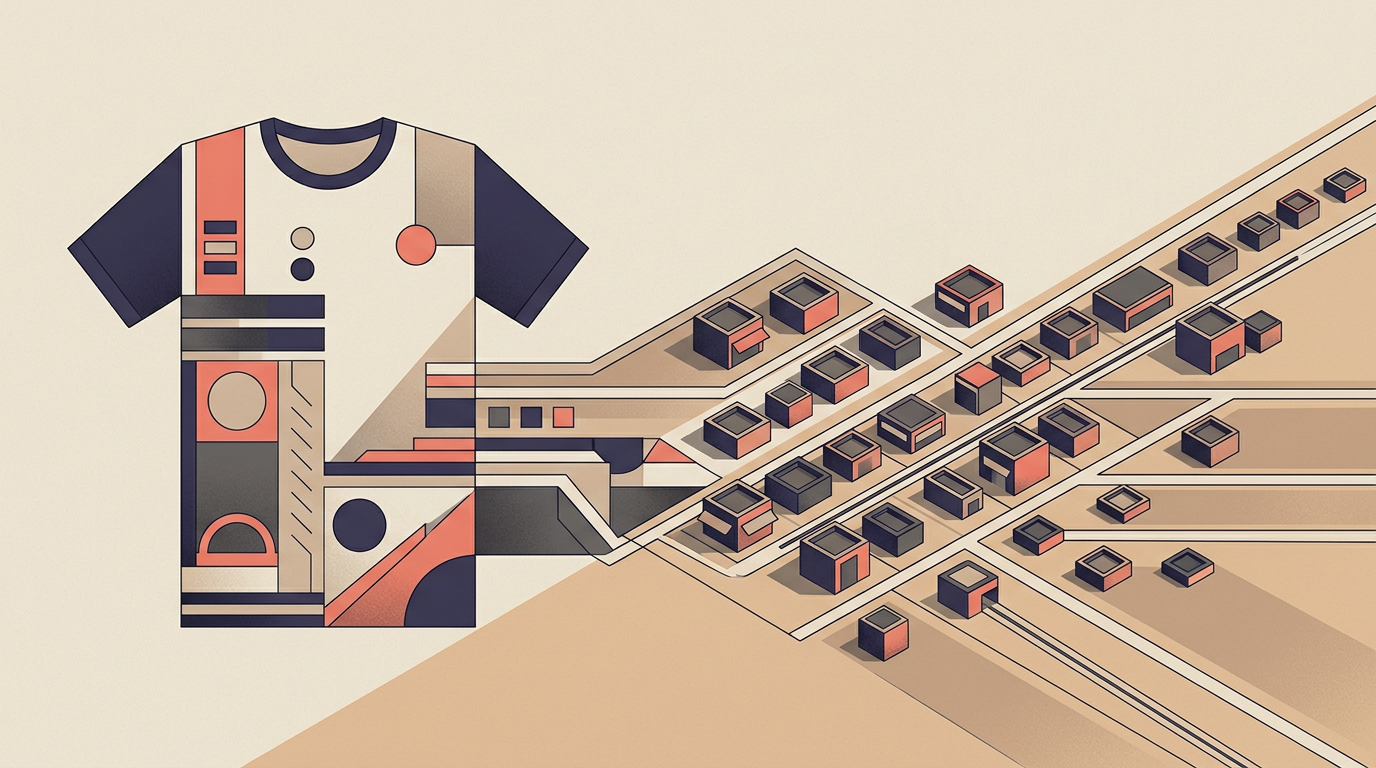
Solving this requires treating physical and digital channels not as separate distribution pipes but as components of a single brand architecture. The online storefront becomes the space for depth — storytelling, education, loyalty programs — while the physical presence serves as a discovery mechanism that feeds consumers back into the owned ecosystem. Some brands have approached this by limiting wholesale partnerships to retailers whose curation philosophy aligns with their own, preserving a degree of selectivity even as they broaden reach.
The pattern is not entirely new. Legacy consumer brands have always managed multi-channel strategies. What is new is the generation of founders who built their instincts in a DTC-first environment now learning the disciplines of wholesale negotiation, retail merchandising, and channel conflict management — skills that were considered relics of an older era just a few years ago.
The tension remains unresolved in a productive sense. Brands that lean too heavily into wholesale risk losing the direct customer relationships that gave them leverage in the first place. Those that cling exclusively to DTC face rising costs and a ceiling on addressable audience. The founders navigating this moment most effectively are those who treat the hybrid model not as a compromise but as a design problem — one where the answer is neither channel alone, but the architecture that connects them.
With reporting from Inc. Magazine.
Source · Inc. Magazine