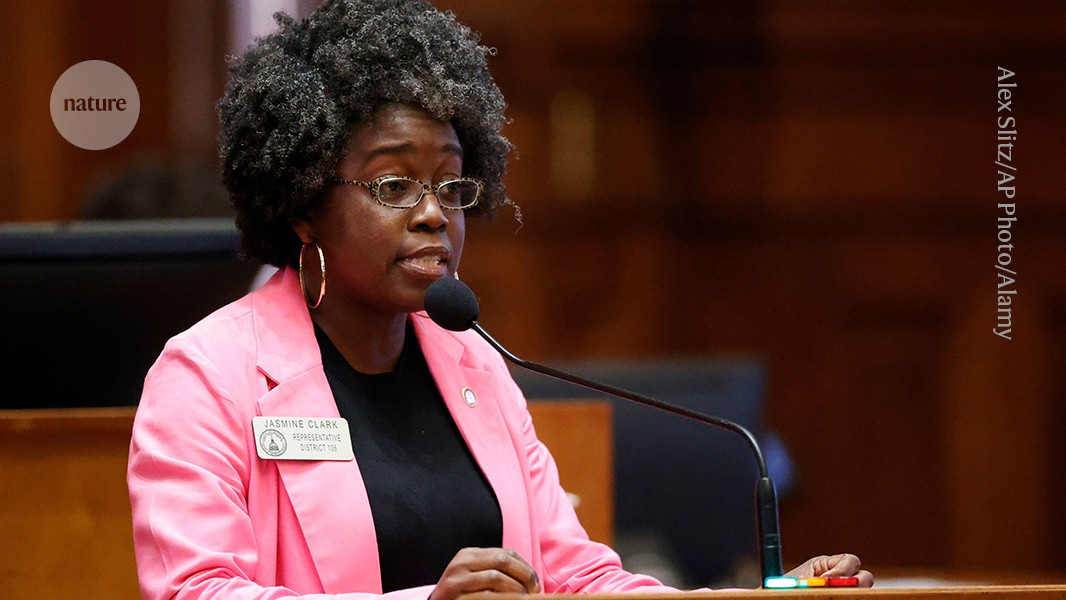
The traditional distance between the laboratory and the legislative floor is narrowing. A record number of researchers are running for office in the upcoming 2026 U.S. mid-term elections, according to new data, marking a significant shift in how the scientific community views its role in the machinery of government. No longer content to merely provide expert testimony or advisory input, these candidates are seeking the authority to draft the laws that govern their fields — and, increasingly, the broader economy.
The trend is not entirely without precedent. In the 2018 mid-terms, a notable cohort of scientists and engineers entered congressional races, many of them first-time candidates galvanized by disputes over climate policy and research funding. Organizations such as 314 Action — named after the first digits of pi — emerged to recruit and support STEM professionals seeking public office. But the 2026 cycle appears to represent a quantitative leap, with the candidate pool reportedly surpassing previous records by a considerable margin.
Defending the Grant, Designing the Grid
The motivations behind this surge split along recognizable partisan lines, though they share a common root: the conviction that technical expertise is underrepresented in legislatures that increasingly regulate technical domains.
For many candidates aligned with the Democratic Party, the decision to run is a defensive maneuver — a direct response to significant cuts in federal science funding and research grants. The U.S. federal research apparatus, anchored by agencies such as the National Institutes of Health and the National Science Foundation, has long operated on the assumption of bipartisan support. When that assumption weakens, the downstream effects ripple through university laboratories, clinical trials, and early-stage technology development. For these candidates, the campaign trail is framed as an extension of institutional stewardship: a necessary step to protect the nation's intellectual infrastructure from political erosion.
Republican-leaning researchers, by contrast, are increasingly drawn to the ballot by strategic imperatives. Their platforms tend to prioritize the competitive landscape of artificial intelligence and the complexities of energy independence. Rather than focusing on budget restoration, these candidates view political office as a means to ensure the United States remains the primary architect of emerging technologies — particularly in a global environment where China and the European Union are pursuing aggressive industrial strategies of their own. The framing is less about preserving existing institutions and more about shaping the regulatory and investment environment for the next generation of critical industries.
The Expertise Gap in Governance
The broader context for this movement is a long-documented imbalance. Legislatures in the United States — at both state and federal levels — are disproportionately populated by lawyers, business owners, and career politicians. Engineers, physicists, biologists, and computer scientists remain statistical outliers. This gap matters not as a matter of professional prestige but of functional competence: lawmakers are routinely asked to regulate gene-editing technologies, set standards for algorithmic transparency, and allocate funding for quantum computing programs without direct familiarity with the underlying science.
The Office of Technology Assessment, which once provided Congress with nonpartisan technical analysis, was defunded in 1995 and has never been formally restored. Its absence has left a structural void that expert testimony and external advisory panels fill only partially. Candidates with research backgrounds often cite this gap as a core motivation — not merely to advocate for science, but to improve the technical literacy of the legislative process itself.
What remains uncertain is whether a wave of scientist-candidates can translate laboratory credentials into electoral viability. The skills that earn tenure — methodical reasoning, comfort with uncertainty, insistence on evidence — do not always map neatly onto the demands of retail politics. Previous cycles have shown mixed results: some STEM candidates have won competitive seats, while others have struggled to build the coalitions and fundraising networks that campaigns require.
The 2026 mid-terms will test whether the current political environment — marked by intensifying debates over AI governance, research funding, and technological competition — has shifted the calculus enough to make scientific expertise a genuine electoral asset. The shared language may be science, but the vision for its application remains deeply contested. Whether that tension produces productive policy debate or simply another front in the culture wars is the question neither party has yet answered.
With reporting from Nature News.
Source · Nature News