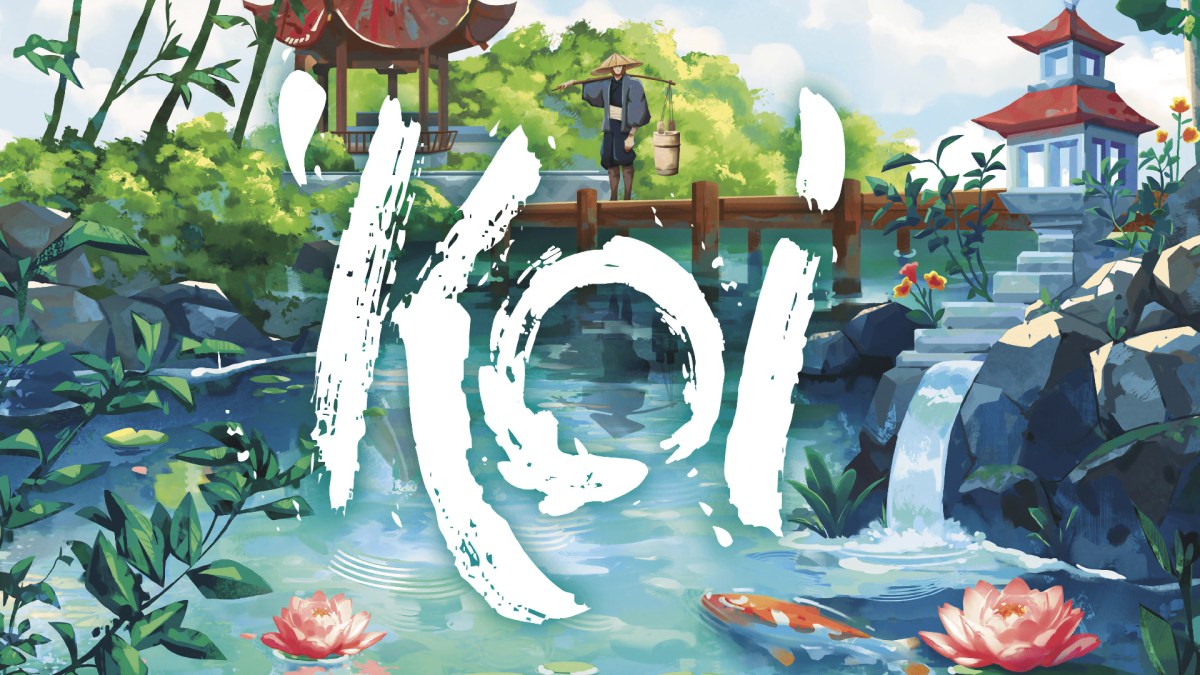
Tabletop gaming has increasingly moved toward the contemplative. While many titles focus on conquest or resource extraction, Koi invites players into the quieter discipline of aquatic landscaping. The objective is simple yet deeply rooted in cultural symbolism: the cultivation of an ornamental pond where the health of the environment is mirrored by the growth of its inhabitants.
The game arrives at a moment when the board game industry has been steadily expanding its tonal range. Titles built around nature stewardship, pattern completion, and meditative rhythm have carved out a durable niche alongside the traditional fare of territorial conflict and economic engines. Koi fits squarely within that current, drawing on the centuries-old Japanese tradition of ornamental carp keeping — a practice that originated in rice farming communities and evolved into a refined art form with its own vocabulary of color, pattern, and lineage.
Spatial strategy as aesthetic discipline
The mechanics of Koi revolve around the strategic placement of elements — lily pads, stones, and the titular fish — to create a balanced ecosystem. In Japanese culture, koi are enduring symbols of luck and perseverance, often associated with the legend of the carp that swims upstream and transforms into a dragon. Here, they serve as the primary actors in a shifting puzzle of spatial management. Players must navigate the tension between personal aesthetic vision and the systemic requirements of a thriving pond.
What distinguishes this design philosophy from more conventional optimization games is the dual register on which decisions operate. A placement that maximizes scoring potential may disrupt the visual composition of the pond, and vice versa. The game effectively asks players to hold two frameworks in mind simultaneously: one mechanical, one sensory. This kind of layered decision-making has precedent in titles like Azul, which similarly translates the logic of decorative tiling into a competitive puzzle, or Photosynthesis, where the growth of a forest canopy doubles as both strategy and spectacle. The through line is a design ethos that treats beauty not as ornamentation layered on top of gameplay but as a structural element within it.
The tactile dimension matters as well. Board games that foreground physical arrangement — the act of placing, rotating, and composing — tend to generate a different quality of engagement than those driven primarily by card draws or dice rolls. The pond in Koi is not merely a scoring surface; it is an artifact that players construct and contemplate over the course of a session.
The quiet market for slow games
Beyond the gameplay, Koi functions as an exercise in biophilic design on a miniature scale. It taps into a growing appetite for games that offer a sense of order and tranquility within complex rule sets. The broader tabletop market has seen sustained interest in what some designers informally call "slow games" — experiences that reward patience, observation, and incremental refinement rather than rapid escalation or direct confrontation.
This trend runs parallel to shifts in adjacent creative industries. In video games, the success of titles centered on gardening, fishing, and quiet world-building has demonstrated that a substantial audience exists for structured leisure that does not depend on adrenaline. The tabletop space, with its inherent physicality and social cadence, is arguably better suited to this register. A board game session already requires players to slow down, sit together, and attend to a shared surface. Designs like Koi lean into that existing rhythm rather than working against it.
By prioritizing the visual and symbolic harmony of the water garden, the experience offers a brief, structured escape into the art of the slow build. Whether that contemplative quality translates into lasting replay value — or whether the aesthetic pleasure plateaus once the novelty of the pond recedes — depends on how much strategic depth the spatial puzzle sustains across repeated sessions. The tension between serenity and complexity is, in a sense, the same tension the game asks players to manage within the pond itself.
With reporting from Numerama.
Source · Numerama