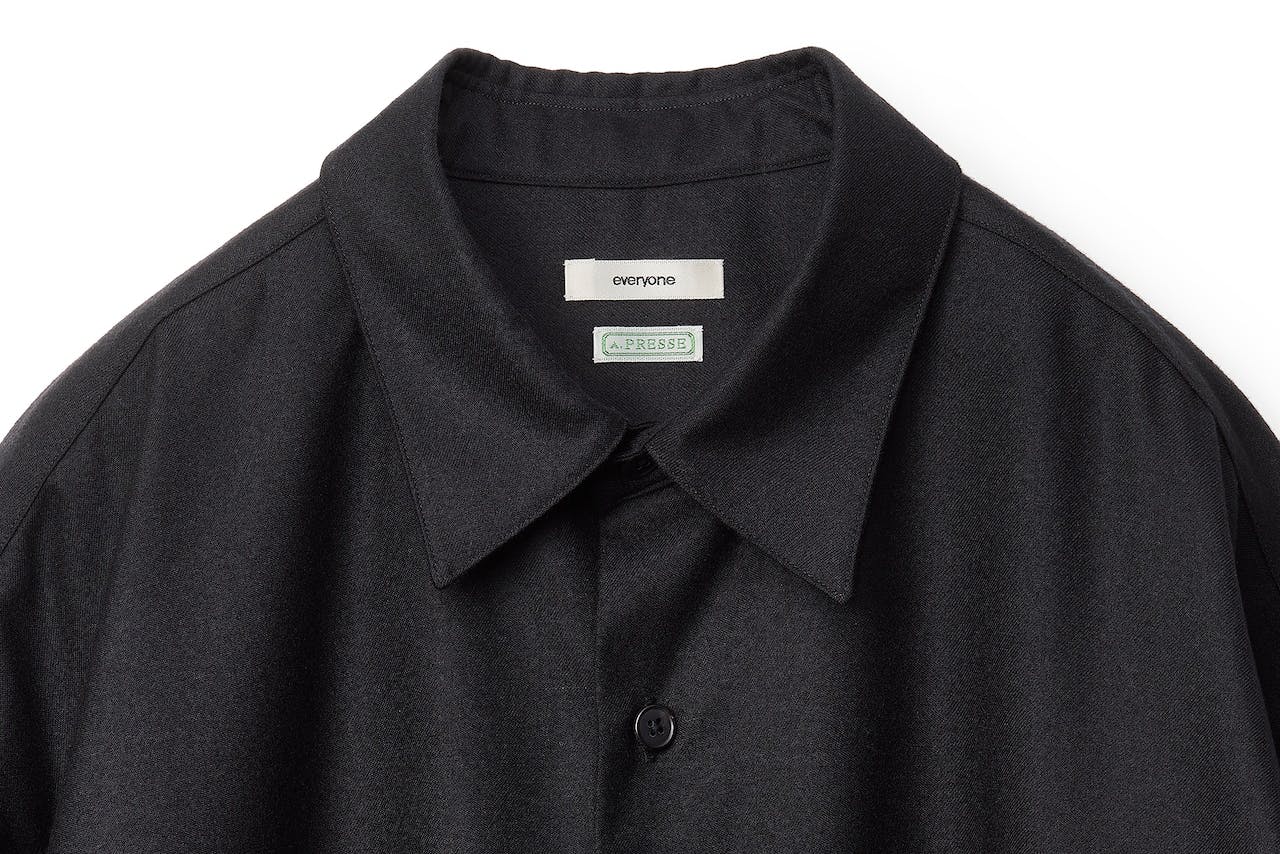
In an era of digital accessibility, the Japanese label A.PRESSE operates with a deliberate, almost defiant obscurity. The brand maintains no website, preferring a model of intentional friction where garments must be sought out in flagship stores or a handful of discerning boutiques. With small production runs and price points that reflect a rigorous commitment to craft — leather puffers retailing for nearly $7,000 — A.PRESSE has positioned itself as the antithesis of the modern fashion cycle. Its latest move, a silk-linen sleepwear collection made in partnership with the label EVERYONE, scheduled for release on April 18, is a rare concession from a house that has built its identity on refusal.
The collaboration is notable less for what it produces than for what it signals. A.PRESSE maintains a general policy against partnerships, treating external tie-ups as dilutive to the controlled universe it has constructed. EVERYONE, a modest Japanese label known for its subtle refinements of classic American staples, is the exception — and a recurring one. The two houses share a philosophical alignment around slow production, material integrity, and an indifference to the attention economy that governs most of contemporary fashion.
The Economics of Deliberate Friction
The no-website, no-e-commerce model that A.PRESSE employs is not unprecedented, but it remains unusual enough to function as a statement. In the broader luxury market, a small number of houses have experimented with restricting digital access — limiting online availability, pulling back from wholesale, or requiring in-person appointments. The logic is consistent: scarcity, when genuine rather than manufactured, can create a form of brand equity that marketing budgets cannot replicate.
A.PRESSE takes this further than most. By eliminating the digital storefront entirely, the label forces a physical pilgrimage — a buyer must locate a stocking retailer or visit a flagship. This friction filters the customer base by intent rather than by price alone, though the price points themselves serve as an additional gate. The result is a distribution model that resembles the atelier tradition more than the contemporary direct-to-consumer playbook. It is a bet that a small, devoted audience is more valuable than a large, distracted one.
EVERYONE operates on a different register but arrives at a compatible destination. Its catalog of reworked American basics — the kind of garments whose quality reveals itself over months of wear rather than in the first photograph — attracts a consumer who prioritizes material substance over novelty. Frequent collaborations are part of EVERYONE's model, but the recurring nature of its work with A.PRESSE suggests something deeper than a seasonal marketing exercise.
Sleepwear as Quiet Provocation
The collection itself — "Sleeping Shirts" and "Sleeping Pants" rendered in deep black silk-linen with a gentle luster — is a study in restraint. Sleepwear occupies a peculiar position in fashion: it is among the most intimate categories of clothing, yet it has increasingly become a vehicle for branding, from monogrammed silk sets to logo-heavy loungewear marketed for public consumption. A.PRESSE and EVERYONE appear to move in the opposite direction, designing garments whose primary audience is the wearer alone.
The choice of a silk-linen blend reinforces this orientation. Silk provides the luster and softness; linen contributes breathability and a textural character that improves with washing. The combination prioritizes the tactile over the visual — a garment meant to be felt rather than seen. In a market often defined by loud logos and rapid-fire releases, the proposition is almost contrarian: luxury as a private, sensory experience rather than a public signal.
Whether this kind of collaboration can sustain itself as a model — or whether it remains a niche anomaly tolerated by the market precisely because it is too small to threaten anyone — depends on questions that extend beyond two Japanese labels making pajamas. The tension sits between fashion's accelerating demand for visibility and the stubborn persistence of makers who treat obscurity not as a problem to solve but as a condition worth defending. Both forces show no sign of relenting.
With reporting from Highsnobiety.
Source · Highsnobiety