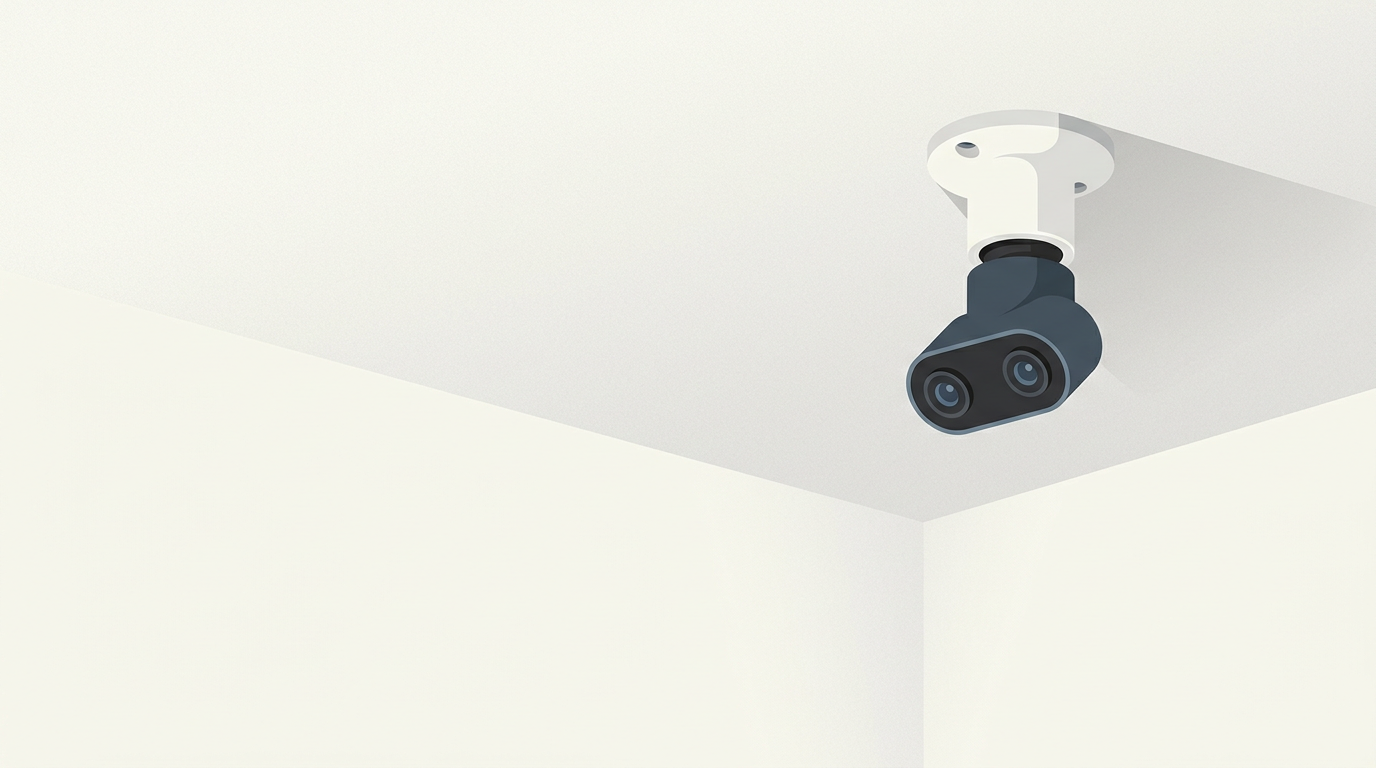
The barrier to entry for home surveillance has shifted from professional, hard-wired installations to a decentralized ecosystem of plug-and-play devices. This transition, fueled by the commoditization of high-definition sensors and wireless networking, has turned the "smart home" into a site of constant, accessible monitoring. Recent market entries, such as the IP A8 and various dual-lens configurations, illustrate how sophisticated hardware—once reserved for commercial enterprise—is now being packaged for the domestic consumer at price points that would have been unthinkable a decade ago.
The trajectory is not new, but its acceleration is notable. The Internet of Things, a term that entered mainstream usage in the early 2010s, promised to embed connectivity into everyday objects. Home security cameras have become one of the category's most tangible consumer products—devices where the value proposition is immediately understood and the installation friction has been engineered almost entirely away.
From Add-On to Native Infrastructure
Innovation in this space is increasingly defined by form factor and ease of integration rather than raw sensor capability. The emergence of cameras designed to fit into standard light bulb sockets, such as those from Yoosee, represents a push toward invisible infrastructure. These devices combine 1080p resolution with two-way audio and motion detection, leveraging existing household electrical grids to bypass the need for complex wiring. The design logic is significant: rather than asking the homeowner to accommodate a new device, the device accommodates the home.
This integration suggests a future where security is not an add-on but a native feature of a dwelling's utility layer—comparable to how smoke detectors transitioned from optional accessories to building-code requirements over the course of the late twentieth century. The parallel is instructive. Smoke detectors became ubiquitous not because of a single technological breakthrough but because manufacturing costs fell below a threshold that made regulatory mandates practical. Home cameras appear to be following a similar cost curve, though without the regulatory push.
Technically, the standard for entry-level security has risen in ways that compress what was once a wide product hierarchy. Features that were premium only a few years ago—IP66 weatherproofing, infrared night vision capable of illuminating scenes beyond ten meters, and dual-lens wide-angle coverage—are now baseline expectations. The competitive differentiation among budget devices has narrowed to marginal differences in app quality, cloud storage terms, and motion-detection algorithms. Hardware, in other words, has been largely commoditized. The value is migrating to software and services.
The Ubiquity Question
As these tools become more affordable and easier to deploy, the conversation necessarily shifts from the feasibility of surveillance to the implications of its ubiquity within private spaces. A home outfitted with multiple always-on cameras generates a continuous stream of data—video, audio, motion logs—that must be stored, transmitted, and, in many cases, processed by third-party cloud services. The security device, somewhat paradoxically, becomes a potential vulnerability: a networked endpoint that, if poorly secured, offers an entry point for intrusion of a different kind.
The regulatory landscape around domestic surveillance remains fragmented. Data protection frameworks such as the European Union's General Data Protection Regulation and Brazil's Lei Geral de Proteção de Dados establish broad principles around data collection and consent, but their application to a homeowner's camera pointed at a shared hallway or a neighbor's fence line remains a matter of interpretation and local enforcement. The technology has outpaced the legal scaffolding meant to govern it—a pattern familiar from nearly every wave of consumer technology adoption.
There is also a subtler cultural dimension. The normalization of domestic monitoring changes the texture of private life in ways that are difficult to quantify. A home that watches its occupants is a different kind of space than one that does not, regardless of whether the footage is ever reviewed. The question is not whether the technology will continue to proliferate—the economics make that outcome all but certain. The question is what kind of domestic life takes shape around it, and whether the sense of security these devices provide is commensurate with what they quietly demand in return.
With reporting from Olhar Digital.
Source · Olhar Digital