The Softening of the Technical Sneaker
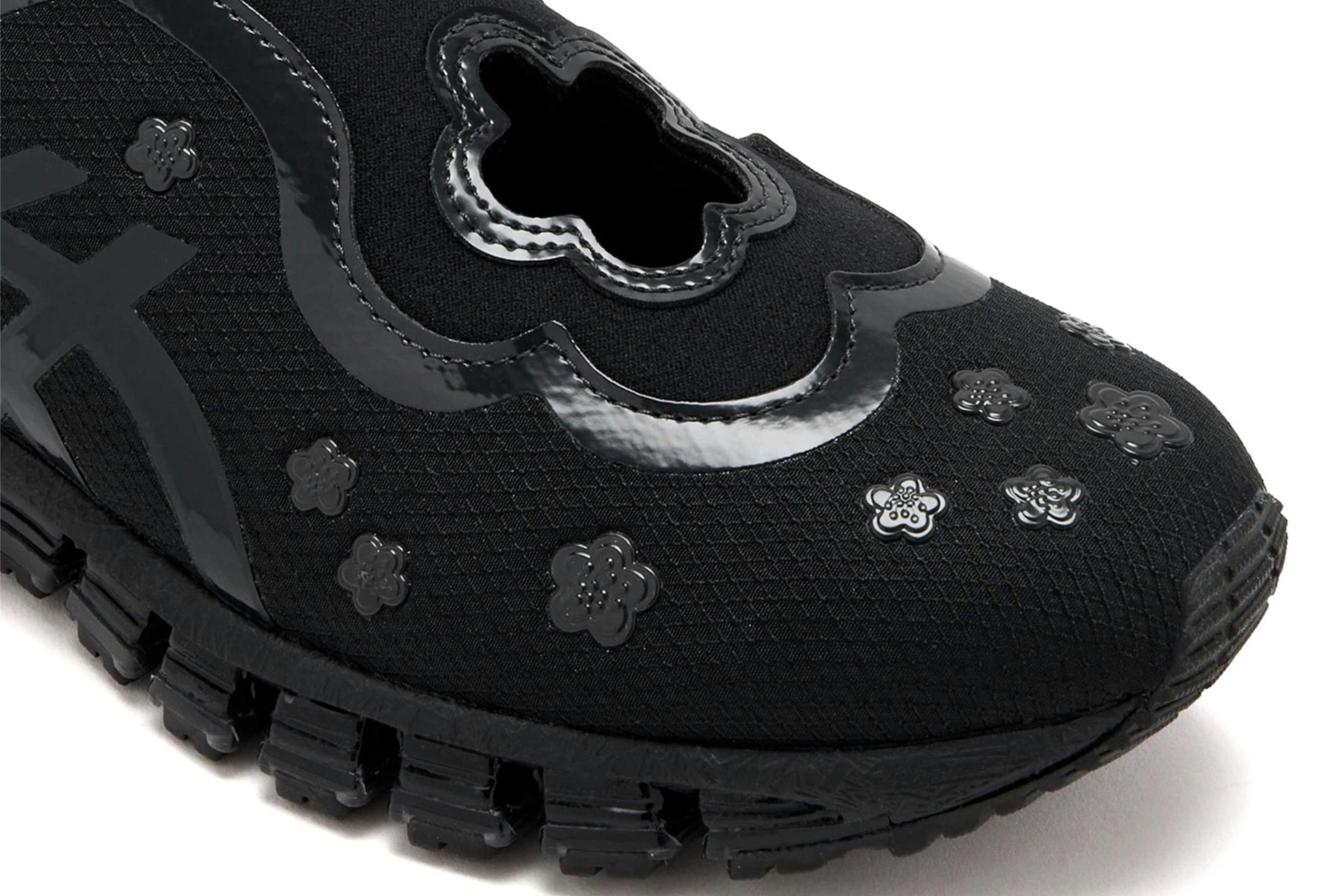
The latest collaboration between Copenhagen-based designer Cecilie Bahnsen and ASICS arrives as a laceless, floral-adorned reworking of the GEL-QUANTUM 360 — a silhouette historically associated with maximum cushioning and high-performance running. By replacing the shoe's conventional lacing system and rigid upper with stretchy neoprene and signature floral cutouts, the partnership continues to test a proposition that has quietly gained traction across the footwear industry: that technical infrastructure and romantic aesthetics are not mutually exclusive.
Available in monochrome pink and black colorways at $264, the slip-on retains the original GEL-QUANTUM 360's cushioned sole unit while discarding nearly every visual cue that would identify it as an athletic shoe. The result is a hybrid object — part performance platform, part artisanal slipper — that sits at the center of what the fashion press has termed the "girlcore" sneaker trend.
From Subculture to Market Category
The Bahnsen-ASICS partnership, which dates to 2022, did not invent the idea of feminizing athletic footwear. Ballet flats and fashion sneakers have coexisted for decades. What the collaboration has done, however, is provide a consistent design language for a specific consumer appetite: the desire for hyper-feminine motifs applied to shoes that retain genuine structural performance. Earlier entries in the series reimagined the GT-2160 as a ballet-inspired silhouette, and the progression to the GEL-QUANTUM 360 suggests an expanding ambition — moving from a relatively slim running shoe to one of ASICS' most maximalist platforms.
This trajectory mirrors a broader pattern in the sneaker market. Over the past several years, collaborations between fashion designers and athletic brands have shifted from limited-edition curiosities to reliable commercial formats. Brands like New Balance, Salomon, and ASICS have each cultivated rosters of external creative partners whose work serves a dual function: generating cultural relevance in fashion circles while introducing heritage silhouettes to audiences who might never visit a running store. Bahnsen's role within ASICS' portfolio is distinctive because her interventions are among the most visually radical — few other collaborators strip a shoe's identity down to its sole unit and rebuild the upper from scratch.
The "girlcore" label itself reflects a wider cultural current. Across fashion, interior design, and digital aesthetics, a renewed embrace of overtly feminine visual codes — florals, pastels, soft textures, ribbon details — has emerged as a counterpoint to the utilitarian and minimalist tendencies that dominated much of the previous decade. In footwear specifically, this has translated into demand for shoes that look delicate but perform like athletic equipment, a combination that was largely absent from the market before collaborations like Bahnsen's demonstrated its viability.
The Strategic Logic of Prettification
For ASICS, the partnership carries strategic weight beyond any single product drop. The Japanese brand has spent the past few years repositioning itself as a credible player in the fashion-adjacent sneaker space, a territory long dominated by Nike and Adidas. Collaborations with designers like Bahnsen, alongside partnerships with other fashion-forward names, have helped ASICS build cultural capital among consumers who evaluate shoes on aesthetic terms first and performance specifications second.
The tension embedded in this strategy is worth noting. Technical sneaker brands derive their authority from engineering credibility — gel cushioning systems, motion-control features, laboratory-tested outsoles. Each time a collaboration subordinates those visible engineering cues to decorative elements, it risks diluting the functional identity that made the base product desirable in the first place. Bahnsen's approach navigates this by preserving the sole unit intact, effectively splitting the shoe into two legible layers: performance below, poetry above.
Whether this formula represents a durable category or a cyclical aesthetic moment remains an open question. The commercial success of successive Bahnsen-ASICS releases suggests genuine demand, but fashion's appetite for feminized utility will eventually encounter the same gravitational pull toward novelty that reshapes every trend. The more interesting question may be what happens to the technical sneaker itself — whether the "softening" pioneered by collaborations like this one permanently expands the design vocabulary available to performance footwear, or whether it remains confined to the collaboration economy, a parallel track that never fully merges with the mainline.
With reporting from Highsnobiety.
Source · Highsnobiety