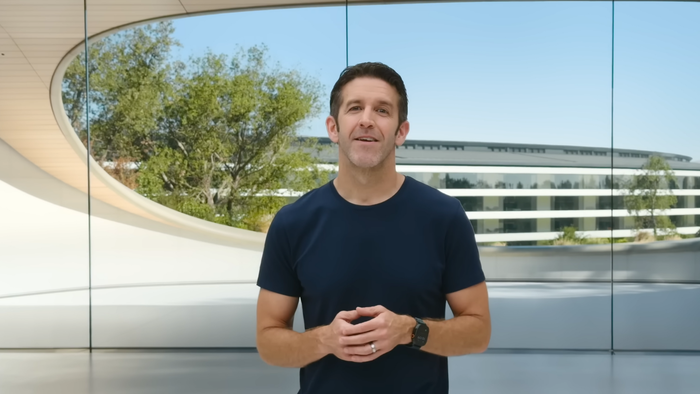
Apple announced on Monday that John Ternus, the company's Senior Vice President of Hardware Engineering, will succeed Tim Cook as chief executive on September 1. The transition marks the first leadership change at the helm of the world's most valuable company since 2011, when Cook himself replaced co-founder Steve Jobs during a period of profound uncertainty about whether Apple could sustain its creative momentum without its visionary leader. Cook answered that question decisively — under his stewardship, Apple's annual revenue more than tripled and its market capitalization crossed thresholds that no public company had reached before.
Ternus, a mechanical engineer who joined Apple in 2001, has spent more than two decades inside the hardware organization, rising to oversee the development of the iPhone, iPad, Mac, and most recently the Apple Vision Pro spatial computing headset. Cook will transition to the role of Executive Chairman, and Arthur Levinson, the current non-executive chairman, will move to Lead Independent Director. The two executives plan to work closely through the summer before the formal handover.
From supply chain to silicon: what the choice signals
CEO successions at companies of Apple's scale are rarely just personnel decisions; they are strategic declarations. When the board chose Cook in 2011, the implicit message was that operational discipline and supply-chain mastery would matter more than product showmanship in scaling a hardware business to global dominance. That bet paid off. Cook turned Apple's operations into a competitive moat — negotiating component exclusivity, building out retail, and orchestrating a services ecosystem that now generates revenue comparable to a Fortune 50 company on its own.
The selection of Ternus sends a different signal. His career has been defined not by logistics or finance but by the physical objects Apple ships. In an era when the company faces simultaneous bets on spatial computing, custom silicon, and devices that must increasingly integrate on-device artificial intelligence, the board appears to have concluded that the next chapter demands a leader whose instincts are rooted in engineering trade-offs rather than supply-chain optimization. The parallel to the Jobs-to-Cook transition is instructive but imperfect: Cook was chosen to institutionalize what Jobs had created; Ternus is being asked to extend a product portfolio into categories that do not yet have proven market demand.
The challenges waiting on the other side of September
Ternus inherits a company in a position of extraordinary financial strength but facing questions that money alone cannot resolve. The Apple Vision Pro, the most ambitious hardware project launched under Cook, has generated admiration for its engineering but has yet to demonstrate mass-market viability. The broader mixed-reality category remains nascent, and whether spatial computing follows the trajectory of the iPhone or the trajectory of Google Glass is still an open question.
Simultaneously, Apple's competitive environment in artificial intelligence has shifted. Rivals have moved aggressively to embed large language models and generative AI capabilities into their platforms, and Apple's approach — emphasizing on-device processing and privacy — carries both philosophical appeal and practical constraints. A hardware-minded CEO may be well positioned to push the integration of AI into silicon and sensor design, but the software and services layers that increasingly define user experience will demand equal attention.
There is also the question of culture. Apple's internal mythology prizes the intersection of technology and liberal arts, a phrase Jobs repeated often and that Cook preserved as institutional doctrine. Ternus now carries the responsibility of sustaining that ethos while managing a workforce and product line of vastly greater complexity than anything Jobs oversaw. The Cook era proved that Apple could thrive under a leader whose genius was organizational rather than creative. Whether the company now needs a return to product-led intuition, or something else entirely, is the question the Ternus era will be measured against.
The transition has been structured to minimize disruption — Cook's continued presence as Executive Chairman provides a safety net of institutional knowledge and investor confidence. But the deeper tension is structural, not personal. Apple must decide how much of its future lies in refining the categories it already dominates and how much depends on creating new ones. That Ternus, the person who built the hardware, is now the person who must answer that question tells its own story.
With reporting from Canaltech.
Source · Canaltech