For years, the Adidas Samba defined the intersection of sportswear and street culture — a flat-soled, gum-bottomed silhouette rooted in 1950s indoor football that became, through sheer repetition and celebrity adoption, one of the most visible shoes on earth. Its dominance was a case study in archival mining: take a dormant heritage model, reintroduce it through the right collaborators, and let the fashion cycle do the rest. But the strategy that made the Samba ubiquitous also made it vulnerable to fatigue. Adidas now appears to be placing a different bet — one that swaps nostalgia for engineering and repositions the brand's marathon-grade Adizero line as the vehicle for its next chapter in high-fashion relevance.
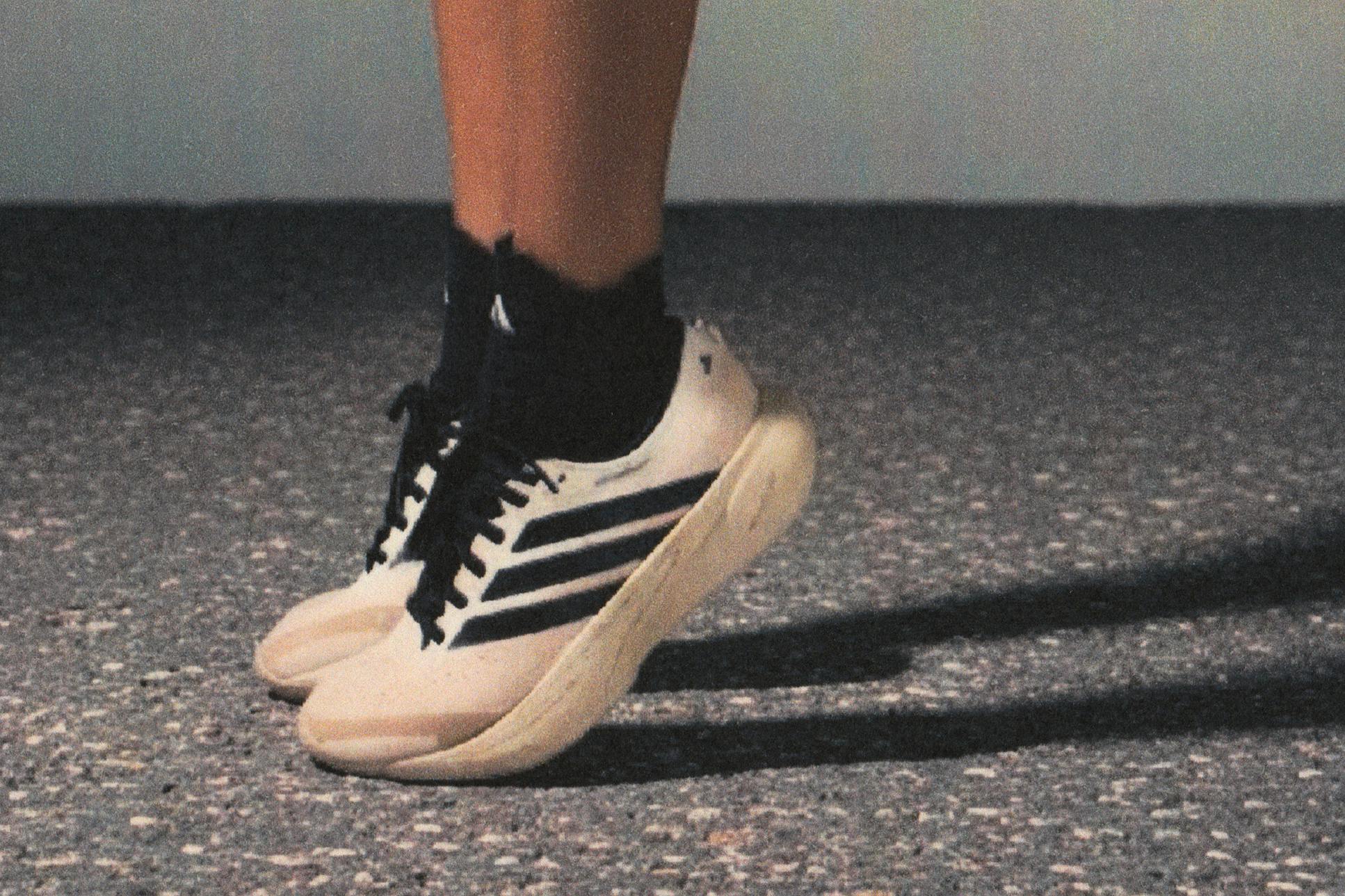
The pivot is not subtle. A succession of collaborations has systematically reframed the Adizero platform — originally developed for competitive distance running — as a credible object of design desire. Grace Wales Bonner, the British designer whose work with Adidas helped propel the Samba into cultural ubiquity, has turned her attention to the Adizero's origins, reissuing the line's 2008 debut model in its signature golden-yellow. Kith, the New York-based retail operation with considerable influence over sneaker taste, has stripped back the Adizero Boston into a minimalist palette that signals sophistication rather than split times. And Pharrell Williams has introduced a $1,000 Adizero "concept" shoe, placing Adidas' most advanced engineering squarely in the luxury artifact category.
From the Archive to the Laboratory
The shift reflects a broader tension in the sportswear industry between heritage-driven product cycles and technology-forward positioning. For much of the past decade, the dominant playbook among major athletic brands involved excavating old silhouettes, applying premium materials or limited colorways, and selling them at elevated price points. Nike's Dunk, New Balance's 550, and Adidas' own Samba all followed this arc. The approach works — until the market saturates and the silhouette loses its signaling power.
Performance technology offers a different kind of scarcity. Where archival models derive value from cultural memory, technical platforms derive it from R&D investment and functional credibility. The Adizero line carries the legitimacy of actual competitive use: it is the family of shoes worn by athletes chasing world records in major marathons. That provenance is harder to replicate and harder to exhaust than a retro shape. By routing fashion collaborations through this platform, Adidas is attempting to build desirability on a foundation that refreshes with each engineering cycle rather than each nostalgic revival.
The Paris Olympics provided a visible proof point. Noah Lyles secured gold wearing shoes designed through Y-3, Yohji Yamamoto's long-standing avant-garde partnership with Adidas. The moment fused competitive legitimacy with design credibility in a single televised image — the kind of brand event that no amount of lifestyle marketing can manufacture.
The Risk in the Pivot
The strategy is not without complication. Performance footwear and fashion operate on fundamentally different value logics. Fashion prizes novelty, narrative, and aesthetic coherence; performance prizes measurable improvement and functional integrity. When a luxury collaborator alters a technical shoe for aesthetic purposes, the result can read as neither fully functional nor fully fashionable — an uncanny valley of product design that satisfies no audience completely.
There is also the question of whether the broader consumer market, beyond sneaker enthusiasts and fashion-adjacent buyers, will follow. The Samba succeeded in part because it was approachable: flat, simple, legible as a casual shoe. The Adizero's aggressive geometries and visible cushioning systems carry a different visual language — one that reads as intentional and technical, but also more niche.
Adidas is effectively wagering that the cultural center of gravity in sneakers is migrating from the sidewalk to the track, from comfort in the familiar to fascination with the engineered. Whether that thesis holds depends on whether performance technology can sustain the kind of emotional resonance that archival silhouettes generated — or whether the lab coat proves less seductive than the vintage jersey once the novelty fades.
With reporting from Highsnobiety.
Source · Highsnobiety