In the landscape of contemporary Japanese fashion, where meticulous craftsmanship often borders on the monastic, the Tokyo-based label NICENESS occupies a distinctive position. Founded in 2017 by Hirokazu Goh, the brand has built a following for garments that are technically demanding yet aesthetically playful — a combination that sounds simple but proves difficult to sustain without tipping into either preciousness or irony. According to Takahiro Ito, one of the label's creative leads, the goal is to bypass the "heavy" or "overly serious" atmosphere that typically accompanies high-end artisanal production.
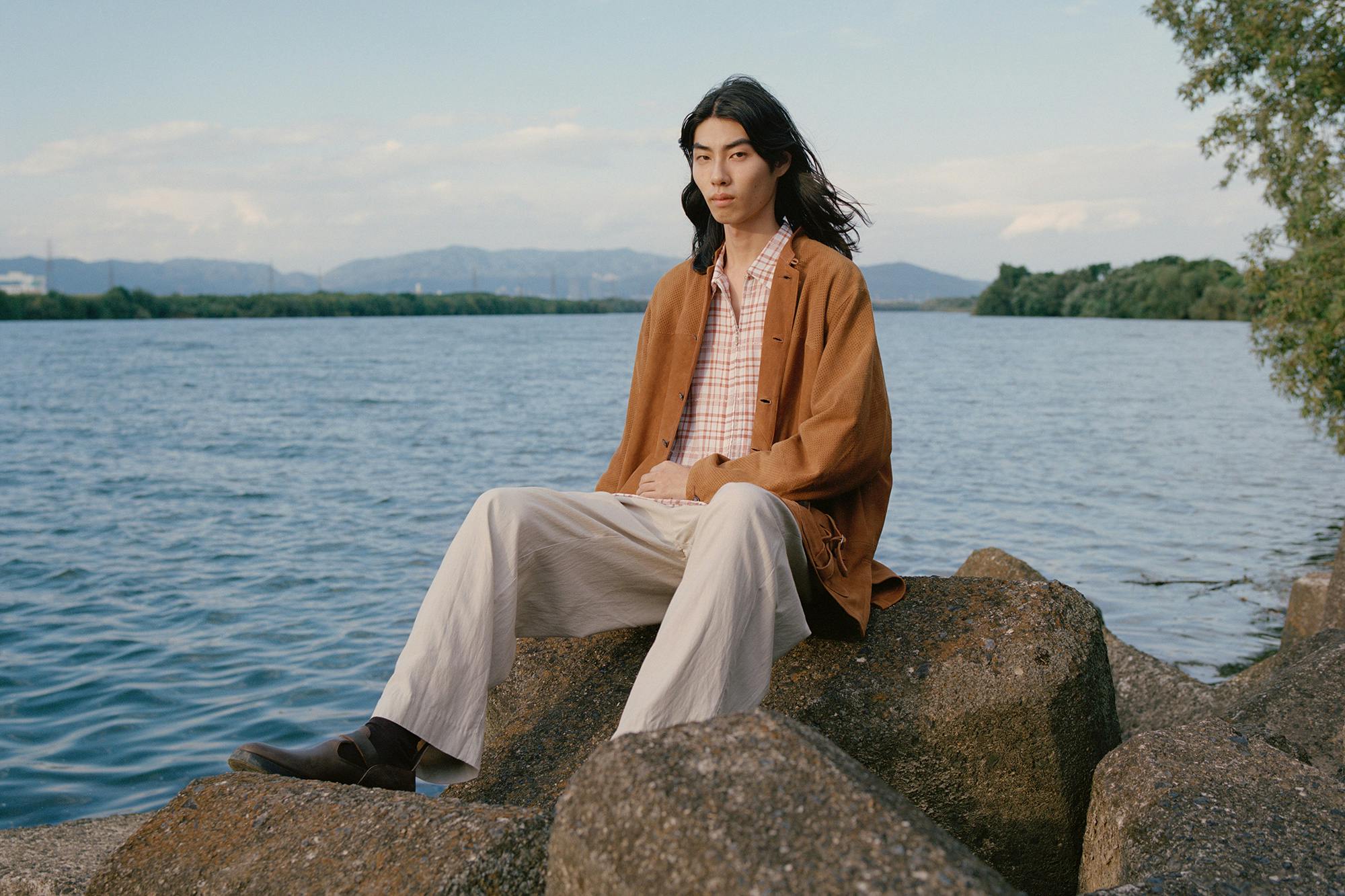
The label's Spring/Summer 2026 collection, titled "Folklash," serves as the latest articulation of that ethos. Its silhouettes pull from 1950s rockabilly, 1970s glam, and 1990s alternative dance culture, producing a visual language that feels both archival and improvised. Pieces range from Himalayan sheepskin jackets to technical wool balloon coats, each filtered through a DIY sensibility reminiscent of 1990s Tokyo street style — a period when Harajuku's sidewalks functioned as an open-air design laboratory.
Craft Without Cathedral
Japanese fashion has long carried an association with near-spiritual devotion to process. Labels such as Visvim, Kapital, and the broader Ura-Harajuku lineage established a template in which the story of how a garment is made — the dye bath, the hand-stitching, the obscure regional textile — becomes inseparable from the garment's identity. That tradition has produced extraordinary work, but it also created a default register: reverent, austere, and occasionally self-serious.
NICENESS operates within this tradition without fully subscribing to its tone. The brand uses Kurume Kasuri, a traditional Japanese fabric requiring a complex 30-step production process that involves hand-binding threads before dyeing to create intricate patterns. The technique dates back over two centuries in the Kurume region of Fukuoka Prefecture and remains one of the more labor-intensive textile practices still active in Japan. Yet in NICENESS's hands, the fabric appears in garments shaped by subcultural references rather than heritage reverence. The craft is present; the solemnity is not.
This tonal shift matters because it addresses a tension familiar across luxury fashion: the gap between production narrative and wearing experience. Many heritage-oriented labels ask the consumer to appreciate the process intellectually. NICENESS appears more interested in whether the garment feels good on the body and looks right in the context of a life actually lived.
Subcultural Collage as Design Method
The eclecticism of "Folklash" is not random. Rockabilly, glam, and rave culture share a common thread — each represents a moment when a subculture used clothing as a form of self-invention, often by repurposing existing codes in unexpected combinations. By layering these references, NICENESS positions itself less as a revivalist project and more as a participant in the long tradition of subcultural bricolage.
This approach has precedent in Tokyo's fashion ecosystem. Designers from Rei Kawakubo to Hiroshi Fujiwara have drawn on the city's unique capacity to absorb, remix, and re-export global style vocabularies. What distinguishes NICENESS is the insistence on pairing that remix instinct with artisanal production methods that most contemporary labels would consider impractical at their price point and scale.
The resulting garments — described by the label as "luxurious staples" — aim to be deeply considered but never precious. Louche, relaxed tailoring softens the technical rigor of the materials, creating a deliberate friction between how the clothes are made and how they present themselves. A sheepskin jacket built with exacting skill reads not as a statement of mastery but as something closer to a well-loved vintage find.
Whether this balance proves commercially durable remains an open question. The economics of labor-intensive textile production sit uneasily alongside the pace of contemporary fashion cycles, and brands that depend on artisanal supply chains face constraints that scale-oriented competitors do not. At the same time, the appetite for garments that carry genuine material substance — rather than brand mythology alone — continues to grow among a segment of consumers resistant to both fast fashion and conventional luxury signaling. NICENESS sits precisely at that intersection, and the forces pulling in each direction show no sign of resolving.
With reporting from Highsnobiety.
Source · Highsnobiety