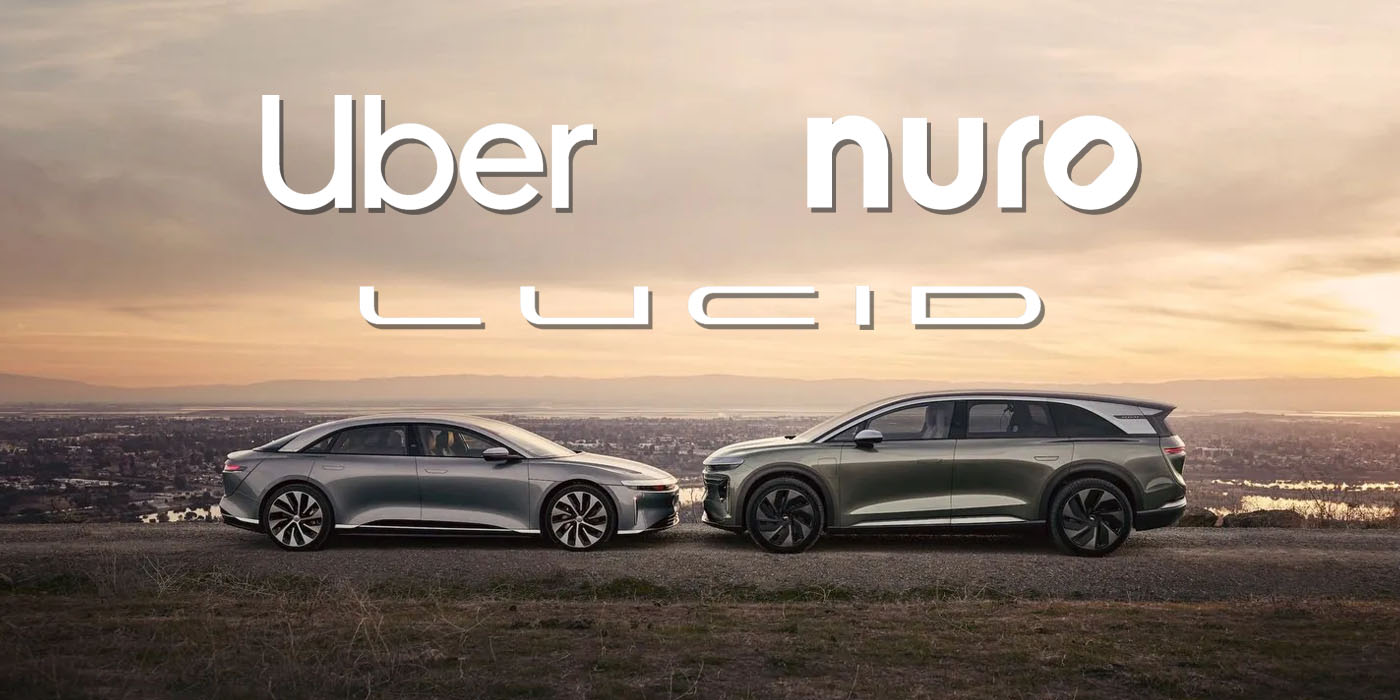
Uber Technologies has acquired an 11.5% stake in Lucid Group, cementing a strategic alliance that extends well beyond a typical commercial partnership. According to a recent SEC filing, Uber now holds 37.7 million shares of the electric vehicle manufacturer, a position built through a $500 million capital infusion that makes the ride-hailing company one of Lucid's largest shareholders — second only to the Saudi Public Investment Fund.
The investment arrives at a consequential moment for both companies. Lucid, which has struggled with the capital-intensive realities of scaling EV production, gains a financial lifeline and a committed commercial partner. Uber, which has spent years positioning itself as a platform rather than a vehicle operator, now holds a material equity interest in the hardware layer of its business — a notable reversal for a company that once divested its own self-driving unit.
From Platform to Stakeholder
Uber's relationship with vehicle manufacturing has followed an uneven arc. The company launched an ambitious autonomous vehicle program in the mid-2010s, investing heavily in self-driving technology before selling that division to Aurora Innovation amid mounting losses and safety concerns. The sale was widely interpreted as a strategic retreat: Uber would focus on software, logistics, and marketplace dynamics, leaving the hard problem of building cars and autonomous systems to others.
The Lucid stake suggests a more nuanced posture. Rather than attempting to build vehicles or develop full-stack autonomy in-house, Uber is using its balance sheet to secure influence over a manufacturer whose technology aligns with its long-term fleet requirements. Lucid's powertrain engineering — known for high energy efficiency and extended range — addresses practical constraints that matter in ride-hailing: vehicles that spend long hours on the road need to minimize downtime at charging stations.
The two companies have already disclosed a collaborative effort centered on robotaxis, with the stated aim of pairing Uber's demand network with Lucid's vehicle platform. The structure echoes partnerships that other mobility platforms have pursued with autonomous vehicle developers, but the equity component adds a layer of commitment that arms-length commercial agreements typically lack. An 11.5% stake gives Uber meaningful influence over Lucid's strategic direction — board representation, input on product roadmaps, and alignment of incentives that a supply contract alone cannot guarantee.
The Competitive Landscape Shifts
The investment also repositions Uber within a competitive landscape that has grown more complex. Waymo continues to expand its autonomous ride-hailing operations. Tesla has signaled its own robotaxi ambitions. Chinese players, including platforms linked to Baidu's Apollo program, are scaling driverless services in select markets. For Uber, the risk of disintermediation — of becoming a legacy dispatch layer while others control the vehicles and the autonomy stack — has been a persistent strategic concern.
By taking a significant position in Lucid, Uber hedges against that scenario without bearing the full cost and risk of vertical integration. It gains a seat at the table in vehicle development while preserving the asset-light model that has defined its economics. The question is whether this hybrid approach — part investor, part platform, part fleet architect — can move quickly enough to keep pace with competitors that control more of the stack.
For Lucid, the calculus is more straightforward but no less consequential. The company has burned through capital as it ramps production of its luxury sedans and prepares additional models. A $500 million infusion from a partner with a clear commercial use case for its vehicles is more strategically valuable than equivalent funding from a passive investor. It also signals to the market that Lucid's technology has attracted a sophisticated buyer with direct insight into the operational demands of high-utilization fleets.
What remains unresolved is the timeline. Robotaxi deployments at meaningful scale require regulatory clearance, proven safety records, and consumer acceptance — none of which follow predictable schedules. Uber now has capital tied up in a company whose near-term financial performance depends on luxury EV sales, while the strategic rationale for the investment rests on an autonomous future that has not yet arrived. Whether the partnership delivers returns commensurate with the commitment depends on variables that neither company fully controls.
With reporting from Electrek.
Source · Electrek