At Milan Design Week 2026, Iris Ceramica Group has used its Fuorisalone presence to stage a quiet provocation: an installation titled "The Humans Behind," located at the company's showroom on Via Santa Margherita, that strips away the seamless finish of industrial ceramics to foreground the creative labor and personal identities of their makers. The event also marks a decade of collaboration between the Italian ceramics manufacturer and Diesel Living, the lifestyle arm of the fashion house now under the creative direction of Glenn Martens.
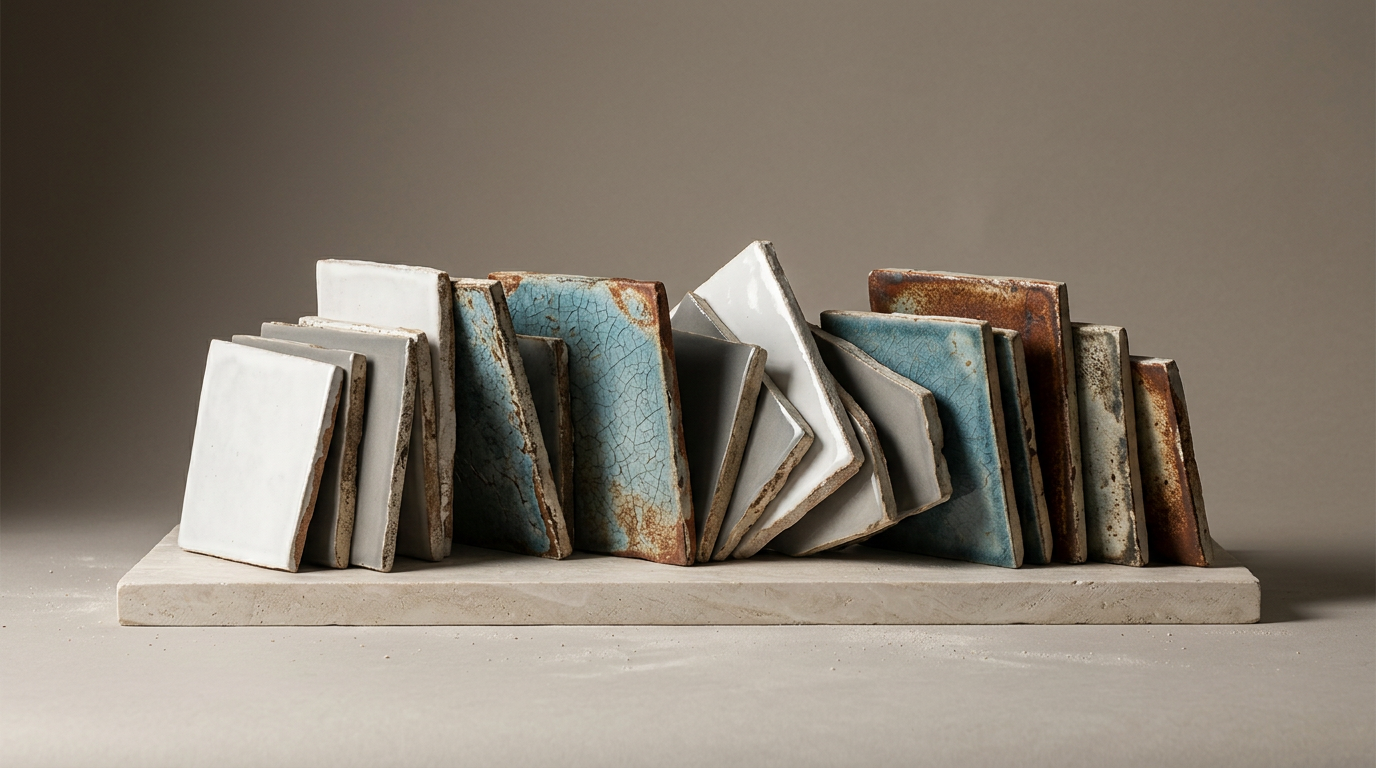
The new collections debuted at the showcase — including pieces called "Distressed Rug" and "Acid Majolica" — signal a shift in how the partnership frames itself. What began as an aesthetic crossover between streetwear irreverence and high-end ceramic production has matured into something closer to a sustained material argument: that industrial surfaces can function as cultural artifacts, not merely functional building components.
From Crossover to Dialogue
The collaboration between Iris Ceramica and Diesel Living, launched in the mid-2010s, arrived at a moment when fashion-to-home crossovers were largely exercises in brand extension. Luxury houses licensed their names onto furniture and finishes with varying degrees of creative commitment. The Diesel partnership distinguished itself by engaging directly with the manufacturing constraints and possibilities of ceramics — a medium defined by kiln temperatures, glaze chemistry, and dimensional tolerances that leave little room for superficial styling.
Over the past decade, the collaboration has produced collections that translate fashion's visual vocabulary into durable architectural surfaces. The appointment of Glenn Martens as Diesel's creative director brought a different sensibility to the table. Martens, known for his work at Y/Project and his tenure at the helm of Diesel's runway collections, has pushed the brand toward deconstruction and textural experimentation. That sensibility is legible in the new ceramic pieces. "Distressed Rug" transposes the worn, layered textures of antique Persian carpets into a permanent ceramic medium — a move that compresses centuries of textile heritage into a surface designed for contemporary interiors. "Acid Majolica" takes the tradition of Portuguese tin-glazed earthenware and distorts it through a contemporary lens, preserving the decorative grammar of majolica while undermining its historical formality.
These are not decorative novelties. They represent a specific design thesis: that the most resonant surfaces are those that carry legible traces of cultural history, even when produced at industrial scale.
The Human Dimension in an Automated Era
The installation's most pointed gesture may be its integration of a live podcast series, broadcast from the showroom window and featuring voices from fashion, design, and haute cuisine. The format is modest — conversation, not spectacle — but the placement is deliberate. By situating live human exchange within the physical space of product display, the installation insists on the presence of individual creative agency behind materials that might otherwise read as anonymous industrial output.
This emphasis on the human dimension arrives at a moment of particular tension in design and manufacturing. Advances in digital fabrication, parametric design, and AI-assisted material development are accelerating the capacity to produce complex surfaces with minimal human intervention. The ceramics industry itself has undergone significant automation over the past two decades, with digital inkjet printing enabling photorealistic reproduction of textures — stone, wood, fabric — onto ceramic tiles at scale. The question of what, exactly, constitutes "the human" in such a production chain is not rhetorical. It is a live strategic and philosophical problem for any manufacturer positioning its products above commodity status.
Iris Ceramica Group's framing suggests one answer: that the human contribution resides not in the physical act of making but in the cultural narrative embedded in design decisions — the choice to reference Persian carpets or Portuguese majolica, the willingness to distort tradition rather than merely replicate it. Whether that framing holds as automation deepens its reach into the creative process itself remains an open question. The installation at Via Santa Margherita does not resolve it. It stages the tension — between heritage and technology, between authorship and industrial reproduction — and leaves the visitor to sit with it.
With reporting from Designboom.
Source · Designboom