BRABUS, the German tuning house synonymous with high-performance modifications of Mercedes-Benz vehicles, has entered the electric two-wheel market through a collaboration with French manufacturer DAB Motors. The partnership produced a three-bike series unveiled at Milan Design Week 2026: the DAB 1α BRABUS, the BRABUS URBAN E, and a limited First Edition variant. Together, the motorcycles represent a deliberate pivot for a brand built on internal combustion excess — toward silent, urban-oriented electric mobility wrapped in an unexpectedly vivid design language.
The series is built on DAB Motors' existing 1α electric architecture, powered by a 72-volt lithium-ion battery paired with a carbon belt drive. With a top speed of 120 km/h and an urban range of up to 150 km, the bikes are calibrated for metropolitan commuting rather than highway performance. Charging accommodates daily routines: a full battery via standard home connections takes under four hours.
Monochromatic as Strategy
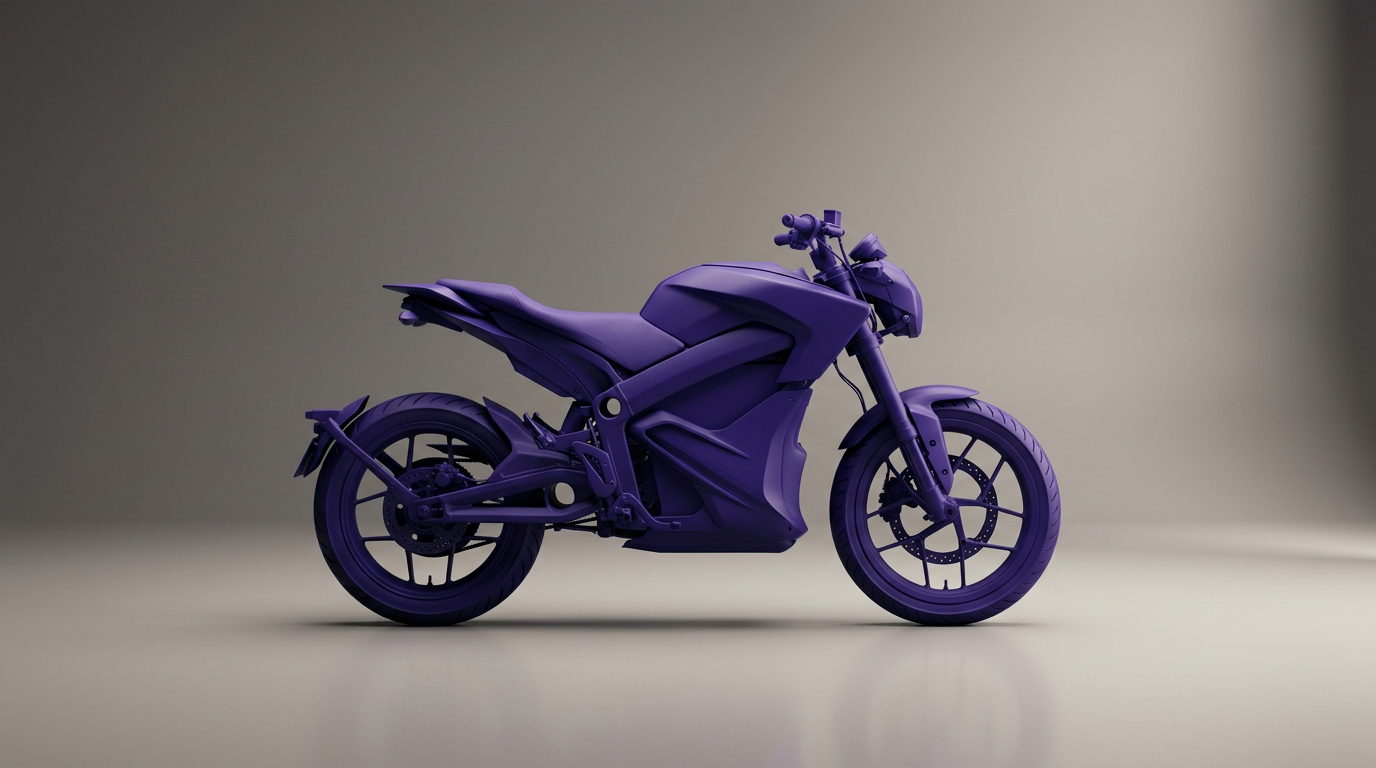
What distinguishes the collaboration from the growing field of urban electric motorcycles is not the powertrain but the surface. BRABUS's traditional aesthetic — dark carbon fiber, restrained tones, an almost paramilitary severity — has been partially set aside. The First Edition introduces four saturated colorways: Peetch, Desert Sand, Superviolet, and Fusion Red. These are not accent colors applied to trim or detailing. Each tone envelops the motorcycle entirely, extending from bodywork to seat upholstery, creating a continuous monochromatic field that eliminates the visual boundaries between component and frame.
The approach inverts a convention in motorcycle design, where color typically follows functional segmentation — tank in one finish, fender in another, seat in a third. By collapsing these distinctions, the BRABUS-DAB series treats the motorcycle less as an assembly of parts and more as a single sculptural object. The effect is closer to product design or fashion than to traditional automotive styling, a choice that aligns with the context of its debut: Milan Design Week, not a motor show.
That venue choice is itself a signal. Milan Design Week has become an increasingly common stage for mobility brands seeking to position vehicles as lifestyle objects rather than engineering specimens. Presenting electric motorcycles alongside furniture, lighting, and installation art reframes the product's competitive set. The bikes are not measured against a Ducati or a Zero SR/F but against the broader ecosystem of designed urban objects.
BRABUS Beyond the Engine Bay
For BRABUS, the partnership raises a broader strategic question. The company's identity has been inseparable from the internal combustion engine — specifically, from the act of extracting more power from existing Mercedes-Benz platforms. As the automotive industry shifts toward electrification, tuning houses face an existential challenge: when the powertrain becomes a sealed software-defined unit, what remains to modify?
One answer, visible in this collaboration, is that the brand migrates from engineering differentiation to design and lifestyle curation. BRABUS contributes not a reworked motor or a recalibrated suspension but a color philosophy, a material sensibility, and a brand halo that repositions an existing electric platform. DAB Motors, a relatively small manufacturer based in Bordeaux, gains access to BRABUS's established audience of affluent performance enthusiasts. The exchange is asymmetric but mutually legible.
This pattern has precedents. Luxury and performance brands across the automotive sector have increasingly entered collaborations where their contribution is aesthetic authority rather than mechanical intervention. The risk is dilution — a brand known for substantive engineering becoming a licensing operation. The opportunity is relevance in a market where the powertrain is commoditizing and the surface, the experience, and the brand narrative carry disproportionate weight.
Whether the BRABUS-DAB series sells in meaningful volume matters less than what it signals about the company's direction. The motorcycles are modest machines by BRABUS standards — city commuters, not autobahn predators. But they suggest a version of the brand that can exist without a V8 at its center, one where saturation of color substitutes for saturation of horsepower. Whether that trade sustains the mythology BRABUS has built over four decades, or quietly erodes it, depends on how far the pivot extends — and how much of the original identity survives the crossing.
With reporting from Designboom.
Source · Designboom