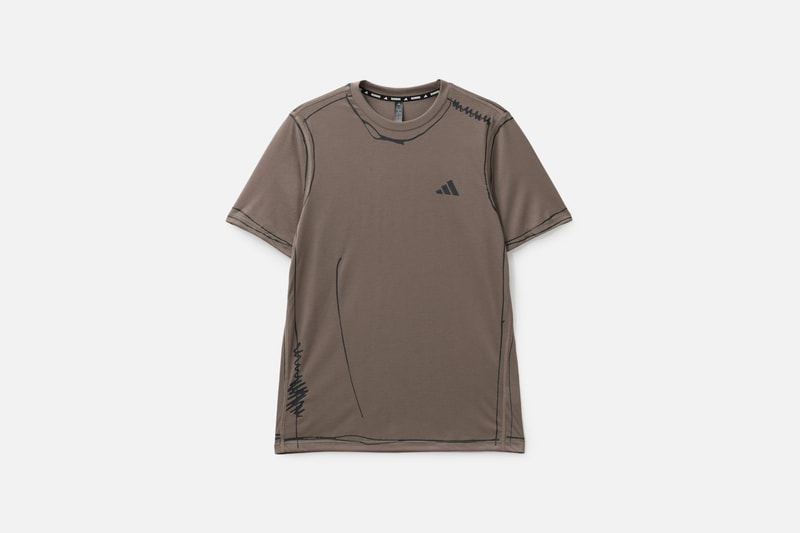
The evolution of Adidas Originals serves as a case study in how a legacy brand maintains relevance by curating its own history. As the heritage arm of the German activewear giant, the line has moved beyond the gym to occupy a specific niche in the urban landscape, where the functional requirements of sport meet the aesthetic demands of modern streetwear. The latest arrivals at HBX — the Hong Kong-based retail platform known for its curation of global streetwear and contemporary fashion — offer a fresh lens through which to examine that strategy.
The current drop features iterations on established silhouettes like the Stan Smith, Superstar, and the more contemporary NMD_R1. Each model carries distinct provenance: the Stan Smith, originally a tennis shoe introduced in the early 1970s, became one of the best-selling sneakers of all time by virtue of its minimalist design; the Superstar, born on basketball courts in 1969, crossed into hip-hop culture in the 1980s through its adoption by Run-DMC; the NMD_R1, launched in 2015, represented Adidas's attempt to channel archival design language into a modern silhouette built on Boost cushioning technology. Together, these models illustrate a design philosophy rooted in continuity — each generation of product referencing the last while incorporating updated materials and construction.
Heritage as Strategic Asset
For sportswear companies operating at global scale, archive management has become a competitive discipline in its own right. Nike has its Dunk and Air Jordan rotations; New Balance cycles through its 99X series. Adidas Originals occupies a comparable position, but with a distinctive approach: rather than relying primarily on scarcity-driven hype cycles, the label treats its heritage catalog as a permanent collection, available in seasonal colorways and material updates that keep the product commercially active without exhausting consumer appetite.
This approach carries both advantages and risks. On one hand, it provides a stable revenue base anchored in consumer recognition. Silhouettes like the Superstar and Stan Smith require minimal marketing education — their cultural associations are already embedded. On the other hand, over-distribution has historically posed challenges for the brand. In the mid-2010s, market saturation of the Stan Smith and Superstar led to a period of declining desirability, prompting Adidas to pull back supply and redirect attention toward newer platforms. The tension between accessibility and exclusivity remains a persistent management challenge for any heritage-driven strategy.
Cultural Positioning Beyond Product
The product itself, however, tells only part of the story. Adidas Originals has built its contemporary identity through a network of cultural affiliations that extend well beyond athletic endorsement. Collaborations with designers like Alexander Wang and cultural figures like Pharrell Williams helped reposition the label at the intersection of fashion, music, and streetwear during the last decade. These partnerships served a dual function: they generated limited-edition product that drove media attention, and they signaled to a younger consumer base that the brand operated fluently in creative spaces beyond sport.
At the same time, Adidas maintains credibility through its long-standing associations with world-class athletes, including Lionel Messi and David Beckham. This dual footing — one foot on the pitch, one on the runway — is not unique to Adidas, but the brand has been notably deliberate in managing both channels simultaneously rather than privileging one over the other.
The broader question facing Adidas Originals is whether heritage curation can sustain momentum indefinitely, or whether it eventually encounters diminishing returns. Streetwear's appetite for archival product shows few signs of abating, but consumer attention is finite, and newer entrants — from Salomon's trail-inspired silhouettes to Asics's resurgence in fashion circles — are competing for the same cultural real estate. Whether the German label's deep archive proves to be an inexhaustible resource or a constraint on forward-looking design remains an open tension, and one worth watching as the market continues to shift.
With reporting from Hypebeast.
Source · Hypebeast