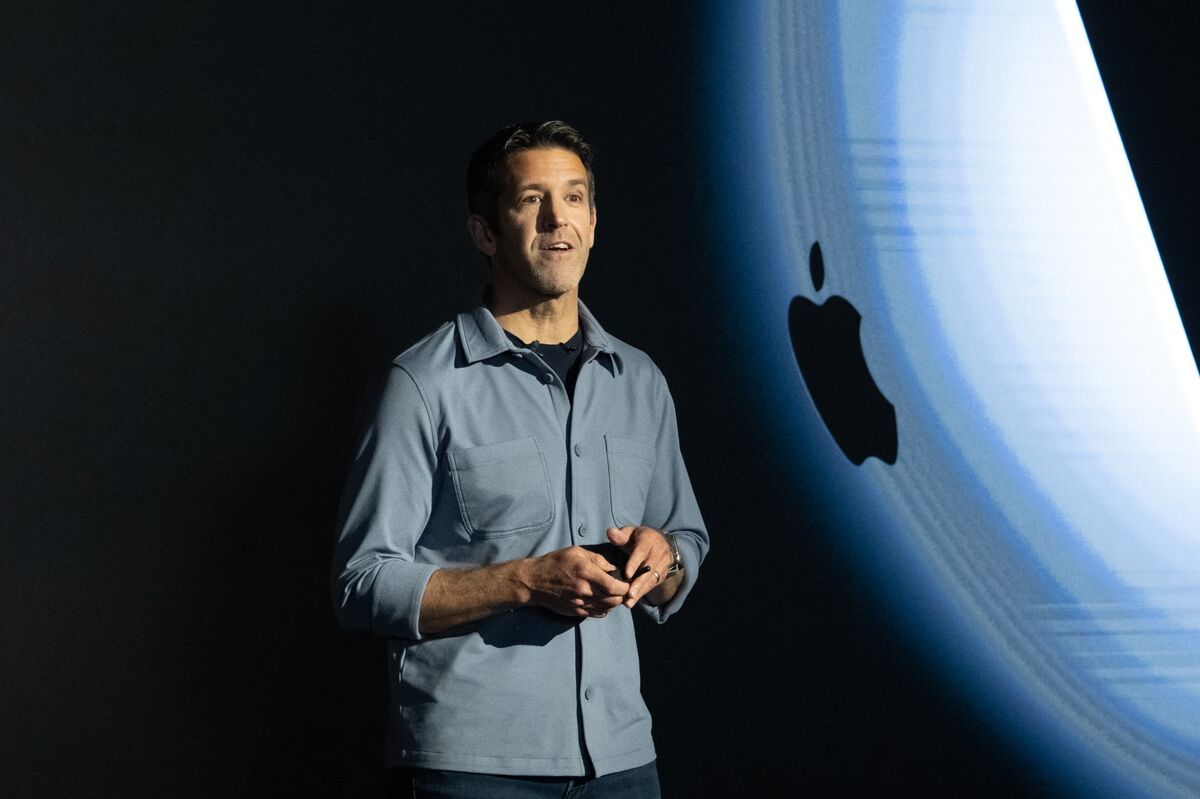
Apple Inc. announced that Chief Executive Officer Tim Cook will step down later this year, handing leadership to John Ternus, the company's senior vice president of hardware engineering. Cook will transition to the role of chairman, closing a 15-year tenure during which Apple reached a $4 trillion valuation. The succession marks the first leadership change at the top of the world's most valuable public company since Cook himself replaced co-founder Steve Jobs in 2011.
Ternus, who has overseen the development of Apple's hardware portfolio including the iPhone, iPad, Mac, and the company's mixed-reality headset, inherits a business that looks fundamentally different from the one Cook took over. Under Cook's stewardship, Apple expanded well beyond its core device lineup into wearables, video streaming, financial services, and advertising — transforming itself from a hardware maker into a platform company with deeply integrated services revenue.
The Cook legacy: from operator to architect
When Cook succeeded Jobs, the prevailing question was whether an operations executive could sustain the creative momentum of one of technology's most iconic founders. The answer, measured in financial terms, was unambiguous. Apple's market capitalization grew by an order of magnitude, and its services division — encompassing the App Store, Apple Music, iCloud, and Apple TV+ — became a business that, on its own, would rank among the largest software companies in the world.
Cook also reshaped Apple's supply chain and manufacturing relationships, deepening ties with Asian semiconductor partners while beginning a long-term effort to bring chip design fully in-house. The transition from Intel processors to Apple's own silicon, which began in 2020, is now widely regarded as one of the most consequential hardware decisions in the industry's recent history. It gave Apple tighter control over performance, power efficiency, and product differentiation across its entire lineup.
At the same time, Cook navigated a more complex geopolitical environment than any of his predecessors faced. Apple's dependence on Chinese manufacturing became a recurring point of tension amid trade disputes and pandemic-era disruptions. Efforts to diversify production toward India and Vietnam accelerated under his watch, though China remains central to the company's supply chain.
What Ternus inherits
The incoming CEO takes the helm at a moment when Apple faces a distinct set of strategic pressures. The smartphone market, Apple's largest revenue driver, has matured globally, with replacement cycles lengthening and unit growth flattening in most regions. Growth increasingly depends on services attach rates and the ability to open new hardware categories — a domain squarely within Ternus's background.
The choice of a hardware executive rather than a services or software leader signals where Apple sees its next chapter. The company's mixed-reality headset, its automotive ambitions (the scope and timeline of which remain subjects of persistent speculation), and the continued evolution of its silicon roadmap all sit at the intersection of hardware innovation and platform integration. Ternus's track record in shipping complex physical products positions him as a leader suited to that particular set of challenges.
CEO transitions at companies of Apple's scale are rare and consequential. Microsoft's handoff from Steve Ballmer to Satya Nadella in 2014 reshaped that company's strategic direction within a few years. Google's restructuring under Sundar Pichai similarly redefined priorities. Whether Ternus will pursue continuity or inflection remains to be seen — but the organizational signal of elevating a hardware leader, rather than a financial or services executive, is itself a statement of intent.
Cook's move to the chairman role suggests he will retain influence over governance and long-term strategy without directing daily operations. The arrangement echoes patterns seen at other major technology firms, where founders or long-tenured CEOs maintain board-level involvement during transitions. How much operational latitude Ternus will have in practice — and how quickly he puts his own stamp on product strategy — are among the questions that investors, employees, and competitors will be watching most closely.
With reporting from Bloomberg — Technology.
Source · Bloomberg — Technology