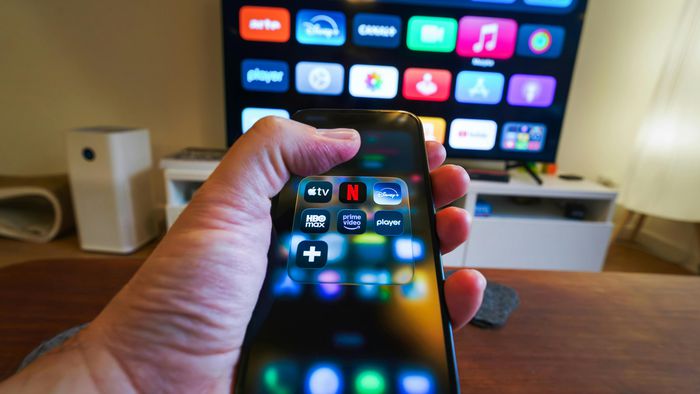
The physical remote, once a staple of the living room coffee table, is increasingly becoming a vestigial organ of the home entertainment system. For decades, the television experience was defined by the limitations of infrared technology — a rigid, line-of-sight requirement that demanded the user point a plastic wand directly at a sensor. Today, that paradigm has shifted toward the local network, turning the smartphone into a sophisticated, invisible tether for the modern screen. The change is not sudden, but the pace of consolidation has accelerated as manufacturer ecosystems mature and voice assistants become embedded in the default architecture of consumer electronics.
This transition is driven by platforms such as LG's ThinQ and Samsung's SmartThings, which move control from dedicated hardware to software applications. When a smartphone and a television share a Wi-Fi network, the interaction moves beyond simple volume adjustments; the phone becomes a high-fidelity interface capable of launching streaming services, managing deep system settings, and serving as a bridge for voice commands. The integration of Google Assistant and Amazon's Alexa represents the final step in this decoupling of hardware and control. By processing natural language through the smartphone's microphone, users can navigate complex streaming libraries without the friction of a directional pad.
From Infrared to IP: A Long Convergence
The infrared remote control entered mass adoption in the early 1980s, and its basic architecture remained remarkably stable for nearly four decades. It was cheap, reliable, and universally understood. But it was also dumb — a one-way transmitter with no feedback loop, no contextual awareness, and no capacity for software updates. The first meaningful challenge to this model came not from television manufacturers but from the smartphone industry itself. As handsets gained IR blasters in the early 2010s, apps like Peel Smart Remote demonstrated that a general-purpose device could replicate and even improve upon the dedicated remote. The IR blaster, however, was a transitional technology. Most smartphone makers quietly dropped it within a few product cycles, a signal that the future of device control lay not in replicating old signals but in leveraging IP-based communication over Wi-Fi and Bluetooth.
The shift to network-based control introduced something the infrared remote never offered: bidirectionality. A smartphone app can receive state information from the television — what is currently playing, which input is active, what firmware version is running — and adjust its interface accordingly. This feedback loop transforms the control experience from a series of blind commands into a responsive dialogue between devices. It also opens the door to automation: routines that dim lights, switch inputs, and launch a specific streaming profile based on time of day or user identity.
The Voice Layer and the Question of the Default Interface
Voice control adds another dimension to this shift, but its significance is less about the novelty of speaking to a screen and more about what it reveals regarding platform strategy. When a user issues a voice command through Google Assistant on an Android phone to control a Samsung television, at least three corporate ecosystems are in play: the phone's operating system, the assistant's cloud infrastructure, and the TV manufacturer's integration layer. Each of these actors has an interest in becoming the default interface — the layer the user thinks of first when interacting with home devices.
This competition for the default interface is not trivial. The entity that controls the primary interaction point gains privileged access to behavioral data, content recommendation, and, eventually, commerce. Television manufacturers understand this, which is why platforms like ThinQ and SmartThings are expanding beyond TV control into broader home automation — managing thermostats, cameras, and appliances. The smartphone, meanwhile, benefits from sheer ubiquity: it is the device already in the user's hand.
The "smart" designation of a television is no longer measured by its internal apps but by how seamlessly it disappears into the user's existing mobile ecosystem. What remains unresolved is whether this convergence ultimately favors the device maker, the operating system provider, or the voice assistant platform — three forces pulling in different directions, each with a credible claim to the center of the connected home.
With reporting from Canaltech.
Source · Canaltech