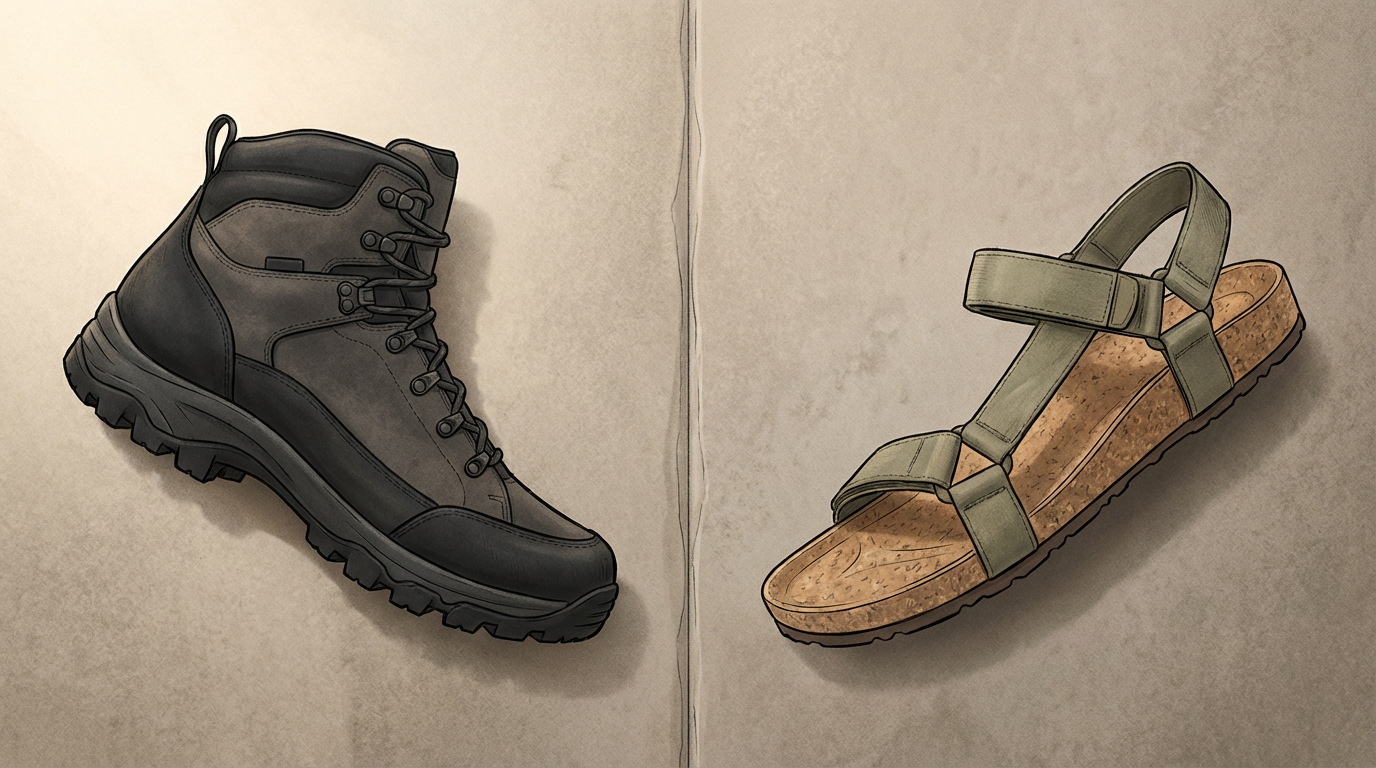
Blundstone has spent the better part of 150 years perfecting a singular silhouette: the Chelsea boot. The Tasmanian company's commitment to a specific form has transformed it into a cultural fixture — a brand that signals utility and permanence through a refusal to chase trends. The release of the #2698 Aerocork, however, marks a rare departure from that lineage. It is the company's first open-toe sandal, and it arrives at a moment when the broader footwear industry is undergoing a quiet but significant structural shift.
The $145 Aerocork trades Blundstone's signature rugged sole for a cork base, though it retains a vestige of its heritage in the form of water-resistant nubuck leather straps. Visually, the design leans closer to the aesthetic language of Birkenstock than to the heavy-duty workwear typically associated with the Australian outfit. It is a calculated move into the lifestyle sector, prioritizing breathability and leisure over the protective enclosure of a boot.
The Logic of Convergence
There is a curious symmetry unfolding in the footwear market. As Blundstone explores the open-toe space, Birkenstock — the definitive authority on the cork sandal — has been aggressively expanding into boots, sneakers, and closed-toe moccasins. The two brands, once occupying clearly distinct territories, are now moving toward each other's core categories.
This pattern is not unique to footwear. Heritage brands across consumer goods have historically faced a strategic tension between the depth of their signature product and the breadth required to sustain growth. A single-silhouette identity offers clarity and cultural resonance, but it also creates a ceiling. Seasonal variation, shifting consumer habits, and the sheer economics of retail distribution all exert pressure on brands to expand their assortments. The question is never whether to diversify, but when — and how far.
Blundstone's move carries particular weight because the brand has been unusually disciplined in resisting this pressure. While competitors routinely extended into adjacent categories over the past two decades, Blundstone largely held its position, iterating on colorways, leathers, and sole compounds within the Chelsea boot framework. The Aerocork represents a philosophical shift as much as a product one: an acknowledgment that the brand's audience may want something from Blundstone beyond what a boot can offer.
What Heritage Brands Risk — and What They Gain
The risk in such a move is well-documented. When a brand defined by a single product enters an adjacent category, it invites direct comparison with incumbents who have spent decades refining that space. Blundstone's cork sandal will inevitably be measured against Birkenstock's Arizona and Boston, products with deep consumer loyalty and decades of ergonomic development behind them. A heritage brand entering unfamiliar territory does not arrive with the same authority it commands at home.
But there is a countervailing force. Consumer identity in footwear has become increasingly fluid. The same person who wears Blundstone boots in winter may reach for a Birkenstock sandal in summer — and both brands know it. By offering a sandal, Blundstone is not necessarily trying to displace Birkenstock; it may be trying to prevent its own customers from leaving the ecosystem when the weather changes. The strategic goal is retention across seasons, not conquest of a new category.
Birkenstock's expansion into closed-toe silhouettes follows a similar logic in reverse. Its entry into boots and moccasins is an attempt to remain relevant in colder months, when open-toe sandals lose their functional appeal. Both brands are, in effect, trying to solve the same problem from opposite ends of the calendar.
What makes this convergence worth watching is the degree to which it tests the elasticity of brand identity. Blundstone's cultural equity is built on ruggedness, enclosure, and Tasmanian pragmatism. A cork sandal strains that narrative. Whether the Aerocork becomes a permanent fixture in the lineup or a one-season experiment may depend less on sales volume and more on whether consumers accept the brand's permission to occupy that space. Heritage, once stretched, does not always snap back.
With reporting from Highsnobiety.
Source · Highsnobiety