In Diamanti, Turkish-Italian filmmaker Ferzan Özpetek constructs a narrative that is as much about the mechanics of storytelling as it is about the stories themselves. The film opens with a meta-theatrical flourish: Özpetek himself, surrounded by twenty actresses in a backyard table read, declares his intent to celebrate the collective power of female labor. This prologue serves as a bridge into a fictionalized 1970s, where the labor of the screen is rendered through the rhythmic hum of sewing machines.
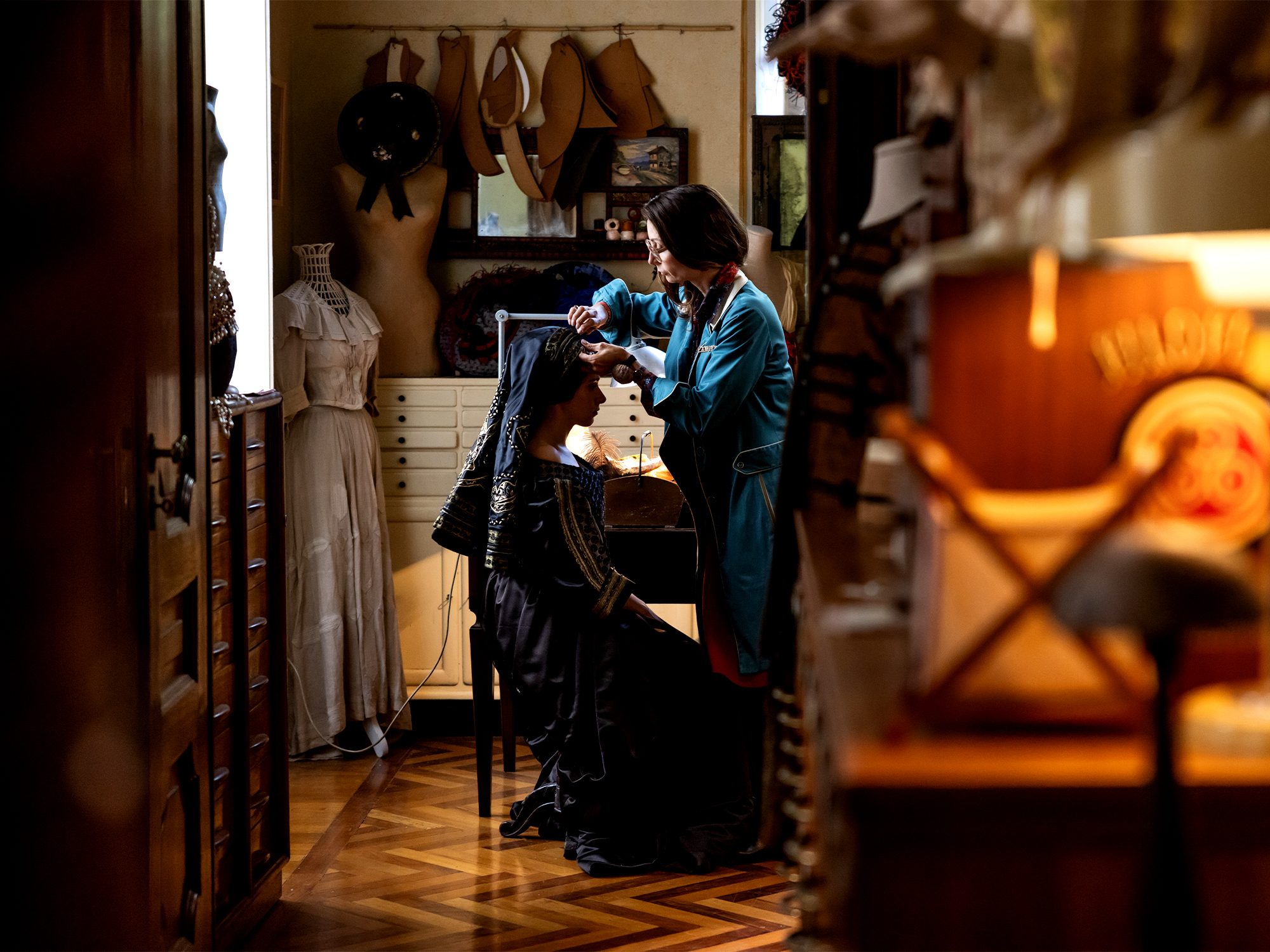
The heart of the film resides in a Roman costume atelier governed by Alberta, a formidable figure played by Luisa Ranieri. Tasked with outfitting a sprawling period drama, Alberta oversees a group of seamstresses whose personal lives are as intricate as the garments they stitch. The atelier becomes a microcosm of mid-century Italian life, where the demands of high-stakes craftsmanship intersect with the domestic pressures and private tragedies of the women behind the needles.
The Atelier as Stage and Subject
Özpetek's career has long orbited around enclosed, emotionally charged spaces — apartments, bathhouses, family dining rooms — where intimacy is both refuge and crucible. The costume workshop in Diamanti fits squarely within that tradition, but it carries an additional layer of self-reference. By placing the apparatus of filmmaking at the center of the story, the director turns the camera on a category of labor that cinema routinely renders invisible: the artisans who build its visual worlds before a single frame is shot.
Costume design has occupied a peculiar position in film history. It is among the oldest credited crafts in the industry, yet it remains one of the least examined in narrative cinema itself. Films about filmmaking tend to gravitate toward directors, actors, or screenwriters — the figures whose names appear above the title. Diamanti inverts that hierarchy. The seamstresses are not supporting characters in someone else's production story; they are the production story. Their needles, their fabric choices, their late nights under fluorescent light constitute the dramatic engine of the film.
This focus aligns Özpetek with a broader, if still modest, current in contemporary European cinema: an interest in the collective and manual dimensions of creative work, rather than the solitary genius myth that has dominated screen narratives about art for decades. The choice to set the story in the 1970s is not incidental. That decade in Italian cinema was marked by large-scale productions that depended on vast networks of artisans operating in Rome's studio ecosystem — a world that has since contracted under the pressures of digital production and international co-financing.
Melodrama as Method
Özpetek's approach is unabashedly melodramatic, weaving together disparate threads — a hidden relative in the attic, the shadow of domestic abuse, and the weight of supporting a struggling child. The register will be familiar to anyone who has followed his work since Harem Suaré and His Secret Life: heightened emotion delivered without irony, scored to swelling music, anchored by ensemble performances that prize warmth over restraint.
The risk of this method is sentimentality. The reward, when it works, is a kind of emotional directness that more guarded filmmaking cannot achieve. In Diamanti, the balance tilts in both directions depending on the scene. The workshop sequences — where bickering and song coexist, where a torn seam can trigger a crisis and a shared cigarette can resolve one — carry genuine vitality. They frame the act of creation as a communal, often chaotic, endeavor. The subplots that venture outside the atelier walls are less assured, occasionally relying on narrative shortcuts that compress complex social realities into tidy dramatic beats.
What holds the film together is its structural conceit. The meta-theatrical frame — Özpetek casting his own film within the film — keeps the audience aware that every emotional crescendo is also a statement about how stories get built, and by whom. The seamstresses stitch costumes that will define characters they will never play. The director orchestrates emotions he asks others to embody. The parallel is deliberate, and it gives Diamanti a reflexive quality that tempers its more sentimental impulses.
Whether the film fully earns its grand tribute is a question that may depend on the viewer's tolerance for melodrama as a legitimate analytical tool rather than mere indulgence. What is harder to dispute is the specificity of its subject. In centering the hands that cut and sew, Diamanti asks who sustains the art form — and whether the industry's attention has been directed at the right stage of the process all along.
With reporting from Little White Lies.
Source · Little White Lies