At Milan Design Week, the noise of the new often obscures the nuance of the craft. Seeking a more contemplative rhythm, German appliance manufacturer Gaggenau has returned to the glass conservatory of Villa Necchi Campiglio for "Presence," an installation that serves as a minimalist sanctuary within the 1930s architectural icon. Developed in collaboration with Munich-based architecture firm Studio 1ZU33, the exhibition frames industrial utility through the lens of architectural restraint — a deliberate counterpoint to the spectacle-driven installations that dominate the Fuorisalone circuit each April.
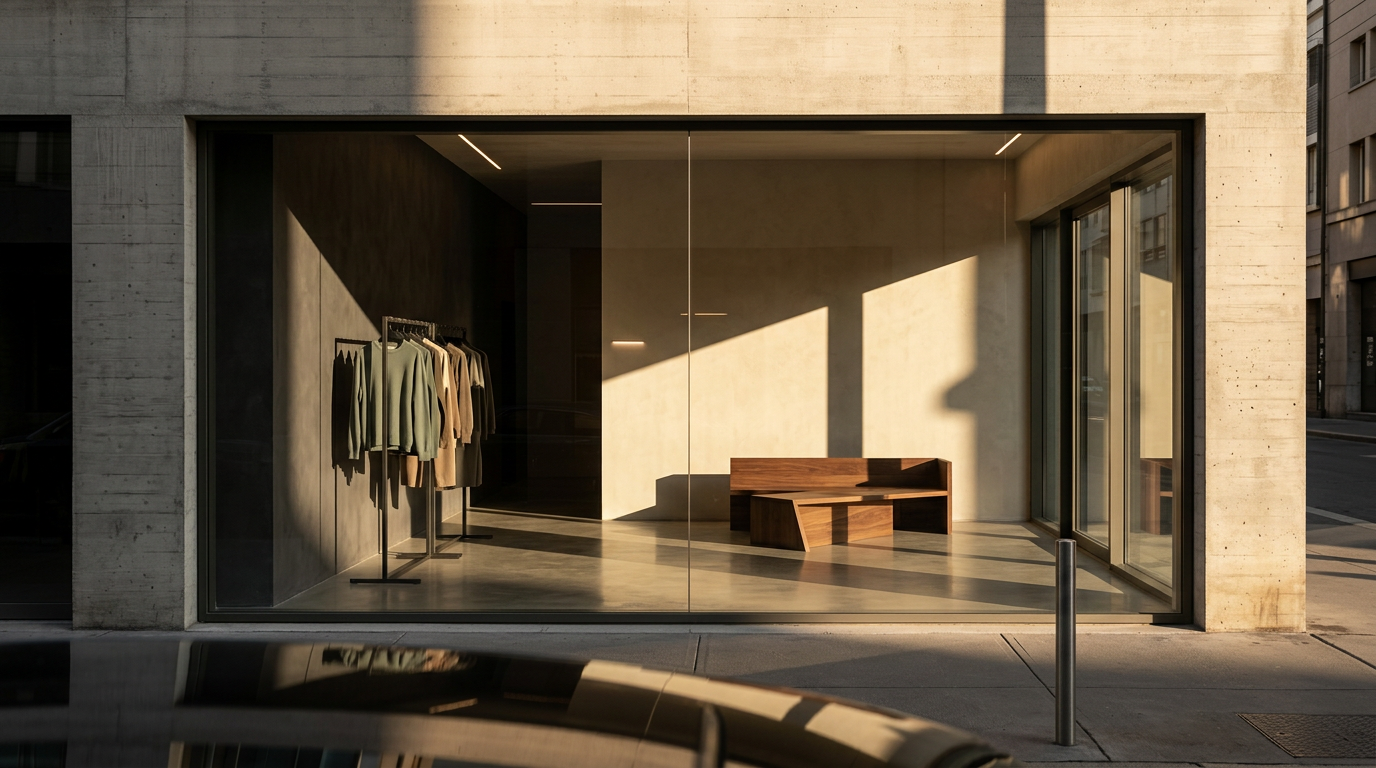
The installation centers on the debut of the Expressive Series, featuring ovens and Vario Cooling wine fridges integrated into a stepped, brass-accented environment. By placing high-performance kitchen technology within the historic, light-filled conservatory, the brand emphasizes the evolution of the kitchen from a hidden service area to a focal point of domestic design. The setting suggests that modern luxury is defined as much by the space between objects as by the objects themselves.
The Villa as Medium
Villa Necchi Campiglio, designed by Piero Portaluppi and completed in 1935, is one of Milan's most significant examples of Italian rationalist architecture. Its glass conservatory — a transitional space between garden and interior — has become a recurring stage for design brands seeking to associate their products with a particular lineage of material refinement. For Gaggenau, the choice is not incidental. The brand, founded in 1683 as a nail and enamel forge in Germany's Black Forest, has long anchored its identity in the intersection of industrial precision and artisanal heritage. Placing new appliances within a structure that itself represents a high point of early-twentieth-century domestic modernism creates a layered dialogue between eras of design thinking.
Studio 1ZU33's spatial approach reinforces this dialogue. Rather than concealing the conservatory's architecture behind exhibition walls, the firm has used the glass envelope as an active element — allowing natural light to shift across the brass-accented surfaces throughout the day. The stepped layout draws visitors through a sequence of encounters with individual products, each given enough negative space to be read as both functional object and sculptural form. It is an approach rooted in the logic of gallery curation rather than trade-show merchandising.
From Product Display to Cultural Programming
Beyond the hardware, Gaggenau has positioned the villa as a site for intellectual and sensory engagement. The week's programming includes a dialogue with minimalist architect John Pawson and a culinary program led by three-Michelin-star chef Tohru Nakamura. This multidisciplinary format signals a broader shift in how legacy brands navigate Milan Design Week: moving away from mere product display toward immersive explorations of how design shapes human experience.
The strategy reflects a pattern increasingly visible across the luxury and premium appliance sectors. Brands with long manufacturing histories face a particular challenge at events like Salone del Mobile: their products are technically sophisticated but visually restrained, making them difficult to showcase in environments that reward visual drama. Wrapping a product launch in cultural programming — architecture talks, chef residencies, curated sensory experiences — offers a way to communicate brand values that a spec sheet cannot. It also positions the brand within a network of creative practitioners whose reputations lend credibility by association.
Whether this approach represents a durable model or a passing phase of design-week strategy remains an open question. The risk is that cultural programming becomes its own form of noise — another layer of content competing for the attention of an already saturated audience. The counterargument is that depth of engagement, not breadth of reach, is what matters for a brand selling appliances at the upper end of the market. For Gaggenau, the bet is that restraint itself can function as a statement — that in a week defined by excess, the most memorable gesture may be the quietest one.
With reporting from Dezeen.
Source · Dezeen