Every April, the global focus shifts toward Geneva for Watches and Wonders, the annual gathering that functions as the horological industry's most consequential stage. The 2026 edition was the largest on record, with 65 brands occupying exhibition space spanning the equivalent of nine football fields. But scale was not the only thing that grew. So did the watches themselves — in ambition, in volume, and in sheer visual audacity. Where the broader fashion world has spent recent seasons under the spell of "quiet luxury" — a movement defined by beige palettes, logo suppression, and understated refinement — the atmosphere in Geneva suggested a decisive pivot toward the spectacular.
The prevailing sentiment among the industry's heavyweights was a rejection of what might be called the minimalist malaise. In place of subtle, thin-profile timepieces designed to whisper from beneath a shirt cuff, the 2026 collections embraced high-octane maximalism. This is watchmaking as statement dressing: loud, expressive, and intentionally disruptive.
From Restraint to Visual Theater
The quiet luxury era in watches was, in many ways, a reaction to the oversized, gem-encrusted excess of the mid-2010s. Brands leaned into heritage references, slimmed down case sizes, and favored dial simplicity. The aesthetic tracked closely with broader cultural currents — the rise of Bottega Veneta's weave-and-whisper approach, the dominance of The Row, the general retreat from conspicuous consumption that followed a decade of Instagram-era maximalism.
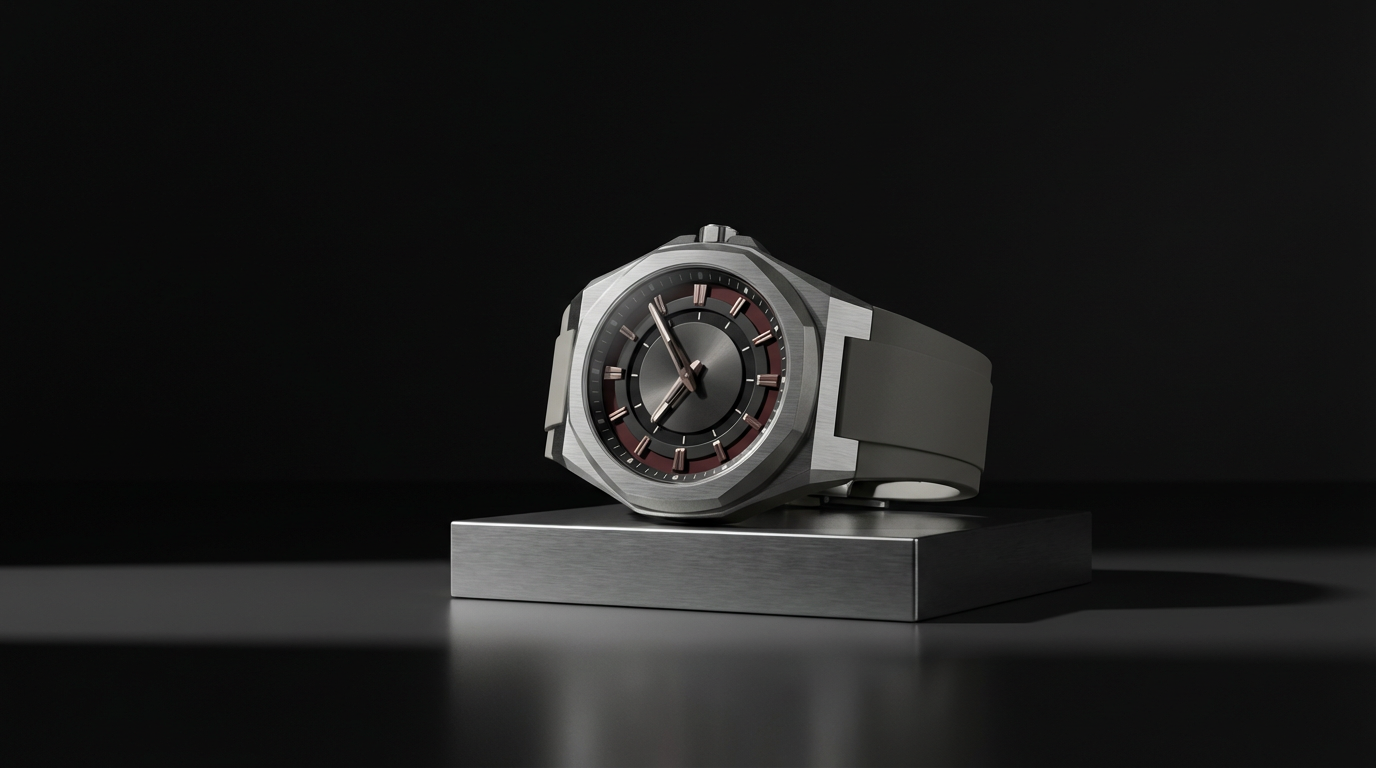
But cycles in luxury design tend to be self-correcting. Restraint, sustained long enough, begins to feel like conformity. The Geneva collections suggest the pendulum has swung. The restraint that once characterized the high-end market has been set aside in favor of designs that demand attention, signaling a return to horology as a form of visual theater. Case shapes are growing more sculptural. Dials are busier, layered, and more willing to provoke. Color palettes have moved beyond the safe harbor of blue, black, and white into territory that would have seemed improbable even two years ago.
Nowhere is this shift more evident than in the experimentation with form. Brands are increasingly moving away from traditional geometries — the round case, the rectangular tank, the cushion shape — to explore what might be described as "shapeshifting" silhouettes and metamorphic designs. Cartier, long a master of the unconventional with its asymmetric Crash and its curvilinear Cloche, led the charge with pieces that challenge standard expectations of how a watch should sit on the wrist. For an industry often accused of being overly conservative, this embrace of the architecturally strange suggests a newfound confidence in design-forward, maximalist principles.
What Drives the Pivot
Several forces converge to explain the timing. The collector market, which expanded rapidly during the pandemic-era speculation boom, has matured. Entry-level buyers who once chased recognizable references — a steel sports watch, a clean dress piece — are now deeper into their collecting journeys and hungry for differentiation. A watch that looks like every other watch on a dealer's tray holds diminishing appeal for a buyer on their fifth or tenth acquisition.
There is also a generational dimension. Younger collectors, shaped by streetwear's comfort with bold graphics and fashion's ongoing dialogue with art and architecture, bring different expectations to the display case. They are less bound by the conventions that kept Swiss watchmaking aesthetically stable for decades. For brands, catering to this cohort means taking risks that would have been difficult to justify when the customer base skewed older and more traditional.
The commercial logic is straightforward as well. In a market where supply of the most coveted references has normalized and secondary-market premiums have compressed from their peaks, differentiation through design becomes a competitive necessity rather than a creative indulgence.
Whether this maximalist turn proves durable or merely represents the early phase of another aesthetic cycle remains an open question. The history of luxury goods is littered with bold pivots that aged poorly once the cultural wind shifted. But the breadth of the commitment on display in Geneva — across heritage maisons and independent ateliers alike — suggests this is not a single brand's gamble. It is an industry-wide recalibration of what a modern luxury watch is supposed to look like, and what it is supposed to say about the person wearing it. The tension between timelessness and novelty, between heritage credibility and design risk, is now the central fault line the sector must navigate.
With reporting from Highsnobiety.
Source · Highsnobiety