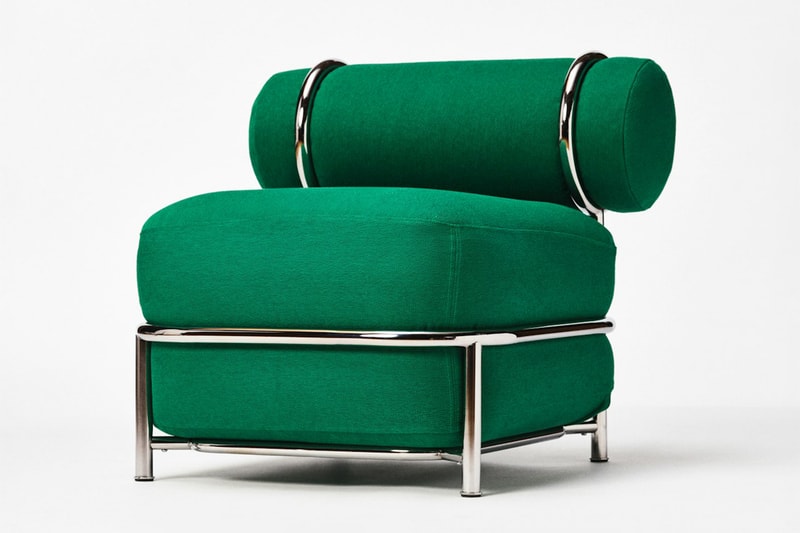
At this year's Milan Design Week, IKEA unveiled a reengineered inflatable chair as the centerpiece of its upcoming PS 2026 collection. Designed by Mikael Axellson, the piece pairs a carbon steel frame with textile-covered internal air chambers, aiming to resolve the durability and comfort shortcomings that turned inflatable furniture into a cautionary tale of late-1990s consumer culture. The chair arrives wrapped in a tailored emerald green fabric, looking less like a pool accessory and more like a conventional armchair — one that happens to weigh a fraction of its solid counterparts.
The PS line has long served as IKEA's laboratory for experimental design thinking. Previous editions have explored flat-pack modularity, sustainable materials, and small-space living. The 2026 iteration appears to center on material efficiency — the idea that the volume a piece of furniture occupies need not correspond to the mass of material used to build it. In that framing, air is not a gimmick but a structural input.
From Novelty to Engineering Problem
Inflatable furniture enjoyed a brief, highly visible moment in the late 1990s, driven largely by transparent PVC chairs sold at low price points. The category collapsed almost as quickly as it arrived. The products squeaked, slipped across floors, sagged under sustained use, and punctured with little provocation. They became shorthand for disposable design — objects that prioritized visual novelty over functional longevity.
Axellson's redesign treats each of those failure modes as an engineering problem rather than an inherent limitation of the concept. The carbon steel frame provides the rigid skeleton that all-air constructions lacked, preventing the lateral instability that made earlier chairs unreliable. The internal air chambers, contained within the textile shell, deliver ergonomic cushioning without direct skin contact with plastic surfaces. The fabric exterior eliminates squeaking and provides the tactile warmth associated with upholstered seating. The result is a hybrid object: structurally closer to a traditional armchair, but materially closer to a camping mattress.
The approach has a clear precedent in how the outdoor and sporting goods industries have long used air as a load-bearing medium — from inflatable kayaks to air-sprung mattresses — but those applications have rarely crossed into domestic furniture with any commercial success. IKEA's scale and distribution infrastructure give the concept a platform that niche designers have never been able to offer.
Air as Material Strategy
Beyond the product itself, the chair signals a broader strategic logic. Furniture logistics are dominated by volume: shipping costs, warehouse footprint, and last-mile delivery all scale with the physical size of the object being moved. A chair that ships deflated and is inflated at home using a manual foot pump compresses the supply chain in ways that benefit both cost structure and carbon footprint. IKEA built a global business on flat-pack efficiency; air-filled furniture extends that principle further, reducing not just assembly complexity but material mass itself.
The choice of a manual pump over an electric one is a small but deliberate detail. It removes a dependency on batteries or electrical outlets, keeps the product's bill of materials minimal, and reinforces a narrative of low-impact living that aligns with the broader sustainability positioning IKEA has pursued in recent years.
Whether the market is ready to accept inflatable furniture as a permanent household fixture remains an open question. The 1990s left a strong associative residue — for many consumers, "inflatable chair" still connotes impermanence and low quality. IKEA is wagering that material engineering and brand credibility can overwrite that memory. The tension worth watching is whether the functional improvements are sufficient to shift perception, or whether the category itself carries too much cultural baggage to be rehabilitated — regardless of how well the engineering performs.
With reporting from Hypebeast.
Source · Hypebeast