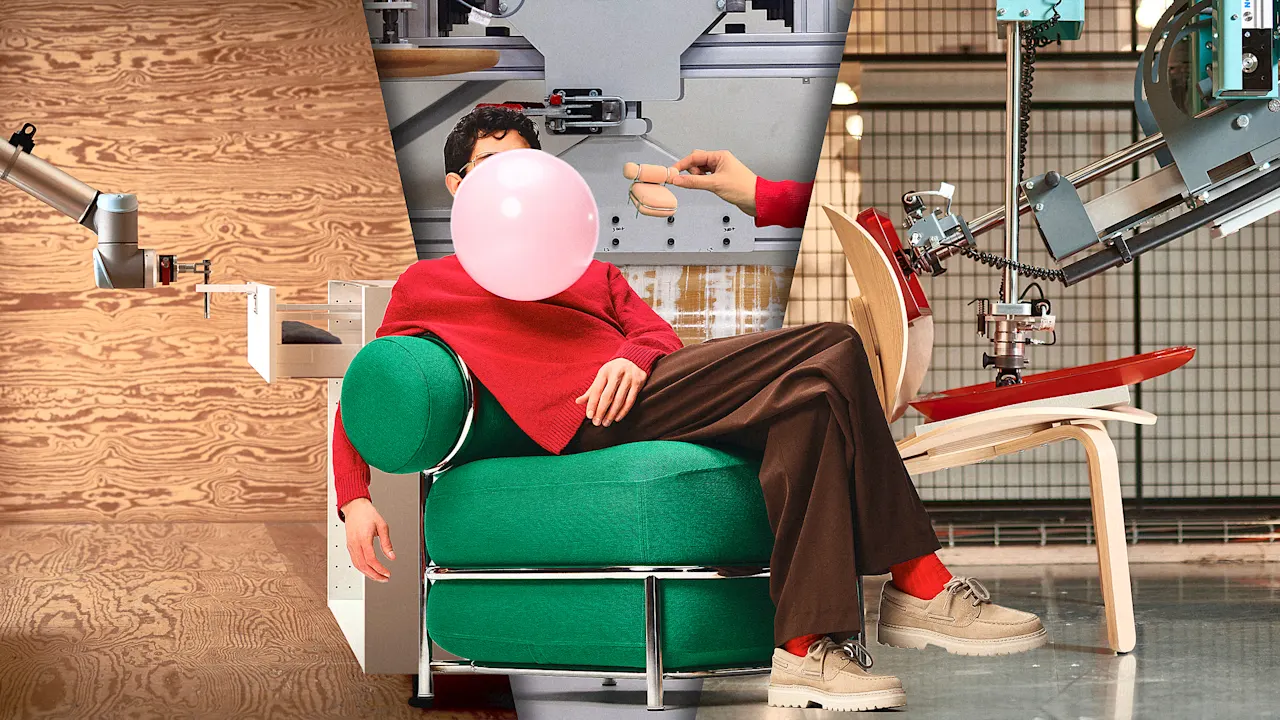
In the quiet town of Älmhult, Sweden, at the global headquarters of Ikea, designer Mikael Axelsson has spent a decade haunted by a miniature. The object — a dollhouse-sized assemblage of bent wire, hand-carved foam, and hot glue — represented a deceptively simple ambition: to transform the novelty of 1990s inflatable furniture into a sophisticated, modern staple. For years, the model sat on Axelsson's shelf, a "white whale" of industrial design that remained grounded by technical limitations and corporate memory. The breakthrough, when it finally came, arrived not through a lone eureka moment but through an institutional mechanism: a high-pressure prototyping sprint that forced the concept out of stasis and into production.
From market flop to design obsession
The hurdles Axelsson faced were both tactile and historical. Early attempts at inflatable seating often felt less like furniture and more like exercise balls, lacking the structural integrity required for domestic life. The material science was unforgiving: air-filled chambers deformed under sustained load, surfaces grew clammy against skin, and the visual language of the category remained anchored to the cheap, translucent PVC of dorm-room novelty items. Beyond engineering, there was an institutional barrier. Ikea's leadership remained wary of the category following a high-profile failure of air-filled products in the late 1990s — a period when several retailers experimented with inflatable home goods only to see them rejected by consumers who found them impractical. Corporate memory, in large organizations, can be as powerful a constraint as any material limitation. A category that once burned a company tends to stay cold for a long time.
This dynamic is not unique to Ikea. Product development history is littered with concepts that failed in one era only to succeed in another once materials, manufacturing techniques, or consumer expectations shifted. The standing desk, once a niche ergonomic curiosity, became a mainstream office fixture decades after its earliest commercial iterations. Electric vehicles spent the better part of a century as a technological dead end before battery chemistry and regulatory pressure converged to make them viable. The question for any designer sitting on a shelved concept is rarely whether the idea is sound — it is whether the surrounding conditions have matured enough to support it.
The sprint as institutional unlock
The mechanism that finally dislodged Axelsson's inflatable chair from his shelf was an experimental design sprint conducted in late 2023. Tasked with pushing boundaries for the upcoming PS collection — Ikea's recurring series of avant-garde, design-forward releases — Axelsson and a small cohort of designers were given two days to pitch radical concepts. The PS line has historically served as Ikea's permission structure for risk: limited-run collections where commercial expectations are relaxed and designers are encouraged to prioritize experimentation over unit economics. Within that framework, a concept that might struggle to survive a standard product review gains a viable path forward.
The sprint format itself reflects a broader shift in how large companies manage innovation pipelines. Time-boxed prototyping exercises — popularized in software development and later adapted by hardware and consumer goods firms — compress the feedback loop between ideation and tangible output. They also create social pressure: presenting a physical prototype to peers within forty-eight hours leaves little room for the incremental perfectionism that can keep projects in limbo for years. For Axelsson, the sprint provided exactly the momentum the inflatable chair had lacked. By revisiting the concept within this high-pressure environment, he moved the project from a desk ornament to a production-ready piece, slated for a May debut as part of the PS collection.
What makes the story instructive is less the specific product than the organizational pattern it reveals. Large companies rarely lack ideas; they lack mechanisms to revisit ideas whose moment may have arrived. The prototyping sprint, in Axelsson's case, functioned not as a generator of novelty but as a retrieval system — a way to pull dormant concepts back into active consideration under conditions that favored speed over caution. Whether the inflatable chair finds a lasting place in Ikea's catalog or becomes another limited-run curiosity will depend on consumer reception and the material advances that underpin it. The more durable takeaway may be structural: how a furniture company with tens of thousands of products in its portfolio creates deliberate space to reconsider the ones that got away.
With reporting from Fast Company.
Source · Fast Company