At Milan Design Week, the Issey Miyake studio presented a collection of furniture crafted from the byproducts of its garment manufacturing — specifically, the tightly compressed paper rolls used in the brand's signature pleating process. The pieces, which range from seating to sculptural tables, transform industrial offcuts into objects with marbled surfaces and organic silhouettes. The debut has reignited a persistent question in contemporary design: where functional furniture ends and sculpture begins.
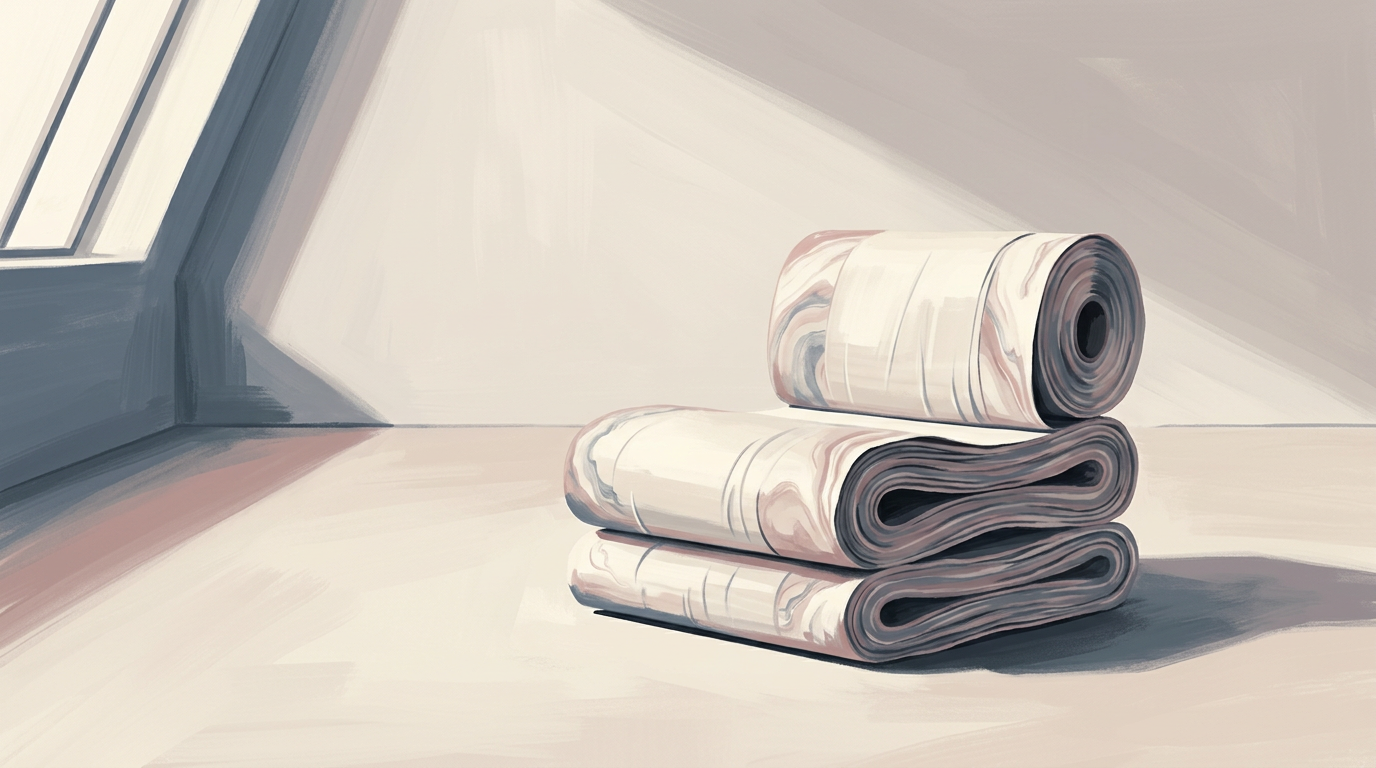
The pleating technique central to Issey Miyake's fashion identity involves sandwiching fabric between layers of paper before heat-pressing it into permanent folds. The process generates substantial volumes of paper waste — material that retains the imprint of the garments it helped shape. Rather than discarding these remnants, the studio compressed and layered them into dense, log-like forms that serve as the structural basis for the new furniture collection. The resulting surfaces carry traces of dye and texture from the production line, giving each piece a unique visual grain.
The sculpture-utility divide
Reaction to the collection has split along a familiar fault line. Admirers have pointed to the subtle color palettes, the tactile warmth of the compressed paper, and the coherence of a design philosophy that extends from garment to object. Skeptics, however, have questioned whether the pieces function as furniture in any practical sense. An armchair in the collection has drawn particular scrutiny: its form suggests seating, but its proportions and material rigidity raise doubts about comfort and daily usability.
This tension is not new. Design history is populated with objects that occupy the boundary between art and utility — from the Memphis Group's deliberately impractical furniture of the 1980s to more recent experiments by designers such as the Campana Brothers, whose work frequently privileges material narrative over ergonomic convention. The difference with Miyake's collection is the specificity of the waste stream. The paper is not a generic recycled input; it is a direct artifact of the brand's most recognizable manufacturing process. That provenance lends the furniture a narrative weight that purely aesthetic objects rarely carry, but it does not resolve the question of whether narrative alone justifies calling something a chair.
Fashion waste as design material
The collection also arrives at a moment when the fashion industry faces mounting pressure to account for its material footprint. Textile waste, chemical runoff, and overproduction have become central concerns in sustainability discourse. Most responses to that pressure have focused on the garment itself — biodegradable fabrics, closed-loop recycling, reduced collections. Miyake's approach is different: it treats the manufacturing infrastructure, not just the product, as a source of design opportunity.
Whether this constitutes a scalable model or a one-off creative exercise remains an open question. Compressed paper, however artfully shaped, has inherent limitations as a structural material — durability under load, sensitivity to moisture, and the challenge of repair or end-of-life recycling all constrain its practical applications. The collection may be better understood as a provocation than a prototype: a demonstration that waste streams contain latent aesthetic and material value, even if extracting that value at scale requires different engineering.
The broader context of this year's Milan Design Week reinforces the point. From large-scale architectural projects experimenting with unconventional cladding materials to museum openings that foreground industrial texture, the current design cycle shows a pronounced interest in giving visible form to processes and materials that typically remain hidden. Miyake's furniture fits within that current, but it also tests its limits. A building wrapped in aluminum is still a building. A chair made of compressed paper may or may not still be a chair — and the answer depends on whether the observer prioritizes material honesty or the expectation that furniture must, above all, be sat upon.
The collection does not resolve that tension, and perhaps it is not meant to. What it does is make the waste visible — pulling the backstage residue of fashion production into the foreground and asking whether the design world is prepared to evaluate objects on the terms of their origin as much as their destination.
With reporting from Dezeen.
Source · Dezeen