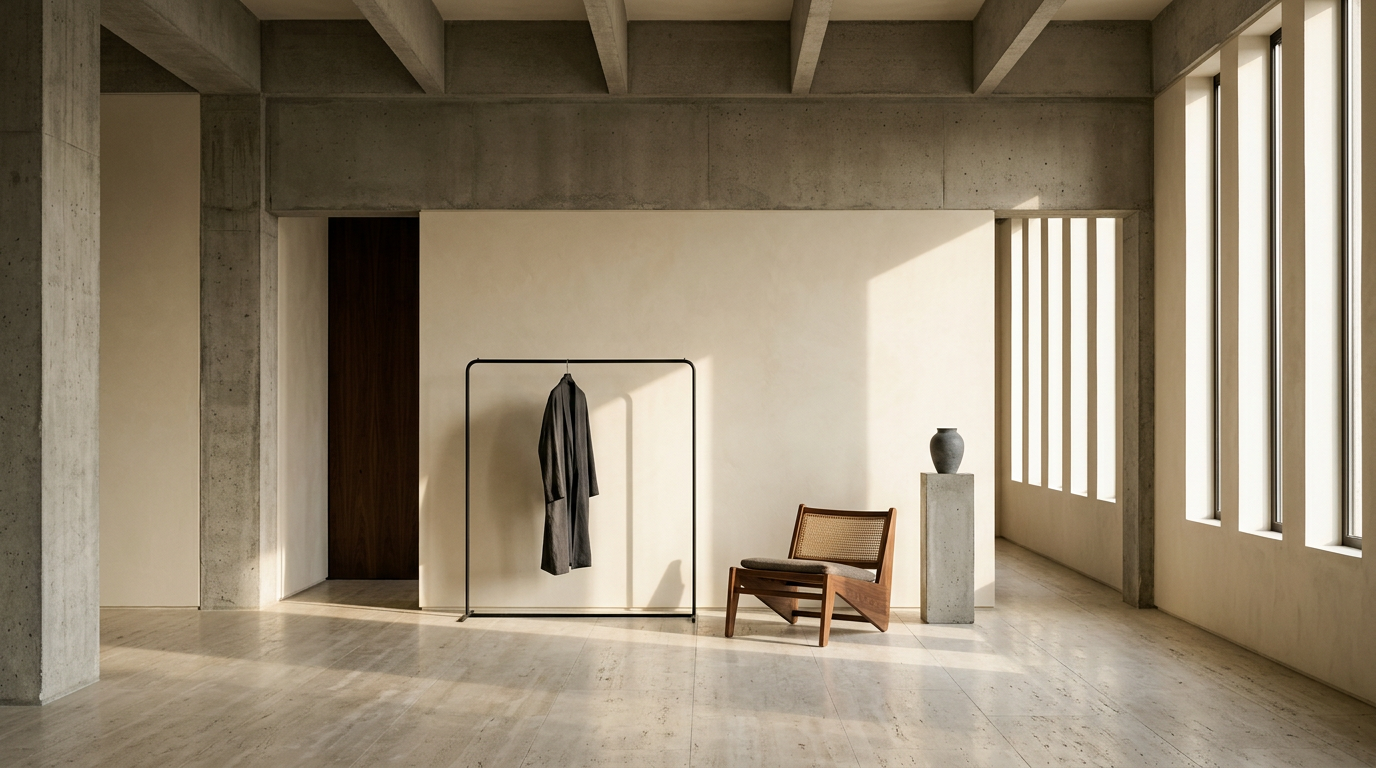
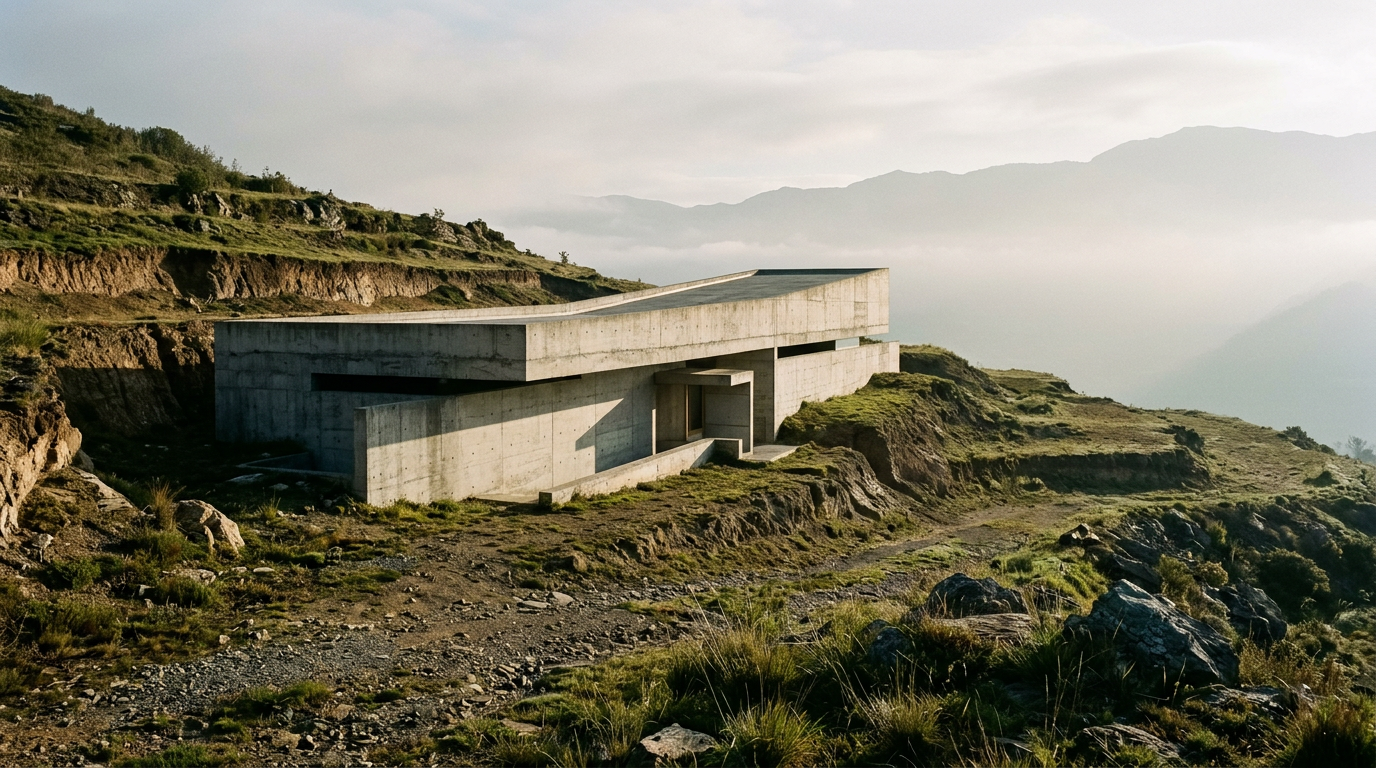
In the Seven Lakes complex near Kyiv, the recently completed Farm Table restaurant serves as a quiet manifesto on material honesty. Designed by the Ukrainian practice YOD Group, the 753-square-meter space avoids the typical tropes of rustic dining in favor of a rigorous, site-specific minimalism. The architecture does not merely house the meal; it frames the surrounding gardens and water, positioning the act of eating as a continuation of the landscape.
The project arrives at a moment when Ukrainian design studios continue to produce work of notable clarity despite the country's ongoing wartime conditions. YOD Group, founded in Kyiv and active for over two decades, has built a portfolio centered on hospitality interiors that treat material selection as a form of argument rather than decoration. Farm Table extends that logic to its most literal conclusion: the building's primary material is drawn from Ukrainian geology, and the spatial program is organized around the visibility of food production.
Stone as Structural Language
The interior's character is defined by a surprising use of Terebovlia red sandstone, a sedimentary stone quarried in western Ukraine's Ternopil region. Traditionally reserved for exterior paving and facades, the stone is repurposed here for floors, bar surfaces, and massive communal tables. This heavy, warm-toned material provides a grounded contrast to the lighter elements of timber and linen. In the lobby, a sculptural wine display carved from solid sandstone reinforces this sense of permanence, lending the space a structural weight that feels intentional rather than ornamental.
The decision to bring an exterior-grade material indoors carries both aesthetic and conceptual implications. In architectural practice, the migration of materials across conventional boundaries — stone from facade to tabletop, industrial finishes into domestic settings — has become a recurring strategy among designers seeking to collapse the distinction between structure and surface. What distinguishes YOD Group's approach is the specificity of provenance. Terebovlia sandstone is not a generic specification; it is a regional material with particular color, grain, and cultural association. Its presence inside the dining room functions as a geographic marker, tying the restaurant to a place beyond its immediate site.
This emphasis on geological locality echoes a broader tendency in contemporary hospitality design to treat material sourcing as a narrative device. Where earlier iterations of farm-to-table restaurants relied on reclaimed wood and exposed brick as shorthand for authenticity, a more disciplined strain of the movement now insists on traceable, site-specific materials that carry their own provenance without requiring explanation.
Dissolving the Envelope
To soften the threshold between the interior and the environment, YOD Group utilized large floor-to-ceiling windows that open upward during warmer months. This mechanical transparency, paired with oversized tubs of living pine trees situated within the dining area, creates a biophilic continuity. The retractable glass system effectively converts the restaurant into a pavilion — a structure that exists somewhere between enclosure and open air, its character shifting with the seasons.
By placing the open kitchen at the center of the room, the designers have also turned the labor of the farm-to-table process into a visible, rhythmic sequence. The kitchen becomes a spatial anchor around which diners, servers, and landscape rotate. This centripetal arrangement ensures that the restaurant remains present in its physical and culinary context simultaneously — the preparation of food is not backstage activity but part of the spatial composition.
The strategy of centering the kitchen while dissolving the perimeter wall sets up an interesting inversion: the most enclosed element of the program sits at the core, while the boundary between inside and outside is rendered negotiable. It is a spatial argument that the essential act — cooking — deserves architectural emphasis, while the envelope around it should defer to the landscape.
Farm Table does not announce itself as a statement about Ukrainian resilience or cultural identity, yet the cumulative effect of its choices — local stone, regional food systems, a design studio working from Kyiv — makes those readings difficult to avoid. Whether the project represents a model that travels beyond its specific context, or whether its power depends precisely on the particularity of that context, remains an open question. The tension between universal design principle and irreducibly local material is, in a sense, the tension the building is built from.
With reporting from The Cool Hunter.
Source · The Cool Hunter