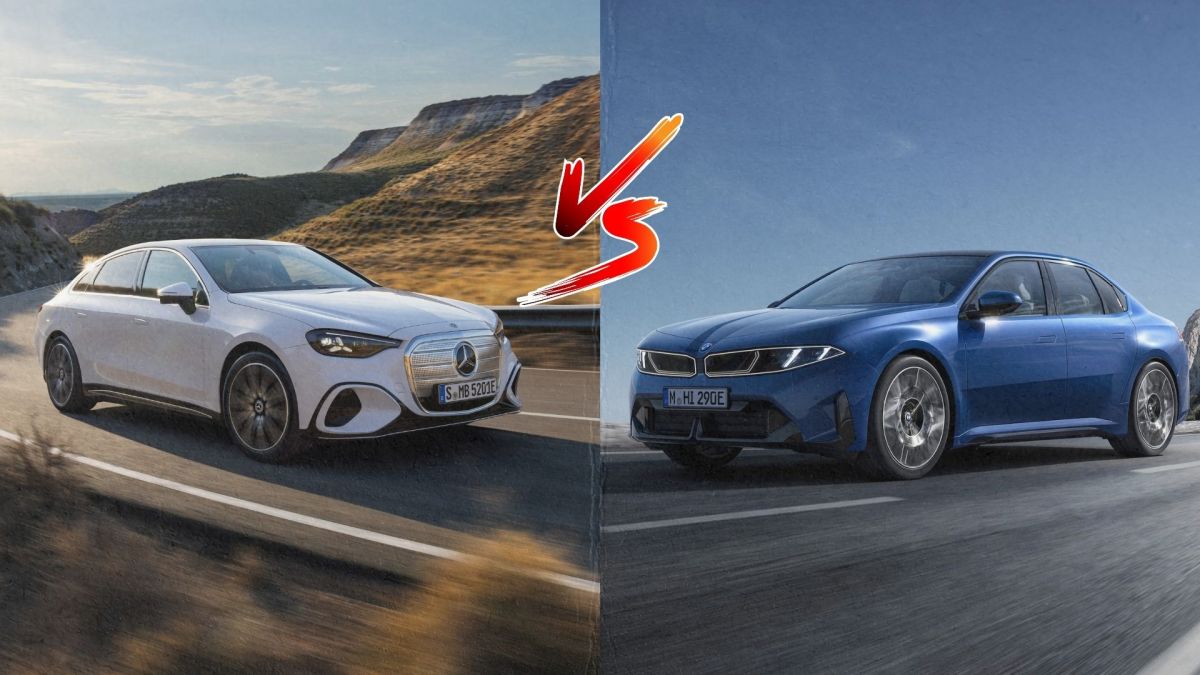
Mercedes-Benz has officially pulled the curtain back on the sixth generation of its C-Class, a vehicle that has long served as the pragmatic heart of the brand's lineup. This iteration, however, represents a fundamental shift: the iconic sedan is going fully electric. The move is a calculated response to a changing landscape where legacy prestige must now be validated by kilowatt-hours and software integration rather than the hum of a combustion engine.
The primary target of this new C-Class is unmistakable: the BMW i3. For decades, the C-Class and BMW's 3 Series have engaged in a perpetual tug-of-war for dominance in the executive sedan segment. As both German giants pivot toward electrification, that rivalry is being reinvented. Mercedes is betting that its blend of traditional luxury and new-age efficiency can disrupt BMW's early momentum in the premium EV space.
A rivalry rewritten in voltage
The C-Class versus 3 Series contest is one of the most commercially significant in automotive history. Since the W201 — the original "Baby Benz" — debuted in the early 1980s as a direct answer to BMW's compact executive formula, the two nameplates have defined the segment. Each successive generation has been benchmarked against the other, with buyers, journalists, and dealers treating the comparison as a near-ritual exercise. That dynamic now migrates to electric drivetrains, but the underlying logic remains the same: whichever car best balances driving engagement, interior refinement, and total cost of ownership will capture the segment's center of gravity.
What has changed is the competitive perimeter. The C-Class and 3 Series no longer compete solely with each other. Tesla's Model 3 redefined expectations around software, over-the-air updates, and acceleration benchmarks in the mid-premium bracket. Chinese manufacturers — BYD and others — have pushed battery cost structures downward while raising interior quality. For Mercedes, launching an electric C-Class is therefore a two-front campaign: it must match BMW's offering on traditional luxury metrics while demonstrating that Stuttgart can compete on the technology axis that newer entrants have claimed as their own.
Mercedes-Benz is not entering this fight without preparation. The EQS and EQE sedans served as the brand's initial forays into full-size electric luxury, built on the dedicated EVA platform. The lessons drawn from those vehicles — in battery packaging, energy management, and the integration of the MBUX software ecosystem — are likely informing the architecture of the electric C-Class. Whether Mercedes opts for an evolution of that platform or a new modular approach designed for higher volume will matter: the C-Class has historically been the brand's best-selling model globally, and manufacturing economics at scale differ from those of a flagship.
The stakes beyond a single model
The broader strategic significance extends well past one sedan. The premium midsize segment is where margins meet volume for German automakers. It is the entry point for brand loyalty — the car that converts a first-time buyer into a repeat customer who later trades up to an E-Class or S-Class. Losing ground here does not merely dent quarterly sales figures; it erodes the long-term funnel that sustains the entire product hierarchy.
For BMW, the calculus is symmetrical. Its electric 3 Series successor carries the same existential weight. The question is whether BMW's head start in certain EV sub-segments — and its experience with the i4 and iX — translates into a durable advantage, or whether Mercedes can leapfrog by arriving later with more refined technology.
Regulatory pressure adds another dimension. European emissions targets continue to tighten, and the balance of battery-electric vehicles in a manufacturer's sales mix directly affects compliance costs. A successful electric C-Class at high volume would ease Mercedes's regulatory position considerably.
While technical specifications remain the subject of intense industry scrutiny, the strategic intent is clear. Mercedes-Benz is not merely swapping a fuel tank for a battery; it is attempting to preserve the "Star"'s identity in a market increasingly crowded by tech-first competitors. The outcome hinges on a tension that neither brand has fully resolved: whether the conventions of German luxury engineering — ride tuning, material quality, dealer experience — still constitute a defensible moat, or whether the defining advantages in the electric era are software cadence, charging infrastructure partnerships, and battery chemistry. The electric C-Class is Mercedes's wager that both can coexist. Whether the market agrees is the open question.
With reporting from Numerama.
Source · Numerama