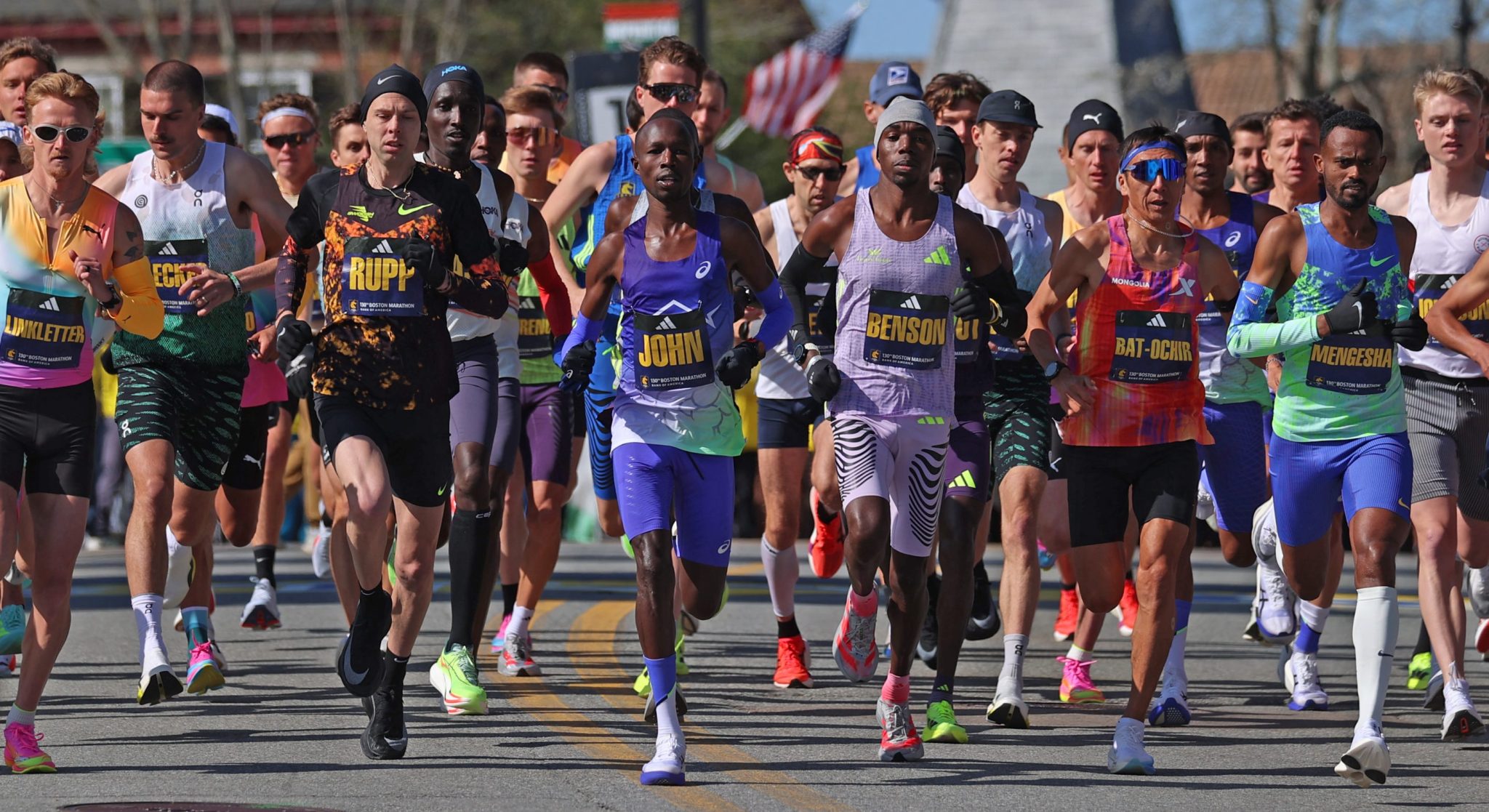
Nike found itself on the defensive last week after a promotional sign at its Boston store — timed to coincide with the Boston Marathon — drew widespread criticism for what many in the running community called exclusionary messaging. The sign, which read "Runners Welcome. Walkers Tolerated," was intended as a cheeky nod to the elite qualifying standards that distinguish the Boston Marathon from most other major road races. Instead, it landed as an affront to a community that has spent years broadening its definition of who counts as a runner.
Among the most prominent critics was Robyn Michaud, a runner in the marathon's adaptive division, who argued the phrasing disparaged participants who walk portions of a course due to injury, disability, or the simple reality of covering 26.2 miles. The backlash spread quickly across social media, where runners of all levels described the sign as tone-deaf and contrary to the values the sport has cultivated over the past decade.
A brand trying to reclaim credibility
The episode arrives at a particularly sensitive moment for Nike. The company has spent the better part of the last several years attempting to reassert itself in the performance running market after losing meaningful ground to rivals. Brands such as On, Hoka, and New Balance have gained traction among both competitive and recreational runners by combining technical innovation with marketing that emphasizes accessibility. Nike's dominance in elite marathon racing — visible through its sponsorship of top athletes and the continued presence of its Vaporfly and Alphafly shoe lines on podiums — has not translated as smoothly into the broader recreational segment, where purchasing decisions are shaped as much by brand affinity as by race-day performance.
The "Walkers Tolerated" campaign appears to have been an attempt to lean into exclusivity as a differentiator — positioning Nike as the brand for serious competitors rather than casual participants. That strategy carries historical precedent in Nike's own playbook. The company built much of its identity in the 1980s and 1990s around an aggressive, performance-first ethos. But the running market of 2026 is structurally different from the one that produced those earlier campaigns. Participation in road races has expanded dramatically, and the culture surrounding distance running has shifted toward inclusivity. Events like the Boston Marathon itself have added adaptive and para-athletic divisions, and race organizations broadly have moved to celebrate finishers across the entire time spectrum. A message that frames walking as merely "tolerated" cuts against that current.
The cost of misreading a community
What makes the backlash notable is not just the content of the sign but the specificity of the context. The Boston Marathon occupies a unique position in running culture — it is simultaneously the sport's most exclusive mass-participation event, requiring qualifying times that most recreational runners will never achieve, and one of its most emotionally resonant, drawing spectators and participants who treat the day as a celebration of endurance in all its forms. A campaign that attempted to exploit the former while ignoring the latter was always going to carry risk.
The incident also illustrates a broader tension in sports marketing: the gap between a brand's internal narrative about its target consumer and the way that narrative is received by the actual community it hopes to serve. Nike's core challenge in running is not a lack of product credibility — its racing shoes remain among the most technologically advanced on the market — but a perception problem. Competitors have succeeded in part by making runners feel welcomed rather than ranked. A store display that sorts participants into those who belong and those who are merely tolerated reinforces precisely the perception Nike can least afford.
Whether the backlash translates into any measurable commercial consequence remains an open question. Brand missteps of this kind tend to fade quickly from public attention. But the underlying strategic tension — between courting elite credibility and maintaining broad appeal in a sport whose participant base is growing more diverse — is not a problem a single campaign can resolve. It is the central marketing challenge Nike faces in running, and the Boston sign made it visible in a way the company almost certainly did not intend.
With reporting from Fortune.
Source · Fortune