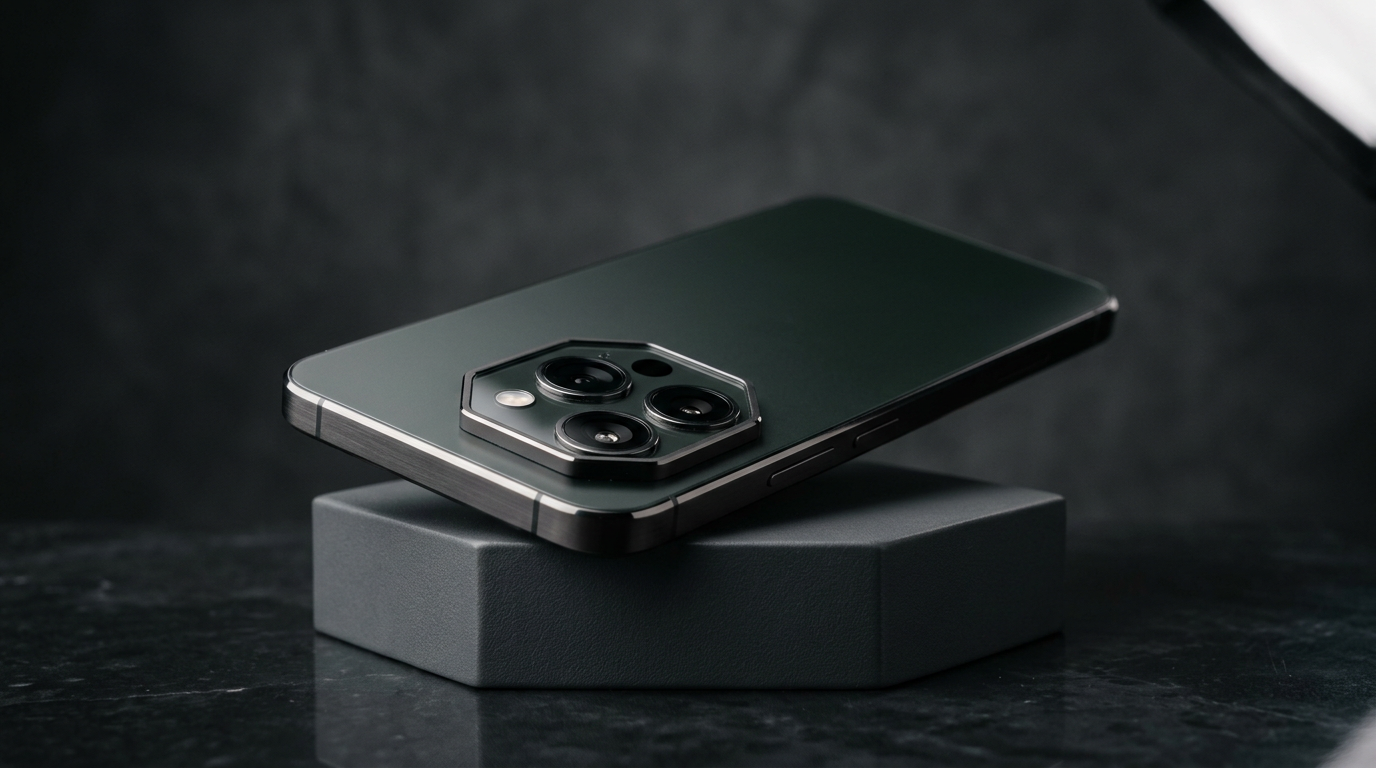
In the mid-2026 landscape of flagship smartphones, the "Ultra" suffix has become a baseline for relevance. Oppo's latest entry, the Find X9 Ultra, arrives in an increasingly crowded arena, competing for attention alongside heavyweights from Samsung, Xiaomi, and Vivo. Rather than pivoting toward radical new form factors, Oppo is leaning further into a "camera-first" philosophy — treating the smartphone less as a general-purpose utility and more as a specialized optical instrument.
The center of gravity for the Find X9 Ultra is its redesigned camera module, a prominent hexagonal array that pays homage to traditional camera aesthetics and Oppo's ongoing partnership with Hasselblad. The hardware is headlined by a 50MP 10x optical zoom telephoto lens, supported by a new ecosystem of accessories including a telephoto converter kit. This commitment to glass and sensors results in a device of significant physical presence: thick and unashamedly weighted toward its optics, a trade-off for users who prioritize image quality over slimness.
The Camera as Identity
Oppo's bet is not new, but it is becoming more deliberate. The smartphone camera wars have been a defining feature of the premium segment for the better part of a decade, but the competitive axis has shifted. Early battles were fought over megapixel counts and computational photography tricks — night modes, portrait bokeh, AI scene detection. The current phase is different. It centers on optical hardware: periscope zoom lenses, larger sensor sizes, and partnerships with legacy camera brands that lend both engineering expertise and brand cachet.
Hasselblad's involvement with Oppo follows a pattern established across the industry. OnePlus, which shares corporate parentage with Oppo under the BBK Electronics umbrella, has also leveraged the Hasselblad name. Vivo has partnered with Zeiss; Xiaomi with Leica. These collaborations serve a dual purpose. They provide access to decades of optical tuning knowledge, and they signal seriousness to consumers who might otherwise view a phone camera as inherently inferior to a dedicated device. The 10x optical zoom on the Find X9 Ultra pushes further into territory that was, until recently, the exclusive domain of standalone cameras and a handful of ultra-premium handsets.
The inclusion of a telephoto converter kit — a physical accessory that clips onto the device — is a notable design choice. It suggests Oppo sees at least a segment of its audience as willing to carry additional hardware, blurring the line between phone accessory and camera gear. Whether that audience is large enough to justify the investment remains an open question.
Design Language as Differentiation
Aesthetically, the Find X9 Ultra attempts to balance industrial heft with evocative finishes. The "Canyon Orange" variant features an etched surface inspired by the Grand Canyon, while the "Tundra Umber" model draws from Hasselblad's X2D, aiming for what the company describes as Scandinavian minimalism and "the raw elegance of glaciers." These are deliberate departures from the glass-and-metal uniformity that has characterized flagship design for years.
The approach reflects a broader tension in the premium smartphone market. As internal specifications converge — most flagships now share similar processors, display technologies, and connectivity standards — external identity becomes a more important vector for differentiation. Material choices, surface textures, and visual references to analog craft traditions are ways to create perceived distance between otherwise similar products. Oppo is not alone in this strategy, but the degree to which it has committed to a camera-centric visual identity is distinctive.
The risk, as always, is that hardware-forward design appeals to a niche rather than the mainstream. Most consumers still choose phones based on a blend of price, ecosystem loyalty, and general capability. A device that makes meaningful sacrifices in thickness and weight to accommodate optics is making a pointed argument about priorities — one that resonates with photography enthusiasts but may leave casual buyers unmoved.
As the distinction between professional-grade cameras and mobile devices continues to thin, the strategic question facing Oppo and its competitors is not whether phone cameras can match dedicated hardware. It is whether the market will reward the kind of specialization the Find X9 Ultra represents, or whether the gravitational pull of the all-purpose device remains too strong to escape.
With reporting from Engadget.
Source · Engadget