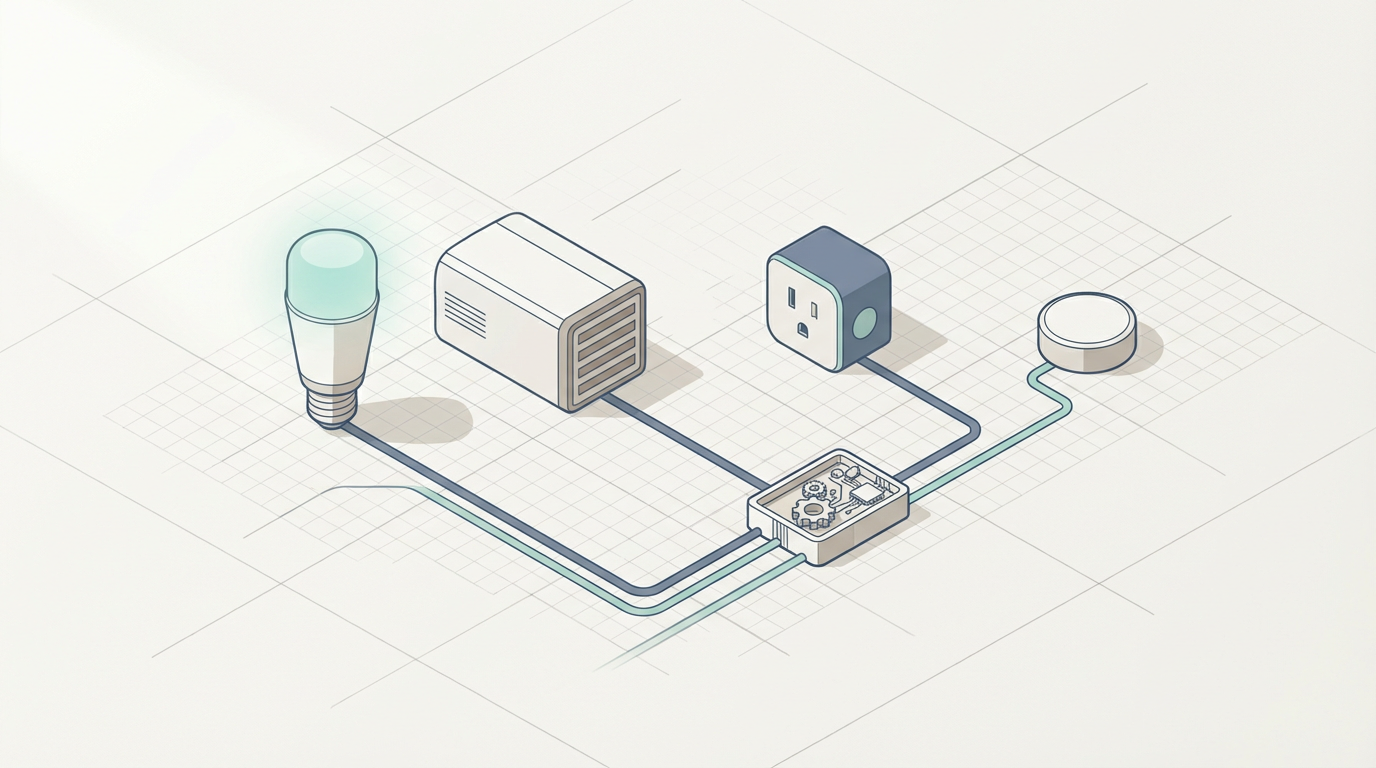
The promise of the smart home has long rested on the idea of invisible infrastructure — a world where devices from disparate manufacturers speak a common language without the need for digital translation. Samsung's announcement that it is deepening its SmartThings integration with IKEA's Matter-over-Thread hardware suggests, however, that the industry's most ambitious attempt at a universal connection standard still requires a significant amount of manual tuning from the platforms that implement it.
By building what it calls "enhanced integrations" for IKEA's suite of smart lights, air quality sensors, and smart plugs, Samsung is attempting to bypass the connectivity hurdles that have frustrated IKEA customers. While Matter was designed to offer a plug-and-play experience across any ecosystem, the reality has been more friction-heavy. Samsung and IKEA reportedly conducted multiple rounds of joint validation to ensure stability, resulting in a dedicated user experience within the SmartThings app that aims for the reliability the base standard has yet to fully deliver.
The Matter Gap Between Specification and Experience
Matter, the connectivity protocol developed under the Connectivity Standards Alliance (CSA) with backing from Apple, Google, Amazon, and Samsung, launched in late 2022 with a clear thesis: a single, IP-based standard that would let any certified device work with any certified platform, out of the box. The protocol runs over Wi-Fi, Ethernet, and Thread — a low-power mesh networking layer particularly suited to small sensors and battery-operated devices.
The ambition was sound. The smart home market had fractured into incompatible silos — Zigbee, Z-Wave, proprietary Wi-Fi stacks — each requiring its own hub, its own app, its own logic. Matter was supposed to collapse those walls. Yet since its rollout, the standard has been dogged by uneven device behavior, pairing failures, and inconsistent feature support across platforms. A Matter-certified smart plug might connect to both Apple Home and Google Home, but expose different capabilities in each, or lose its connection after a firmware update on one side.
The root issue is architectural. Matter defines a baseline of interoperability, but each platform still builds its own control surface, its own automation engine, its own device management layer on top. The protocol guarantees that a light can be turned on; it does not guarantee that the dimming curve, color temperature presets, or grouping logic will behave identically everywhere. That gap between specification and user experience is precisely where Samsung and IKEA have chosen to intervene.
IKEA's smart home line, marketed under the DIRIGERA hub ecosystem, represents one of the largest consumer-facing deployments of Matter-over-Thread devices. The retailer's scale makes it a natural partner for platform-level optimization. When millions of customers buy affordable smart bulbs alongside bookshelves, the tolerance for pairing failures is low. The joint validation effort signals that, at present, generic Matter compliance alone is not enough to meet consumer expectations.
Platform Power in an Open-Standard World
This move fits within Samsung's broader strategy to position SmartThings not merely as a companion app for Samsung hardware but as a cross-brand orchestration layer. Recent additions — including support for Siri voice commands and expanded third-party device categories — point toward a platform that competes less on exclusive hardware and more on the quality of its software integration. The calculus is familiar from other technology sectors: when the underlying protocol is open, competitive advantage migrates to the experience layer above it.
The dynamic carries echoes of the early web, where HTML provided a universal markup language but browsers competed fiercely on rendering speed, developer tools, and interface design. Matter may serve an analogous role — a shared foundation that nonetheless rewards the platforms willing to invest in per-device polish.
For IKEA, the partnership offers a path to credibility in a market where its smart home products have drawn mixed reviews for setup complexity. For Samsung, it reinforces the argument that SmartThings can serve as a reliable hub even for hardware it does not manufacture.
The broader question the arrangement raises is whether Matter's value will ultimately be realized through the standard itself or through the bilateral deals built on top of it. If every major device maker requires bespoke integration work with every major platform, the protocol risks becoming a necessary but insufficient layer — a floor, not a ceiling. The smart home industry set out to eliminate the need for such partnerships. That Samsung and IKEA felt compelled to formalize one is itself a data point worth watching.
With reporting from Engadget.
Source · Engadget