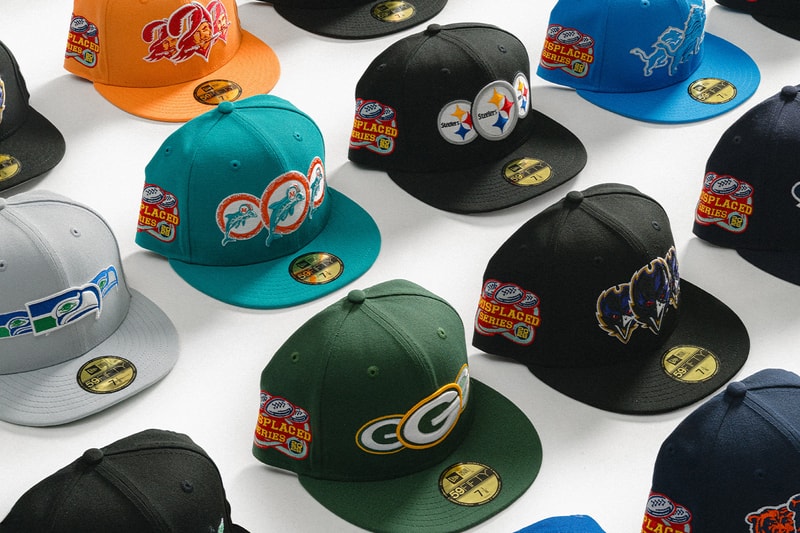
The landscape of sports merchandising, traditionally defined by rigid adherence to corporate style guides, is increasingly being reshaped by the sensibilities of high-end streetwear. The latest evidence of this shift is the "Misplaced Series" NFL Collection, a collaboration between designer John Geiger and headwear retailer Lids. Following a commercially successful venture with Major League Baseball, the partnership now applies Geiger's deconstructive lens to the iconography of 16 American football teams. The collection is set to launch on April 24, preceded by a localized pop-up event in Geiger's hometown of Pittsburgh.
Deconstruction as Design Language
Geiger's signature aesthetic is rooted in the "misplacement" of branding — a technique that layers, offsets, and overlaps logos to create a sense of visual motion and disruption. Rather than treating the NFL's historic marks as static emblems governed by franchise style manuals, the approach recasts them as modular graphic elements, open to reinterpretation. The result moves the product from standard fan apparel toward something closer to a collectible object: a hat that signals cultural fluency as much as team allegiance.
The method has precedent in broader design history. Deconstruction as a visual strategy traces back at least to the typographic experiments of the early 1990s, when designers like David Carson fragmented text and image to challenge the conventions of readability. In fashion, labels such as Off-White built entire brand identities around the deliberate misalignment of familiar symbols — quotation marks around words, arrows pointing nowhere, industrial tape repurposed as ornamentation. Geiger operates in a similar register, but his canvas is narrower and more culturally loaded. Professional sports logos carry decades of emotional investment from fan bases, which makes even modest alterations feel charged. The tension between reverence and subversion is the point.
That Lids serves as the retail partner is itself notable. The chain occupies a particular niche in American retail — ubiquitous in malls and airports, synonymous with mainstream headwear consumption. Collaborating with a designer whose work leans toward limited-edition streetwear positioning signals a deliberate effort to bridge two audiences: the casual sports fan who buys a cap on game day and the fashion-oriented consumer who treats headwear as a statement piece.
The NFL's Expanding Style Playbook
The collaboration also reflects a broader strategic evolution within professional sports licensing. For decades, leagues maintained tight control over how their intellectual property appeared on merchandise, enforcing color palettes, logo placements, and approved product categories with considerable rigidity. That posture has softened in recent years. The NFL, NBA, and MLB have all expanded their licensing frameworks to accommodate collaborations with streetwear designers, luxury houses, and independent creatives. The logic is straightforward: younger consumers, particularly those in the 18-to-34 demographic that advertisers prize, increasingly discover sports culture through fashion and social media rather than through traditional broadcast viewership.
Geiger's MLB collaboration with Lids appears to have provided proof of concept — commercial traction sufficient to justify extending the formula to football. The choice to launch with 16 of the league's 32 teams suggests a phased rollout, a common tactic in limited-edition drops designed to sustain consumer attention across multiple release windows.
The Pittsburgh pop-up adds a layer of locality to what is otherwise a nationally distributed product. Pop-up retail has become a standard mechanism in streetwear marketing, generating scarcity signals and social media content simultaneously. Hosting it in Geiger's hometown ties the product to a personal narrative, reinforcing the idea that the collection is an authorial statement rather than a generic licensing exercise.
What remains to be seen is whether this category of product — the designer-reinterpreted sports cap — settles into a durable market segment or remains a cyclical novelty. The appetite for fashion-forward sports merchandise appears genuine, but it depends on a delicate balance. Push the deconstruction too far and the product loses its connection to the fan identity that gives it meaning. Keep it too safe and it becomes indistinguishable from the official merchandise already filling stadium shops. Geiger's "Misplaced Series" sits deliberately in that gap, betting that the most interesting space in sports merchandising is the one where loyalty and aesthetics pull in opposite directions.
With reporting from Hypebeast.
Source · Hypebeast