In the woods of North Carolina, the rhythmic sweep of a metal detector often unearths more than just oxidized iron; it reveals a persistent human desire to curate the discarded. For Kate Bowler, her husband Zach's recent discovery of a 1936 Chevrolet hubcap represents a pivot point between a standard suburban existence and the idiosyncratic life of a collector. While the prospect of a burgeoning junkyard carries the weight of certain literary tropes — specifically those of the isolated family in need of rescue — it also highlights a fundamental tension in how we value material history.
The hubcap is a piece of industrial design that has survived its original context, transitioning from a functional component to a buried relic. This shift from "garbage" to "artifact" is often a matter of perspective. While neighbors might see an accumulation of scrap, the collector sees a physical record of the past. It is a sentiment echoed by artists who find their canvases in the weathered wood of old doors or the rusted wire of fencing, transforming the infrastructure of the past into the medium of the present.
The taxonomy of discarded things
The question of when an object stops being junk and starts being heritage is older than any metal detector. Museums are, in one reading, institutions built to answer precisely this question — and they answer it with glass cases, climate control, and wall text. The private collector operates under the same impulse but without the institutional scaffolding. There is no accession committee for a backyard in rural North Carolina. The criteria for what merits preservation are personal, idiosyncratic, and often illegible to anyone standing on the other side of the property line.
This illegibility is part of the problem. Municipal codes, homeowner associations, and the general aesthetics of suburban order tend to draw a firm boundary between "collection" and "eyesore." The distinction is rarely about the objects themselves. A 1936 Chevrolet hubcap displayed on a shelf in a design museum would be described as a fine example of Depression-era industrial styling. The same hubcap propped against a shed invites a different vocabulary. Context, not content, determines value — a principle that the art world internalized long ago but that domestic life continues to resist.
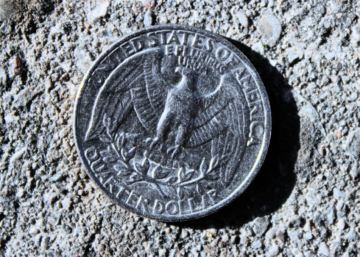
Metal detecting, as a hobby, occupies an unusual position in this taxonomy. It is simultaneously a leisure activity, a form of amateur archaeology, and a species of treasure hunting. Its practitioners develop a trained ear for the tonal differences between ferrous and non-ferrous metals underground, learning to distinguish a coin from a bottle cap by sound alone. The hobby has grown steadily in popularity, aided by online communities where enthusiasts share finds and compare equipment. What unites them is less the monetary value of what they recover — most finds are worth little — than the narrative charge of pulling something from the earth and asking what it was, who held it, and how it ended up beneath six inches of Carolina clay.
Permanence as quiet rebellion
Bowler's reflection touches something broader than hobbyist culture. In an economy organized around planned obsolescence and rapid replacement cycles, the act of retrieving and keeping a nearly century-old object is, in a modest way, countercultural. Modern consumer goods are designed to be replaced, not repaired; discarded, not preserved. The metal detectorist reverses this logic. The object's age is not a deficiency but its entire appeal.
There is a literary lineage here as well. The figure of the collector — from Walter Benjamin's essays on book collecting to the hoarder narratives of contemporary reality television — has long served as a mirror for broader anxieties about possession, meaning, and excess. Benjamin argued that the true collector liberates objects from the drudgery of usefulness, giving them value precisely by removing them from the cycle of function. The hoarder, by contrast, is portrayed as someone consumed by objects rather than liberated by them. The distance between the two figures is narrower than polite society tends to admit.
Whether the backyard accumulation of salvaged metal constitutes a personal museum or an incipient junkyard may depend less on the objects themselves than on the story their keeper can tell about them. A hubcap with a provenance — a year, a make, a model, a plausible history — is an artifact. A hubcap without one is scrap. The collector's real craft, then, is not excavation but narration: the ability to make the recovered object legible, to give it a second life not as a functioning part but as a carrier of meaning. Whether the neighbors find that persuasive is, of course, another matter entirely.
With reporting from 3 Quarks Daily.
Source · 3 Quarks Daily