For decades, the narrative of Apple has been tethered to the myth of the lone visionary. Steve Jobs was the archetypal disruptor — stubborn, demanding, and possessed of a singular aesthetic intuition that pushed the boundaries of industrial design. Under his leadership, Apple didn't just release products; it defined the categories of modern digital life, from the personal computer to the smartphone. When Jobs died in 2011, the question that hung over Cupertino was existential: could Apple survive without its creative nucleus?
The answer, more than a decade later, is unambiguous. Under Tim Cook, Apple has not merely survived but grown into the most valuable publicly traded company in the world. The nature of that growth, however, tells a story that the technology press has been slow to fully appreciate. Cook's Apple does not dazzle with the frequency of its breakthroughs. It dominates through the precision of its operations.
From Vision to Machinery
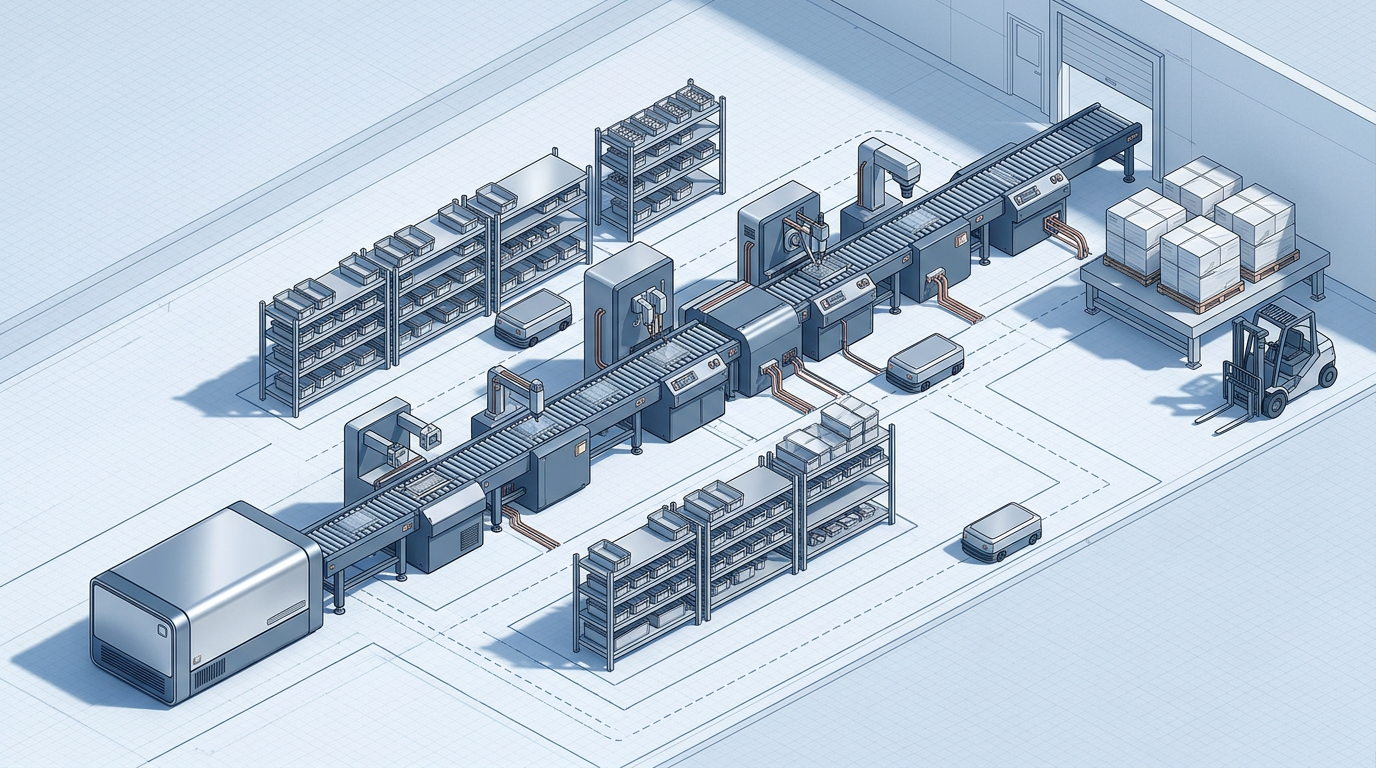
Cook's background is not in design or software engineering but in operations and supply chain management. Before becoming CEO, he spent years restructuring Apple's manufacturing and logistics infrastructure, reducing warehouse inventory, negotiating component contracts, and building relationships with Asian manufacturers that gave Apple preferential access to cutting-edge production capacity. This work was unglamorous but consequential. It meant that when Apple designed a product, it could manufacture it at a scale and margin that competitors struggled to match.
This operational architecture represents a distinct form of innovation — one that the technology industry, long fixated on product launches and interface design, tends to undervalue. The ability to produce hundreds of millions of units of a single device, with tight quality tolerances, across a global supply chain spanning dozens of countries, is an engineering achievement of enormous complexity. Cook did not invent the smartphone, but he built the machinery that made the iPhone a mass-market institution rather than a luxury curiosity.
The parallel extends to Apple's services business. Under Cook, the company layered subscription revenue — from the App Store, Apple Music, iCloud, and Apple TV+ — onto its hardware base, creating a recurring income stream that smoothed the cyclical nature of device sales. This shift from a hardware company to a platform ecosystem was not a single dramatic pivot but a gradual, methodical expansion. It reflects the same operational logic that governs Cook's supply chain: optimize throughput, reduce friction, lock in reliability.
The Era of Refinement
Cook's Apple illustrates a broader pattern in the maturation of technology companies. The founding era of a firm is often defined by invention — the creation of new categories, the disruption of incumbents, the willingness to bet the company on a single product. But as markets saturate and product categories stabilize, the competitive advantage shifts from what a company makes to how efficiently and reliably it can deliver. This transition from invention to refinement is visible across the sector, from cloud infrastructure providers optimizing unit economics to semiconductor firms pursuing incremental process gains measured in nanometers.
The tension, of course, is whether operational excellence can sustain a company indefinitely in an industry that periodically rewards radical reinvention. Apple's competitors in artificial intelligence and mixed reality are making large, speculative bets — the kind of category-defining gambles that characterized Jobs-era Apple. Cook's approach has been more measured: enter adjacent markets carefully, integrate new capabilities into the existing ecosystem, and avoid the kind of public failure that erodes brand trust.
Whether that discipline is a strength or a constraint depends on the trajectory of the technology landscape itself. If the next decade belongs to incremental integration — AI woven into existing devices, health sensors refined year over year, services deepening their hold on daily routines — then Cook's architecture is well suited to the moment. If, on the other hand, a genuinely new computing paradigm demands the kind of reckless creative conviction that defined the original iPhone, the machinery Cook built may need a different kind of operator at the helm.
The question is not whether Cook transformed Apple. He did. The question is whether the transformation he chose — scale over spectacle, process over product — is the one the next era of technology will reward.
With reporting from The Verge.
Source · The Verge