The history of fashion photography is often written as a series of technical breakthroughs — faster film stocks, sharper lenses, the shift from studio to street. Yet its most consequential shifts have always been psychological: changes not in how the camera captures light, but in how the photographer frames identity. This spring, two exhibitions on opposite sides of the Atlantic invite viewers to consider that deeper current. At the Metropolitan Museum of Art in New York, Lillian Bassman: Bazaar and Beyond offers a comprehensive survey of a photographer who spent decades subverting midcentury conventions of the feminine image. In London, a new commission by Nhu Xuan Hua at Autograph extends that interrogation into the present, blending fashion portraiture with surreal, archival impulses.
Taken together, the two shows function less as retrospectives of individual careers than as bookends around a larger question: what happens when the photographer's gaze ceases to serve the garment and begins to serve something more elusive — mood, interiority, the politics of looking itself.
Bassman and the Darkroom as Canvas
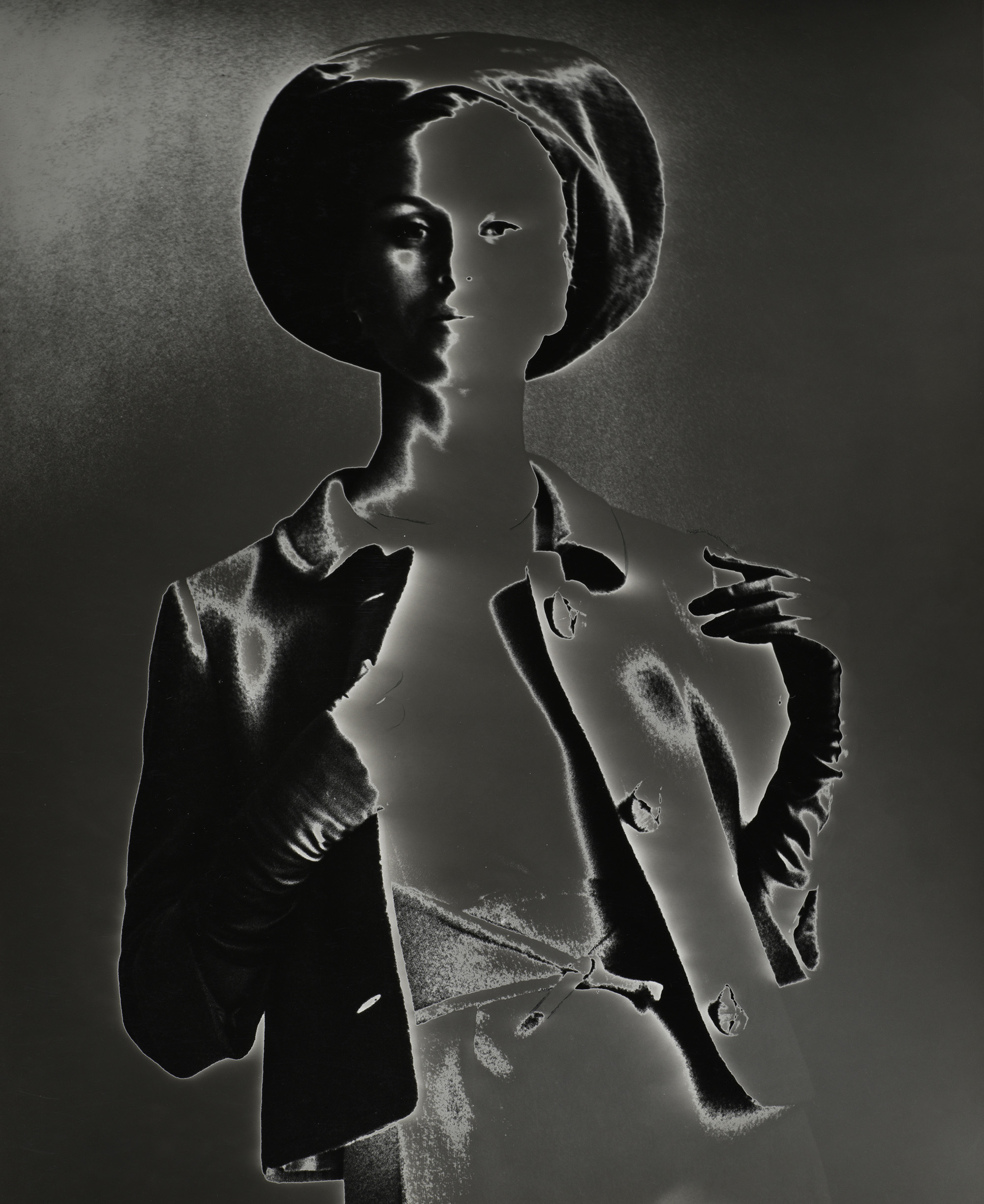
Lillian Bassman came to photography through graphic design, a fact that shaped every frame she produced. As a former art director at Harper's Bazaar during the magazine's midcentury golden age, she understood the printed page as a compositional field before she ever picked up a camera. That background gave her darkroom work a distinctly painterly quality. She favored high-contrast black-and-white tones, experimental bleaching, and printing techniques that dissolved her subjects into elegant silhouettes and gestural lines. Clothing became secondary to atmosphere; the body became a vehicle for abstraction rather than display.
Bassman described her approach as seeing through a "woman's eye" — a phrase that, in the context of a male-dominated industry, carried both aesthetic and political weight. Where many of her contemporaries rendered fashion models as pristine objects of aspiration, Bassman sought intimacy and ambiguity. Her images often feel closer to memory than to advertisement. The Met's retrospective traces this sensibility from her early layout designs at Bazaar through the rare vintage prints that, after decades of relative obscurity, cemented her reputation when they were rediscovered in the 1990s.
The institutional framing matters. Fashion photography has historically occupied an uneasy position within the museum — too commercial for fine art, too artistic for commerce. By mounting a full-scale Bassman retrospective, the Met continues a gradual reclassification that has been underway at major institutions for years, one that treats the fashion image as a legitimate site of visual experimentation rather than a footnote to couture.
Hua and the Contemporary Turn
If Bassman worked within the structured glamour of the magazine spread, Nhu Xuan Hua operates in a landscape where the boundaries between editorial, fine art, and personal archive have largely dissolved. Her portraiture, which has previously been exhibited at Huis Marseille in Amsterdam and Les Rencontres d'Arles in France, draws on her experience in high fashion while pushing toward something more distorted and imaginative. Figures are fragmented, layered, or placed in surreal settings that resist easy narrative. The result is work that feels less concerned with documenting a subject than with constructing one.
Hua's commission at Autograph — a London gallery with a longstanding focus on photography, identity, and representation — positions her practice within a broader contemporary conversation about who controls the image and to what end. Where Bassman challenged the conventions of her era from inside the industry's most prestigious magazine, Hua navigates a media environment in which fashion imagery circulates endlessly across platforms, stripped of context. Her response is to reassert the photographer's authorial hand, making images that are deliberately resistant to passive consumption.
The distance between these two bodies of work — separated by roughly seven decades, different continents, and radically different media ecosystems — is considerable. Yet the underlying tension is remarkably consistent. Both photographers treat the fashion image as a site of negotiation between visibility and interiority, between what the industry demands and what the artist insists on seeing. Whether that negotiation has grown easier or simply changed shape is a question the exhibitions pose without pretending to resolve.
With reporting from Aperture.
Source · Aperture