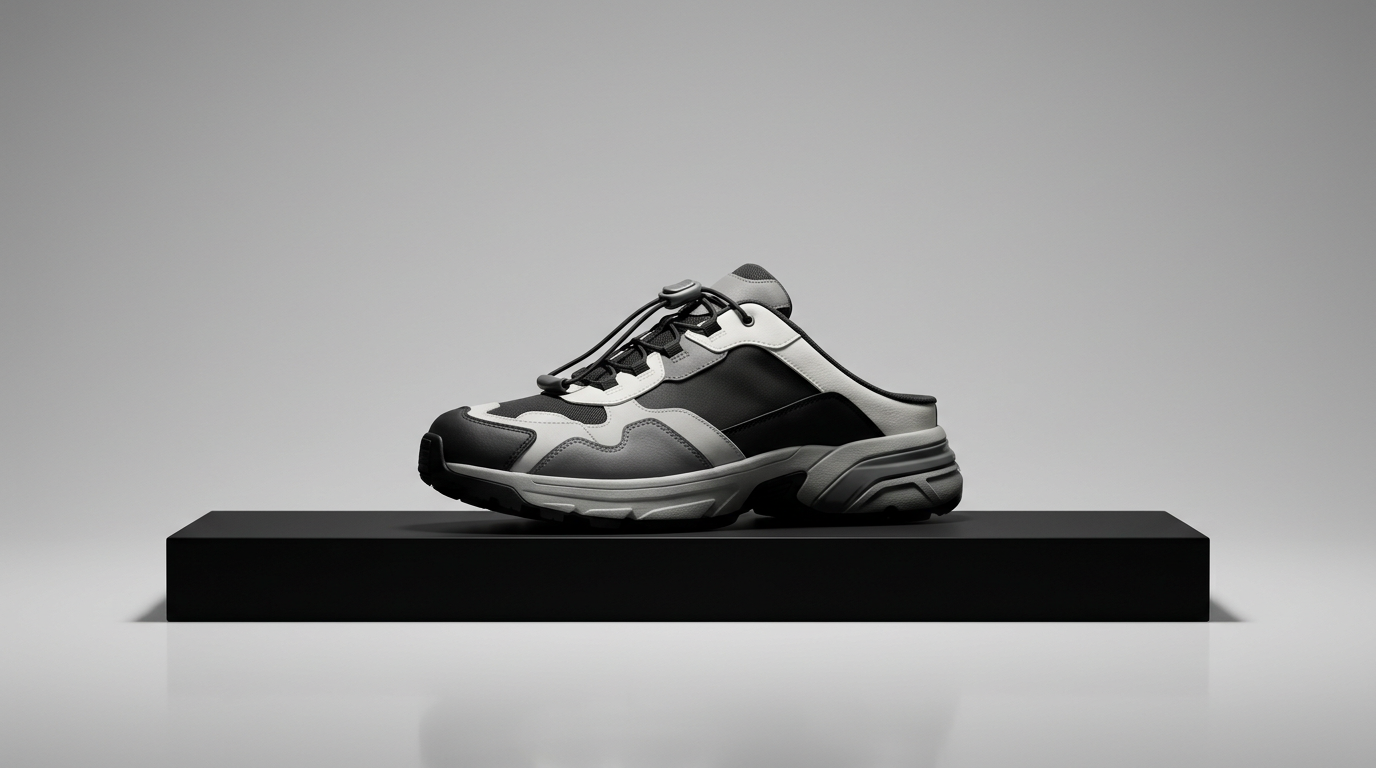
New Balance is preparing to release the 9060 Summer, a hybrid sneaker-sandal that strips the heel from its chunky 9060 silhouette and replaces traditional laces with an adjustable toggle system. The model, available in monochromatic white and black colorways, is scheduled to debut on April 23 through atmos Tokyo at a retail price of approximately $125. The release marks the latest iteration in the brand's effort to extend one of its most commercially successful recent platforms into new functional territory.
The 9060, originally introduced as a retro-futurist running shoe, has become one of New Balance's most visible silhouettes in the lifestyle segment. Its layered midsole, exaggerated proportions, and textural complexity positioned it squarely within the "dad shoe" lineage — a design language that has evolved from ironic fashion statement to genuine pillar of contemporary footwear. The Summer variant preserves the aggressive, maximalist forefoot of the original but introduces an open-back, mule-style construction and a heel strap, creating a shoe that sits at the intersection of sneaker, mule, and technical sandal.
The Logic of Deconstruction
The decision to deconstruct an established silhouette rather than design a sandal from scratch reflects a broader strategic pattern in the footwear industry. Brands increasingly treat proven platforms as modular systems — retaining recognizable design DNA while adapting the form factor for seasonal or functional variation. Nike has done this with slide and mule versions of the Air Max and Offline lines. Salomon has extended its trail-running platforms into sandal territory. The approach reduces design risk: consumers already recognize and trust the silhouette, and the modification itself becomes the marketing narrative.
The toggle lace system on the 9060 Summer is a telling detail. It borrows directly from trail running and hiking footwear, where quick-adjust closures serve a genuine performance function. In a lifestyle context, the toggle is less about utility and more about signaling — it codes the shoe within the "gorpcore" aesthetic, a movement that repurposes heavy-duty outdoor gear for urban leisure. Gorpcore has proven durable as a style current, outlasting several seasonal cycles and embedding itself in the design vocabulary of brands from Arc'teryx to Merrell to, now, New Balance.
Form Over Palette
The choice to launch in strictly monochromatic white and black is deliberate. By stripping away color, the design foregrounds the sculptural complexity of the 9060's layered upper and midsole architecture. This is a presentation strategy that treats the shoe as an object of industrial design rather than a canvas for graphic expression. It also positions the initial release as a foundation: limited colorways at launch often signal that broader palette expansion will follow, calibrated to market response.
The debut through atmos Tokyo is equally notable. Atmos has long functioned as a tastemaker retail channel in the sneaker ecosystem, particularly for releases that straddle the line between performance heritage and streetwear credibility. Launching through a single specialty retailer in Tokyo — rather than through New Balance's own global channels — suggests a controlled rollout designed to build scarcity and editorial attention before wider distribution.
The 9060 Summer arrives at a moment when the boundaries between footwear categories continue to dissolve. The sneaker-sandal hybrid is no longer a novelty; it is becoming a recurring format, driven by consumer demand for versatility and by brands seeking to extract more revenue from proven platforms. Whether this particular execution resonates beyond the initial hype cycle will depend on whether the open-back construction delivers genuine warm-weather comfort or merely aesthetic novelty. The tension between those two possibilities — functional adaptation versus design exercise — is the question that defines much of the hybrid footwear space.
With reporting from Highsnobiety.
Source · Highsnobiety