The traditional airport lounge has long functioned as a utilitarian sanctuary — a reprieve from the terminal's kinetic chaos, defined by lukewarm buffets and reliable Wi-Fi. But as premium air travel enters a more competitive era, the definition of luxury is moving beyond mere exclusivity. At Los Angeles International Airport (LAX), the new Delta One Lounge represents a pivot toward a more holistic, wellness-focused hospitality model, designed to address the physiological and psychological stresses of the long-haul journey.
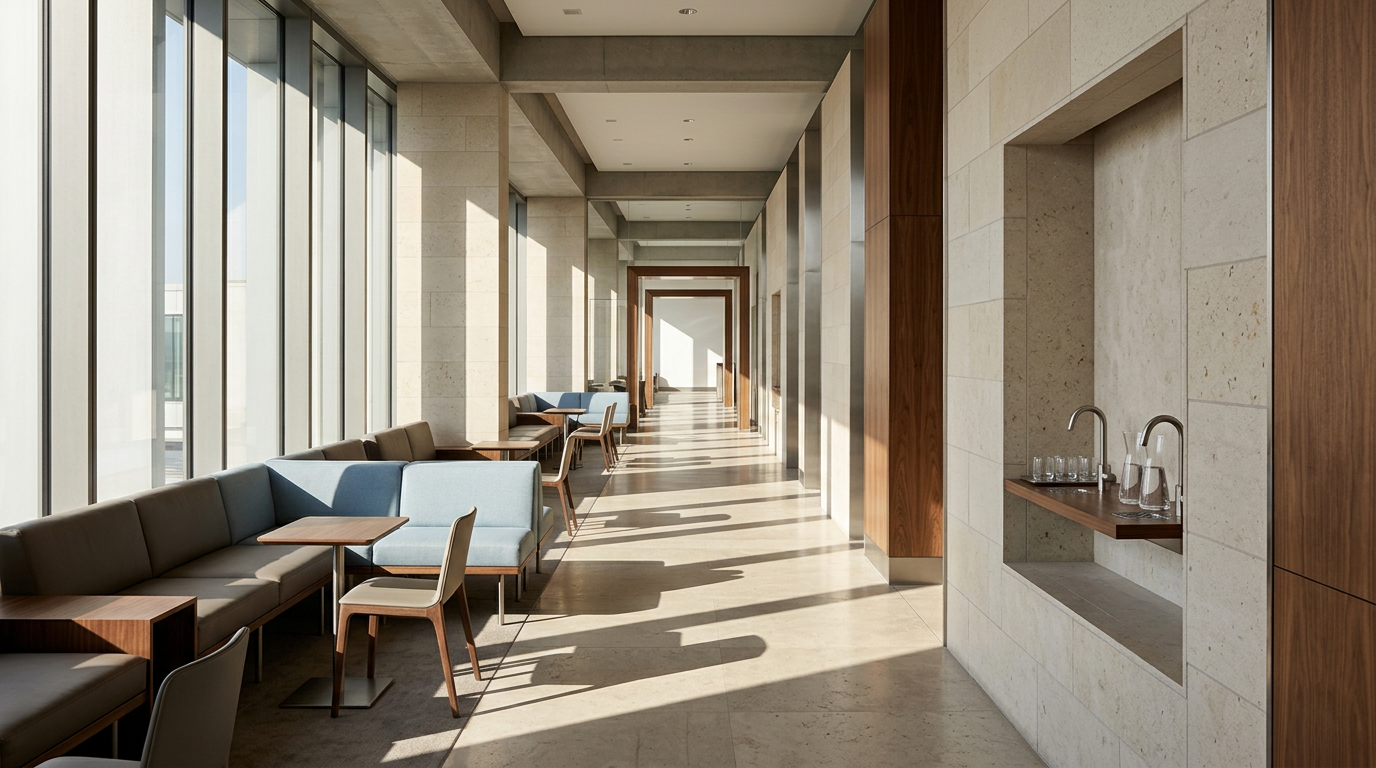
The lounge's primary innovation is the removal of friction. By streamlining the transition from the curb to the gate through dedicated check-in and private security access, the space attempts to solve the "hurry up and wait" paradox of modern aviation. Inside, the environment is less about traditional opulence and more about quiet elegance — emphasizing high-end gastronomy and recovery-focused amenities that aim to reset the traveler's internal clock before boarding.
Competing on the Ground
Delta's investment at LAX arrives at a moment when the competitive landscape for premium travelers has intensified considerably. The major U.S. carriers — United, American, and Delta — have each signaled that the ground experience is now a primary battleground for high-yield customers. United has expanded its Polaris lounge network; American has invested in Flagship lounges with elevated dining. Internationally, carriers such as Singapore Airlines, Qatar Airways, and Emirates have long set the benchmark, offering shower suites, spa treatments, and à la carte restaurants as standard features of their premium lounges.
What distinguishes Delta's approach is the framing. Rather than layering amenities onto a conventional lounge template, the Delta One Lounge appears designed around a single organizing principle: minimizing the cumulative stress of the travel day. Dedicated check-in counters and private security lanes address the logistical bottlenecks that erode the premium experience before a passenger ever reaches the gate. The wellness-oriented interior — with its attention to lighting, acoustics, and restorative spaces — treats the layover not as dead time but as a phase of the journey with its own purpose.
This is a meaningful conceptual shift. For decades, airline lounges competed on tangible perks: better food, faster internet, more comfortable seating. The Delta One Lounge suggests a move toward competing on something less tangible but arguably more valuable — the traveler's physiological state upon boarding. If a passenger arrives at their seat already rested and calm rather than frazzled by security lines and crowded terminals, the entire flight experience changes.
The Commodification of Well-Being
The wellness angle is not unique to aviation. The hospitality industry more broadly has absorbed the language and logic of well-being into its premium offerings. Hotel chains have introduced circadian lighting systems, sleep-focused room designs, and biophilic architecture. Co-working spaces market themselves on air quality and ergonomic furniture. The underlying commercial insight is consistent: as consumers with disposable income become more attuned to the effects of environment on mood and performance, designing for well-being becomes a defensible source of differentiation.
For airlines, however, the challenge is structural. The flight itself — pressurized cabins, recycled air, disrupted sleep cycles — remains largely hostile to human comfort regardless of cabin class. The ground experience is where carriers have the most architectural freedom and the fewest engineering constraints. Delta's bet appears to be that investing heavily in this controllable segment of the journey yields outsized returns in brand perception and loyalty among the travelers who generate disproportionate revenue.
LAX is a strategic venue for this experiment. As a gateway to transpacific routes and a hub for the entertainment industry, it serves a traveler demographic that skews toward high expectations and frequent flying. The lounge functions as both a service offering and a statement of intent — a signal to competitors and customers alike about where Delta believes the premium experience is heading.
Whether this model scales beyond a flagship location remains an open question. The economics of dedicated security access, wellness-oriented design, and high-end food service are demanding, and replicating them across a network of hubs would require sustained capital commitment. The tension between a bespoke, location-specific experience and the operational consistency airlines depend on is real. Delta has built an argument at LAX. The rest of the network will test whether it holds.
With reporting from Exame Inovação.
Source · Exame Inovação