In 1999, the introduction of NikeID marked a pivotal shift in the relationship between a legacy sportswear brand and its audience. What was once a unidirectional transaction — the consumer purchasing a finished product — became a collaborative process, one in which the buyer could select colorways, materials, and personal inscriptions on a limited range of silhouettes. Twenty-seven years later, the platform, now rebranded as Nike By You, has matured into a sophisticated design suite that blurs the line between the professional athlete's exclusive "player edition" and the public's reach.
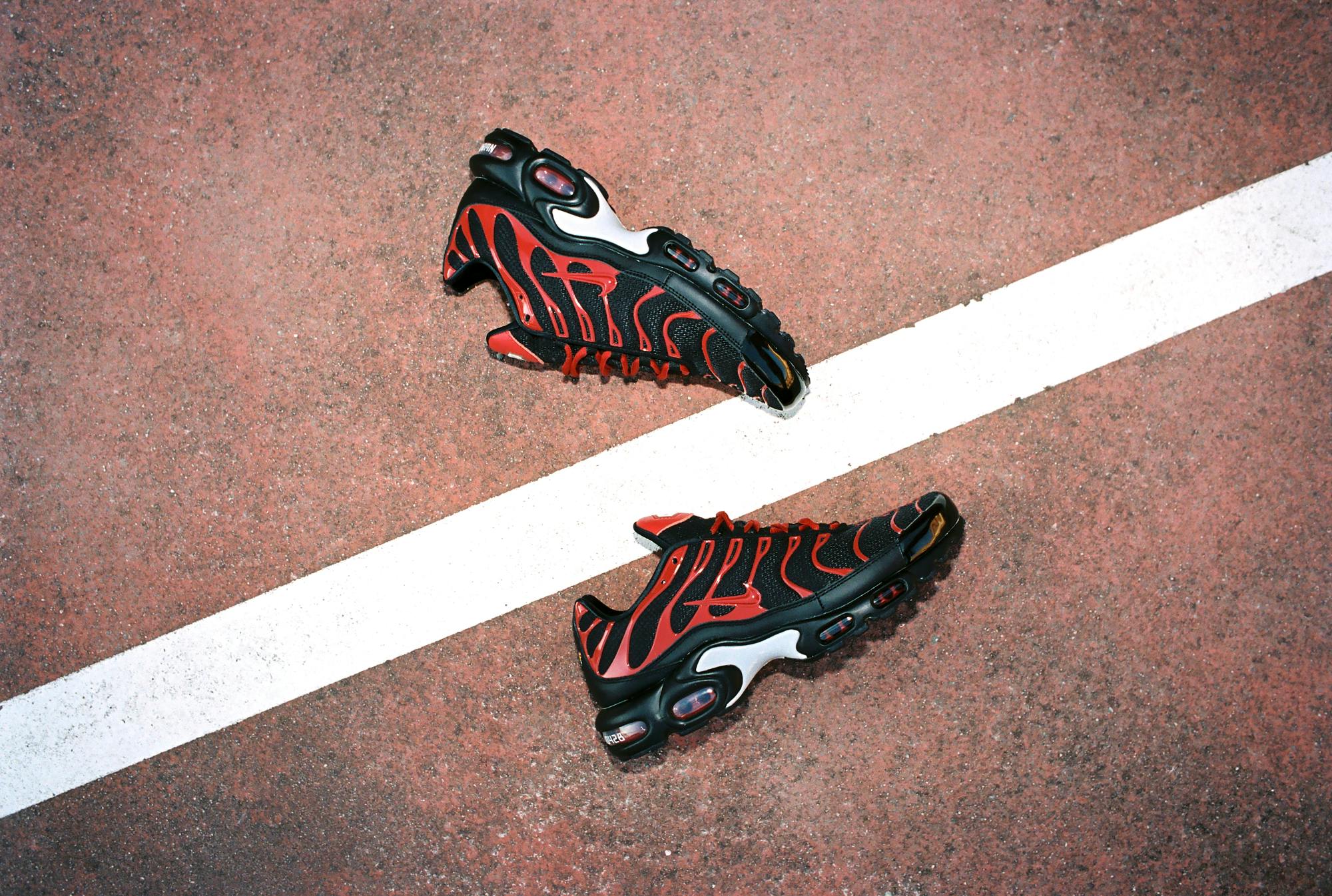
The recent work of Spanish footballers Nico Williams and Alejandro Balde illustrates this closing gap. While high-profile collaborations are often the result of closed-door sessions between corporate designers and global stars, Williams and Balde utilized the standard Nike By You interface to produce iterations of the Air Max Plus and Air Max 95. Their designs serve as semiotic exercises, translating personal history and professional ethos into material form.
From Color Picker to Design Language
The trajectory of mass customization in footwear is worth tracing. When NikeID launched in the late 1990s, its proposition was modest: choose a base model, pick from a palette of colors, and add an embroidered tag. The tools were rudimentary, the options constrained. Over the intervening decades, the platform expanded its material library, introduced premium leather and textile options, and widened the range of silhouettes available for personalization. The rebrand to Nike By You in 2019 signaled an intent to reposition the service not merely as a customization feature but as a creative platform — one that could accommodate a spectrum of users from casual buyers to professional athletes.
That repositioning matters because it reflects a broader shift in how sportswear companies conceive of product design as a spectrum rather than a binary. On one end sits the mass-market release; on the other, the bespoke player edition crafted for a single athlete's biomechanics and personal brand. Nike By You occupies an increasingly interesting middle ground — accessible to anyone with an internet connection, yet flexible enough to carry genuine design intent.
Balde's take on the Air Max 95 demonstrates the point. The sneaker is an homage to his roots in Barcelona's Sant Martí neighborhood. Black leather symbolizes the discipline required of a top-tier defender, punctuated by bright orange accents that denote ambition. It is a subtle narrative arc captured in a silhouette, one that would have been impossible to execute on the rudimentary NikeID interface of two decades ago. Williams's Air Max Plus, similarly, functions less as a consumer product and more as a piece of personal iconography rendered through Nike's toolset.
The Strategic Calculus Behind Open Tools
For Nike, the strategic logic of encouraging professional athletes to use the same platform available to the general public is layered. It collapses the perceived distance between star and consumer, reinforcing the aspirational but attainable ethos that has long underpinned the brand's marketing architecture. When a footballer with millions of followers designs a shoe through the same interface a teenager in Madrid can access, the implicit message is that creative agency is democratized — even if the athlete's cultural capital ensures far greater visibility for the result.
There is also a data dimension. Every customization session generates preference signals — color affinities, material choices, silhouette popularity — that feed back into Nike's broader product development pipeline. The platform functions, in effect, as a distributed design lab, surfacing trends from millions of individual decisions.
The tension, however, lies in the gap between narrative and capability. Nike By You remains bounded by a curated set of options; the athlete-as-architect metaphor has limits when the architecture is modular rather than freeform. Balde and Williams are composing within a grammar that Nike defined. Whether the platform evolves toward genuinely open-ended design tools — approaching the flexibility of a player edition without the closed-door access — or remains a sophisticated but ultimately constrained menu of choices will determine whether this middle ground becomes a permanent category or a transitional phase.
What the Williams and Balde projects make visible is that the demand exists. Athletes want to tell stories through product, and consumers want to participate in the same creative framework. The question is how far the toolset will stretch before the economics of mass customization impose their own constraints.
With reporting from Highsnobiety.
Source · Highsnobiety