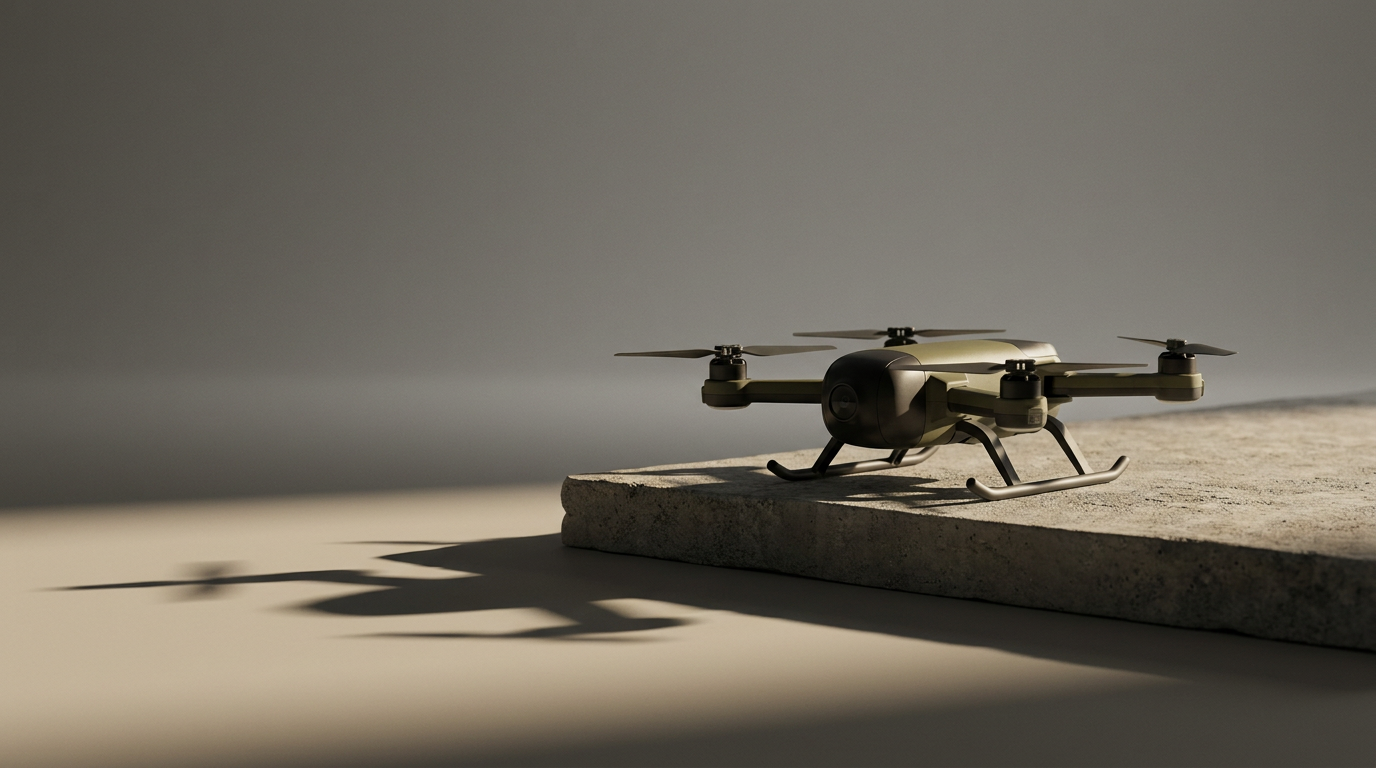
The consumer drone market has undergone a structural transformation over the past half-decade. What began as a niche pursuit for hobbyists and aerial photography enthusiasts has become a standard instrument in the toolkit of content creators, real estate agents, educators, and casual travelers alike. At the center of this democratization sits DJI, the Shenzhen-based manufacturer that has dominated the global consumer drone segment for years. Its Neo model, positioned squarely between entry-level portability and semi-professional capability, offers a useful lens through which to examine where the broader market is heading.
By 2026, the DJI Neo retails in Brazil between R$ 3,000 and R$ 6,000 depending on configuration. The base model delivers the core flight architecture — compact frame, integrated camera, and standard battery life — while advanced kits bundle additional batteries, enhanced camera hardware, and accessories designed for extended field endurance. That pricing corridor places the Neo firmly in the mid-range: above the toy-grade quadcopters that flood online marketplaces, but well below the professional rigs used in cinematography, surveying, and industrial inspection.
The Mid-Range as Strategic Territory
DJI's decision to anchor the Neo in this segment is not accidental. The entry-level drone market, while large in unit volume, is characterized by thin margins and fierce competition from dozens of manufacturers producing near-disposable devices. The professional tier, meanwhile, demands regulatory compliance, specialized payloads, and after-sales support infrastructure that limits the addressable customer base. The mid-range occupies a different kind of territory — one defined less by price sensitivity or professional necessity and more by aspiration. Buyers in this bracket tend to be upgrading from a first drone or purchasing their first device with genuine creative intent.
The Neo's feature set reflects this calculus. Its suite of intelligent flight modes — including automated tracking, orbit patterns, and pre-programmed cinematic maneuvers — is designed to compress the learning curve. Advanced stabilization sensors reduce the likelihood of crashes and smooth out footage in ways that would have required a gimbal-equipped platform costing several times more just a few years ago. The underlying logic is clear: make the technology forgiving enough that a first-time pilot can produce results that feel professional, and the device sells itself through the content its owners share.
This approach mirrors a pattern visible across consumer electronics more broadly. As hardware capabilities converge and component costs decline, differentiation increasingly shifts toward software intelligence and user experience. DJI has leaned into this dynamic more aggressively than most of its competitors, investing in obstacle avoidance algorithms, automated return-to-home functions, and geofencing systems that keep pilots within legal airspace.
Regulation, Competition, and the Crowded Sky
The Neo's emphasis on smart safety features also serves a regulatory purpose. Drone legislation has tightened in most major markets over the past several years, with governments imposing registration requirements, altitude limits, and no-fly zones around airports and sensitive infrastructure. Devices that ship with built-in compliance mechanisms — geofencing databases, automatic altitude ceilings, remote identification broadcasting — face fewer friction points at the point of sale and reduce liability exposure for the manufacturer.
DJI's competitive position, however, is not without pressure. Trade restrictions between the United States and China have periodically complicated the company's access to Western markets, and rival manufacturers in both Asia and North America have sought to capitalize on those tensions. The mid-range segment, in particular, has attracted new entrants promising comparable camera quality and flight intelligence at lower price points.
What remains to be seen is whether DJI's accumulated ecosystem advantages — its flight control software, its dealer network, its library of compatible accessories — constitute a durable moat, or whether the commoditization of drone hardware will eventually erode the premium the Neo commands. The device itself is a competent product in a maturing category. The more consequential question is whether the category's economics will continue to reward the kind of integrated, intelligence-first approach that the Neo represents, or whether the market will fragment into a landscape where hardware specs and price alone determine the winner.
With reporting from Olhar Digital.
Source · Olhar Digital