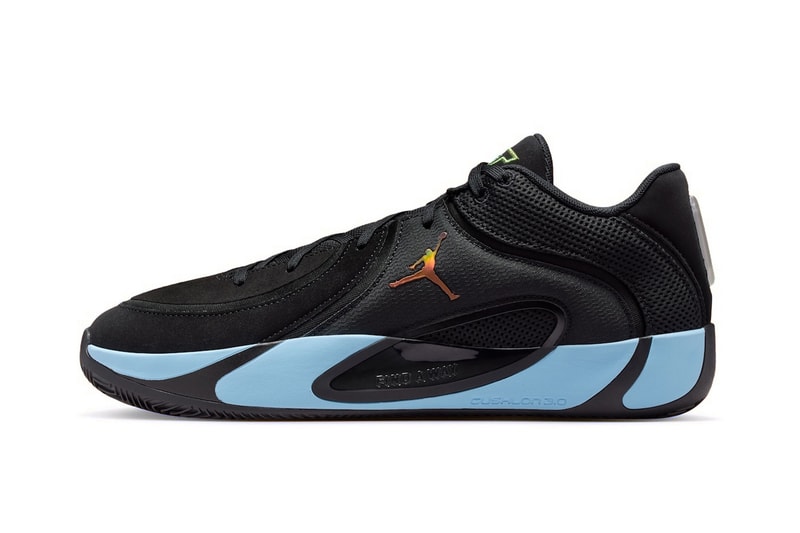
In the ecosystem of modern basketball footwear, the signature sneaker has evolved into a sophisticated exercise in brand storytelling. Jayson Tatum's fourth silhouette with Jordan Brand, recently unveiled in a "Black/Ice Blue" colorway, reflects this shift toward more disciplined, architectural design. Slated for a May 2026 release, the shoe moves away from the vibrant palettes often associated with young superstars, opting instead for a monochromatic austerity that highlights the shoe's technical geometry.
The Tatum line has matured quickly. When the first signature model launched, it positioned Tatum as one of a small cohort of active NBA players granted their own Jordan Brand silhouette — a distinction that carries commercial weight in a market where signature lines increasingly function as brand franchises rather than seasonal products. Each subsequent iteration has refined the visual language, and the Tatum 4 appears to represent the most deliberate departure yet from the expressive maximalism that has dominated basketball sneaker design in recent years.
Material Architecture and Performance Engineering
The construction of the Tatum 4 is a study in material contrast. A stealthy upper, composed of premium suede and nubuck-style paneling, is punctuated by breathable mesh zones at the tongue and collar to manage the thermal demands of elite play. This dark base serves as a canvas for the "Ice Blue" accents that define the sculpted midsole, where textured grooves emphasize an aerodynamic profile designed for lateral speed.
Beyond the aesthetics, the shoe serves as a vessel for Jordan Brand's latest performance hardware. The "Cushlon 3.0" foam — the proprietary cushioning platform Nike has developed as an alternative to its widely used Zoom Air units — provides the responsive energy return required for Tatum's explosive style of play. The choice of foam technology is notable in itself. Basketball footwear has entered a period of intense material competition, with brands investing heavily in midsole compounds that promise lighter weight without sacrificing impact protection. Cushlon 3.0 represents Jordan Brand's bet that a tuned foam system can compete with the air-bag and carbon-plate solutions gaining traction elsewhere in the performance category.
Subtle iridescent details on the Jumpman and tongue logos offer a dynamic visual finish, while the midfoot carries the embossed mantra "FIND A WAY" — a personal tagline for Tatum that doubles as a design element anchoring the shoe's identity.
The Signature Sneaker as Crossover Object
The broader significance of the Tatum 4's design direction lies in what it signals about the evolving role of the basketball signature shoe. For decades, on-court footwear occupied a clearly delineated space: bold colors, aggressive lines, and performance-first construction. The lifestyle crossover was an afterthought, something that happened organically when retired models filtered into casual rotation. That boundary has eroded. Brands now design signature shoes with dual citizenship in mind — engineered for the hardwood but styled for contexts far removed from it.
The Tatum 4's monochromatic palette and industrial silhouette fit squarely within this strategy. Its visual restraint borrows more from the vocabulary of contemporary industrial design and minimalist streetwear than from traditional basketball aesthetics. The suede and nubuck paneling, in particular, reads as a material choice calibrated for off-court appeal, lending the shoe a tactile richness that synthetic performance uppers rarely achieve.
This dual-purpose ambition carries risk. A shoe that tries to serve both the performance and lifestyle markets can end up satisfying neither fully. Yet the trajectory of the broader sneaker market suggests that the audience for basketball signatures increasingly evaluates them as design objects first and athletic tools second. Jordan Brand, more than any competitor, understands this dynamic — its entire heritage is built on the premise that a basketball shoe can transcend its functional origins.
Whether the Tatum 4 achieves that transcendence will depend on factors the design alone cannot control: Tatum's on-court performance during the shoe's release window, the colorway cadence that follows this initial drop, and whether the silhouette resonates with the style-conscious consumers who ultimately determine a signature line's commercial longevity. The tension between athletic credibility and lifestyle desirability remains the central challenge for every modern signature program — and the Tatum 4's calculated minimalism is one of the more deliberate attempts to resolve it.
With reporting from Hypebeast.
Source · Hypebeast