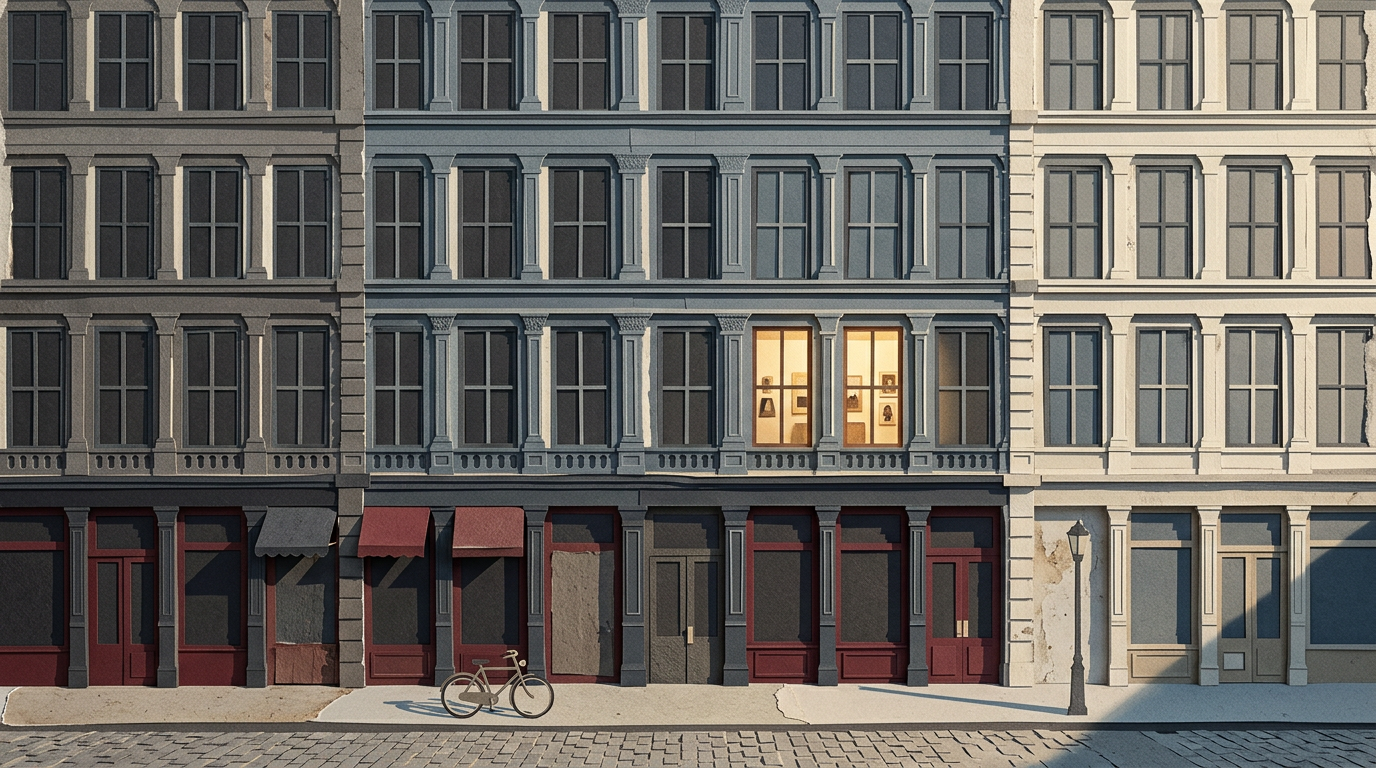
In the high-velocity environment of Milan Design Week, the search for quietude often leads to the most rigorous intellectual inquiry. For the 2026 edition, the ME Milan Il Duca — a hotel shaped by the sober, rationalist hand of architect Aldo Rossi — hosts a multilayered takeover titled "Room for Dreams." At its center sits the Cinema of Dreams, a temporary installation designed by Paf atelier that functions as both a screening room and a sensory retreat from the surrounding trade fair. The program, curated by Designboom in collaboration with Paf atelier, is organized around a single provocation: that dreaming is not escapism but a precondition for cultural change.
Framed under the banner of "Utopian Optimism," the Cinema of Dreams presents a daily rotation of short films, video interviews, and feature-length works selected to foreground creatives whose practices treat curiosity and playfulness as serious intellectual postures. The daily schedule opens with a collaboration with the Louisiana Channel, the digital platform of Denmark's Louisiana Museum of Modern Art, featuring its "Advice to the Young" series — conversations with architects and artists from a broad geographic range, each offering reflections pitched against the commercial tempo of the week.
Design Fairs and the Problem of Attention
Milan Design Week — anchored by the Salone del Mobile trade fair but sprawling across the city through hundreds of satellite events — has long operated under a paradox. It is simultaneously the global design calendar's most important commercial gathering and its most ambitious cultural stage. Brands compete for attention with immersive installations, limited-edition drops, and celebrity collaborations. The result is an environment where spectacle and substance coexist uneasily, and where the sheer density of programming can flatten the distinction between the two.
Against that backdrop, projects that deliberately slow the pace carry a particular charge. The Cinema of Dreams fits a lineage of Milan Design Week interventions that use film, sound, or spatial design to create pockets of contemplation within the broader carnival. The choice of the ME Milan Il Duca as venue reinforces the intent. Rossi's architecture — geometric, restrained, rooted in typological thinking — provides a built environment already predisposed to reflection rather than spectacle. Embedding a screening program inside that shell is a curatorial decision that aligns content with context.
The involvement of the Louisiana Channel adds institutional weight. The Louisiana Museum has built a distinctive editorial identity through its digital arm, producing artist interviews and studio visits that prioritize long-form conversation over promotional content. Importing that sensibility into a trade-fair context is a deliberate friction — an attempt to hold open a space for ideas that resist immediate commercial translation.
Utopian Optimism as Design Position
The curatorial frame of "Utopian Optimism" invites scrutiny. Utopianism in design carries historical baggage: the twentieth century is littered with grand visions — from Soviet constructivism to Buckminster Fuller's geodesic ambitions — that promised transformation and delivered, at best, mixed results. To invoke utopia in a contemporary design context is to court skepticism.
Yet the Cinema of Dreams appears to sidestep the totalizing impulse that marked earlier utopian projects. Rather than proposing a single vision of the future, it curates a plurality of voices and formats, treating dreams as generative starting points rather than blueprints. The distinction matters. Where classical utopianism tended toward prescription, this iteration leans toward permission — an argument that imaginative latitude is itself a design resource, not a luxury to be discarded when budgets tighten or deadlines compress.
Whether that argument lands depends on what happens after the screenings end and visitors step back into the commercial current of the fair. The tension between reflection and transaction is not one the Cinema of Dreams can resolve; it can only stage it. In a city preoccupied with the tangible future of product and form, the installation raises a question that resists easy settlement: whether the most durable structures are those first built in the imagination, or whether imagination untethered from material constraint remains, in the end, just a pleasant room to sit in for a while.
With reporting from Designboom.
Source · Designboom