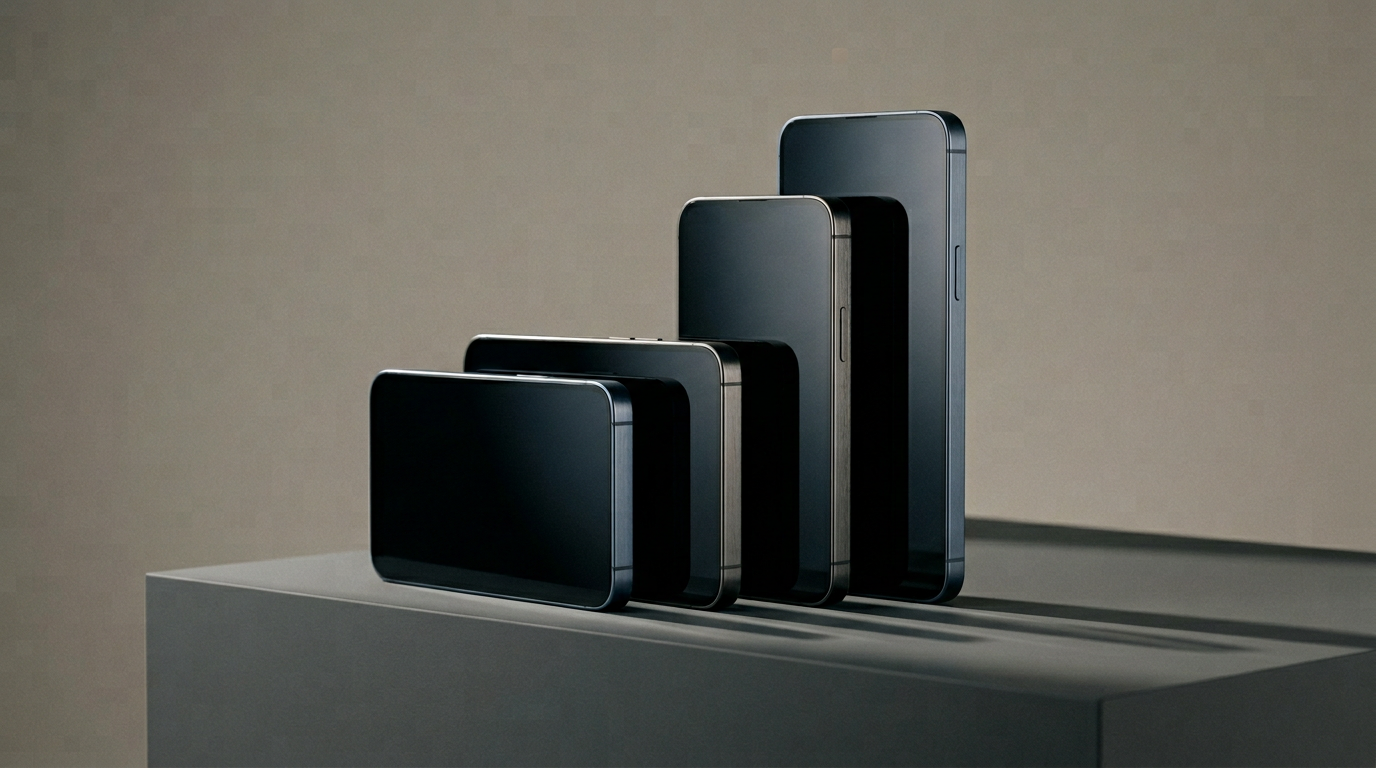
Xiaomi has long occupied a unique position in the global hardware ecosystem, acting less as a pioneer of radical form factors and more as a master of supply-chain efficiency. The brand's latest iterations — ranging from the Redmi Note 14 to the more modest A5 — underscore a continuing trend in the mobile industry: the rapid commodification of high-performance specifications. Features that were once the exclusive domain of flagships, such as 8GB of RAM and 256GB of internal storage, have now become the baseline for the mid-range market. In practical terms, the smartphone that would have commanded a premium two product cycles ago now sits comfortably in the budget tier — and Xiaomi is one of the primary forces driving that compression.
The dynamic is not new, but its pace has accelerated. For much of the past decade, the smartphone industry followed a familiar cadence: flagship innovations trickled down to mid-range devices over roughly eighteen months, then to entry-level hardware a cycle or two later. What distinguishes the current moment is how thin the gap between tiers has become. The current Xiaomi lineup, highlighted by models like the Redmi Note 15 and the Redmi 15C, reflects a strategic push to saturate what might be called the "prosumer-on-a-budget" segment — users who need robust multitasking and generous storage but have no intention of paying flagship prices.
The supply-chain logic behind spec democratization
Xiaomi's ability to compress the value chain rests on structural advantages that are well documented. The company operates on razor-thin hardware margins, a model it has publicly affirmed in the past by pledging to cap net profit margins on hardware. Revenue is supplemented through software services, advertising within its MIUI (now HyperOS) ecosystem, and an expanding portfolio of connected devices. This architecture allows Xiaomi to treat each handset less as a profit center and more as a distribution vehicle for recurring revenue streams.
The broader semiconductor landscape reinforces this strategy. As fabrication processes mature and component costs decline — particularly for DRAM and NAND flash — the bill of materials for a capable mid-range phone drops accordingly. Xiaomi, with its scale and its deep integration with Chinese component suppliers, is positioned to capture those savings faster than many Western-facing competitors. The result is a lineup where specifications that would have been aspirational three years ago are now table stakes.
This approach doesn't just cater to consumer demand; it forces a recalibration of value across the entire sector. When a budget device ships with enough RAM and storage to handle most productivity and media-consumption tasks without friction, the justification for spending two or three times more on a flagship becomes increasingly narrow — limited to camera systems, display quality, and brand signaling rather than core computing capability.
The plateau problem and what remains to differentiate
Even at the lower end of the spectrum, with devices like the Redmi A5, the focus remains on essential utility. While these models trade off some processing power, they maintain a design language that aligns with the brand's more expensive siblings. The convergence is not merely cosmetic. It reflects a broader reality: hardware innovation in smartphones has largely plateaued. Year-over-year improvements in processing, battery life, and display technology are now incremental rather than transformative.
In such an environment, differentiation migrates away from raw specifications and toward software experience, ecosystem integration, and services. Apple understood this years ago; Samsung has invested heavily in the same direction. For Xiaomi, the question is whether its services layer — still heavily dependent on the Chinese domestic market — can generate enough value internationally to sustain the low-margin hardware model as competition from other Chinese manufacturers like Realme, Vivo, and Transsion intensifies.
The tension, then, is not whether mid-range hardware is "good enough" — it plainly is. The tension is what happens to an industry's economics when the hardware floor rises to meet most users' actual needs, and the willingness to pay a premium erodes accordingly. Xiaomi's latest lineup does not answer that question. It sharpens it.
With reporting from Olhar Digital.
Source · Olhar Digital