For years, the premium smart lighting market has been defined by a specific kind of incumbency. Signify's Philips Hue brand has long commanded what amounts to a "luxury tax" for its ecosystem, epitomized by the Hue Go — a portable, rechargeable table lamp that currently retails for roughly $176. It is a product designed for those who view light as an architectural element rather than a utility. The Hue Go has occupied this niche largely unchallenged, buoyed by Signify's early-mover advantage and the stickiness of its proprietary Zigbee-based ecosystem.
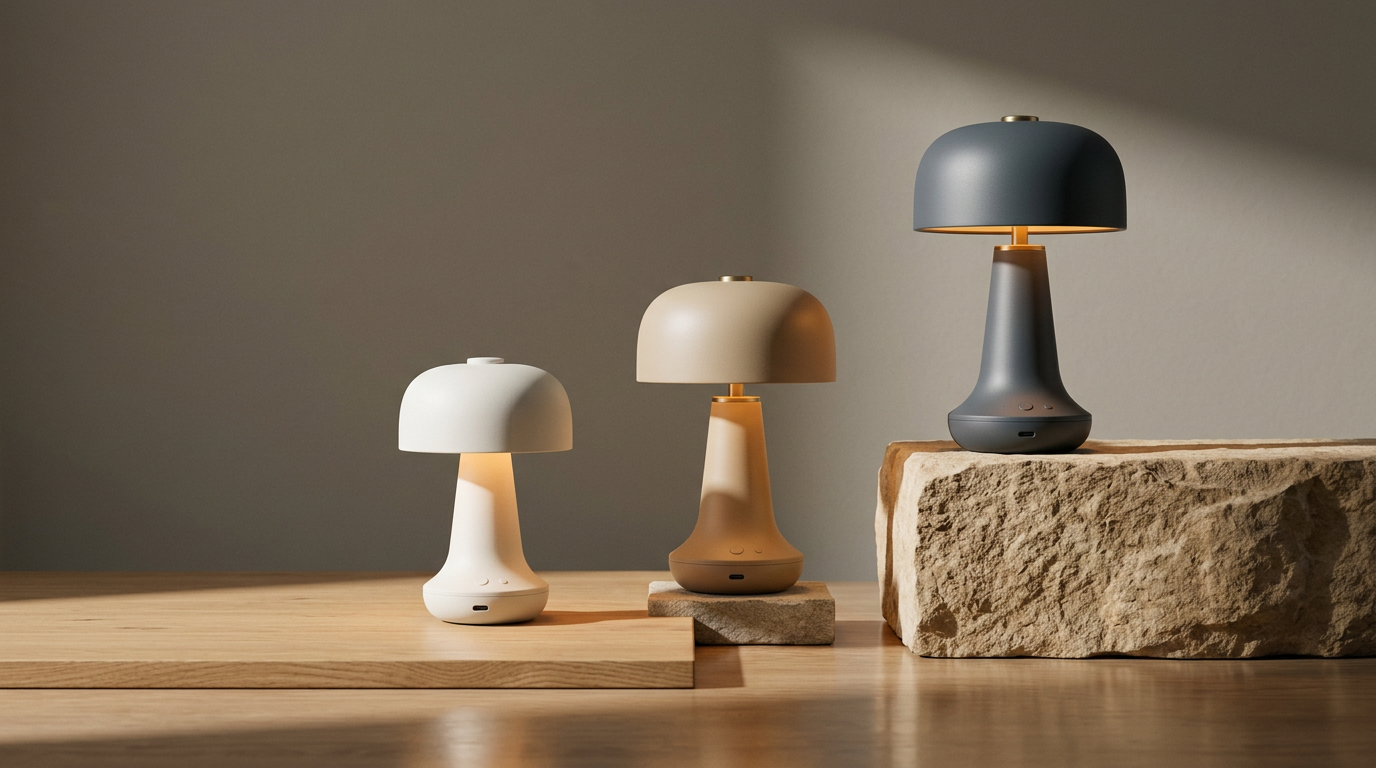
Now, the hardware manufacturer Govee is testing the elasticity of that premium. The company has released the Table Lamp Classic, a rechargeable alternative that arrives at $79.99 — less than half the price of its Hue counterpart. The release highlights a pattern that has played out across nearly every category of the Internet of Things: the rapid commoditization of hardware that once required a substantial investment.
The mechanics of commoditization
The trajectory is familiar. A category pioneer — in this case, Philips Hue — establishes a product segment, sets consumer expectations, and prices accordingly. For a time, the premium holds because alternatives are either nonexistent or functionally inferior. Then manufacturing costs decline, component suppliers proliferate, and competitors arrive with products that are close enough in capability to erode the incumbent's pricing power.
Smart lighting has followed this arc with particular clarity. When Philips Hue launched its first products in the early 2010s, the cost of addressable LED modules, wireless radios, and companion software was high enough to justify premium retail prices. Over the intervening years, the underlying components — LED drivers, Bluetooth and Wi-Fi chipsets, rechargeable battery cells — have become commodity inputs. Companies like Govee, which built their brand on affordable LED strip lights and ambient lighting accessories, are now positioned to assemble feature-competitive products at dramatically lower cost structures.
The Govee Table Lamp Classic illustrates the trade-offs inherent in this compression. While it offers a similar aesthetic and the convenience of cordless, rechargeable operation, the price reduction comes with calculated compromises. Unlike the Hue Go, which is ruggedized for outdoor use with an IP54 rating, Govee's offering is strictly an indoor fixture. It is a deliberate scope reduction — one that narrows the product's versatility but also narrows the bill of materials. For a consumer who wants a portable accent lamp for a living room or bedroom, the outdoor capability may be irrelevant. That calculus is precisely what makes commoditization effective: it identifies the features most consumers actually use and strips away the rest.
What holds and what erodes
The more consequential question is whether Signify's ecosystem advantage can sustain its pricing in the face of hardware parity. Philips Hue has historically justified its premium not just on build quality but on interoperability — a mature app, integration with major voice assistants, and a broad catalog of accessories that work together seamlessly. Govee, for its part, has been expanding its own app ecosystem and has adopted Matter, the cross-platform smart home standard backed by Apple, Google, and Amazon. Matter is designed to reduce the friction of multi-brand interoperability, which means the ecosystem moat that once protected incumbents like Hue is gradually being filled in by an industry-wide protocol.
This does not mean Philips Hue faces an existential threat from a single lamp. Signify's installed base is large, its brand carries trust, and its product line spans categories that Govee has not yet entered with comparable depth. But the pattern is directional. Each product cycle in which a lower-cost competitor matches the core functionality of a premium incumbent shifts consumer expectations about what smart home hardware should cost.
The smart home industry has long been caught between two gravitational forces: the desire of hardware makers to maintain margins and the relentless downward pressure of component economics. Govee's Table Lamp Classic is a data point in that tension — not the resolution of it. Whether Signify responds with price adjustments, feature differentiation, or simply absorbs the competitive pressure as a cost of incumbency remains an open question. What is less ambiguous is the direction of the curve itself.
With reporting from The Verge.
Source · The Verge