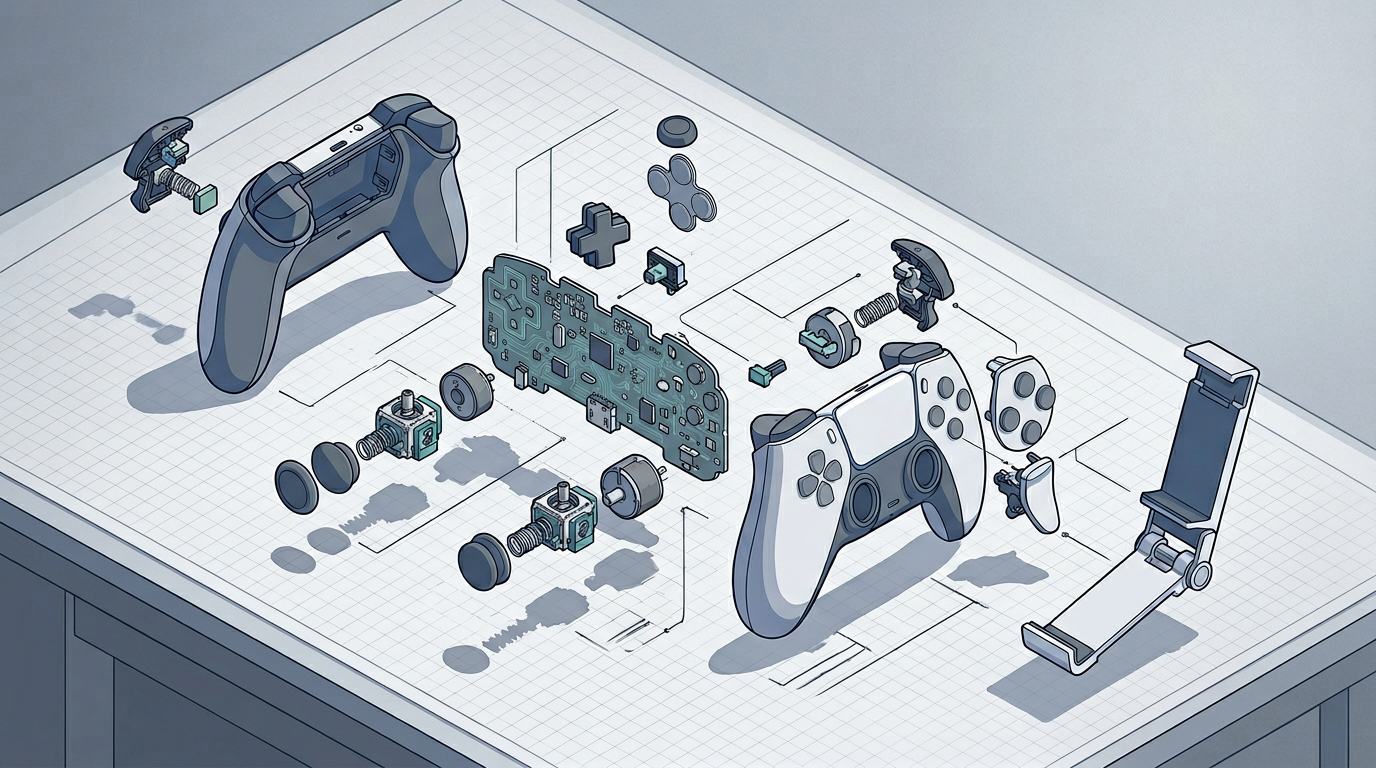
The physical interface of gaming is undergoing a subtle but significant shift. For decades, the controller was an extension of a specific console — a proprietary object designed to lock users into a hardware ecosystem. That logic is eroding. The modern controller is becoming a platform-agnostic bridge between disparate devices, designed less for brand loyalty than for versatility. Whether it is the high-precision GameSir G7 SE or a range of versatile Bluetooth peripherals, the industry's focus has moved toward interoperability — allowing users to transition seamlessly from a PC desk to a mobile screen or a cloud-enabled Smart TV.
The shift is not happening in isolation. It tracks the broader migration of computing power away from local hardware and toward remote servers, a trend accelerated by the maturation of cloud gaming services such as Xbox Game Pass, NVIDIA GeForce Now, and Amazon Luna. As processing moves upstream, the device in the player's hands becomes less about raw platform compatibility and more about tactile quality, ergonomic design, and durability.
The engineering case for Hall Effect sensors
One of the clearest markers of this evolution is the adoption of Hall Effect sensors in analog sticks. Traditional potentiometer-based joysticks rely on physical contact between conductive surfaces to register input. Over time, that contact produces wear, which manifests as the widely reported problem of "stick drift" — phantom inputs that degrade accuracy and frustrate users. The issue has drawn complaints across every major console generation of the past decade, and in some cases prompted class-action litigation against leading manufacturers.
Hall Effect sensors take a fundamentally different approach. By measuring changes in a magnetic field rather than relying on mechanical friction, they eliminate the primary cause of degradation. The result is a component with a significantly longer functional lifespan and more consistent precision over that lifespan. What is notable is that this technology is not being championed primarily by the dominant console makers. Third-party peripheral designers — companies like GameSir, 8BitDo, and GuliKit — have been faster to integrate Hall Effect sticks into their product lines, often at price points competitive with or below the standard controllers bundled with major consoles. The dynamic inverts the traditional hierarchy in which first-party hardware set the benchmark and third-party accessories occupied a lower tier.
The controller as the last local variable
The strategic implications extend beyond component engineering. If cloud gaming fulfills its premise — delivering high-fidelity experiences on any screen with a sufficient internet connection — then the controller becomes the primary piece of dedicated gaming hardware most users own. It is the last local variable in an increasingly remote equation.
This reframes the competitive landscape. Ergonomic design, button mapping flexibility, wireless latency, and build quality become the axes on which products differentiate. Features once considered niche, such as integrated smartphone mounts, programmable back paddles, and adjustable trigger travel, are migrating into mid-range product tiers. The market is responding to a user who might play a console title on a television in the evening, continue the same session on a tablet during a commute, and expect the same controller to perform reliably across both contexts.
The parallel to earlier hardware transitions is instructive. When music moved from physical media to streaming, the headphone market expanded dramatically — the playback device became the point of personal investment. A similar logic may apply here. As the game itself becomes untethered from any single box, the interface through which it is experienced absorbs a disproportionate share of consumer attention and spending.
What remains unresolved is whether the major platform holders will embrace or resist this convergence. Console manufacturers have historically used proprietary controllers as both a revenue stream and an ecosystem lock-in mechanism. A world of truly universal peripherals challenges that model directly. Whether Sony, Microsoft, and Nintendo adapt their accessory strategies to match the interoperability that third-party makers already offer — or attempt to reassert proprietary control — is a tension worth watching as cloud infrastructure continues to mature.
With reporting from Olhar Digital.
Source · Olhar Digital