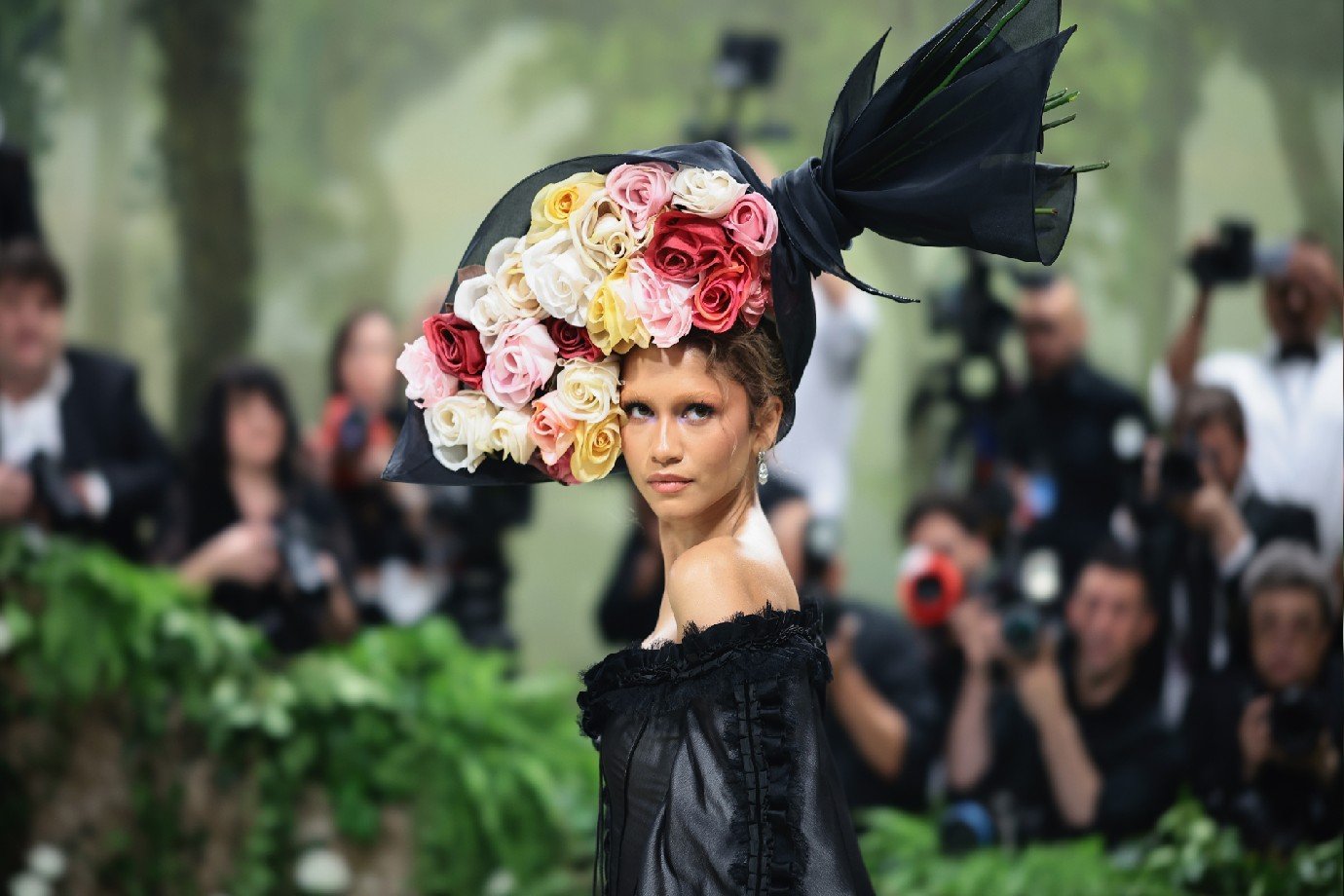
The Met Gala remains the fashion industry's most potent ritual — a high-stakes convergence of avant-garde design and global celebrity that doubles as the primary fundraising mechanism for the Metropolitan Museum of Art's Costume Institute. Scheduled for its traditional slot in the first week of May 2026, the event once again places the intersection of commerce, culture, and institutional patronage under a single chandelier-lit roof.
Beyond the spectacle of the red carpet, the gala functions as a critical junction where the business of luxury meets the rigor of archival preservation. The Costume Institute, unlike most departments at the Met, receives no direct funding from the museum's operating budget. It depends almost entirely on the gala's proceeds and corporate sponsorships to finance exhibitions, acquisitions, and conservation work. That structural reality transforms what might otherwise be a celebrity pageant into something closer to a financial instrument — one calibrated to extract maximum attention, and therefore maximum revenue, from a single evening.
Brand Identity as Intellectual Exercise
For designers and fashion houses, the Met Gala is less about a single night and more about the long-term positioning of brand identity. Each year's theme dictates a specific aesthetic vocabulary that ripples outward through the industry, influencing haute couture presentations, editorial direction, and eventually mass-market retail trends. The theme operates as a constraint — a rigid intellectual framework that forces participants to interpret scholarly or cultural concepts through the medium of textile and form.
This dynamic sets the Met Gala apart from other red-carpet events. Award ceremonies reward past work; the gala demands new creation in response to a curatorial prompt. The result is a peculiar hybrid: part fashion show, part performance art, part institutional fundraiser. Designers who read the theme well can generate months of media coverage and cultural cachet. Those who misread it risk irrelevance — or worse, ridicule in an environment where every outfit is dissected in real time across social platforms.
Historically, the most resonant Met Gala moments have emerged when participants engaged seriously with the curatorial thesis rather than treating the theme as loose inspiration. The event's long arc, stretching back to its founding as a midnight supper in 1948, reflects a gradual escalation from society fundraiser to global media event — a trajectory shaped decisively by the tenure of Anna Wintour, who assumed control of the gala's guest list and transformed its cultural footprint starting in 1995.
A Singular Broadcast in a Fragmented Landscape
As preparations for 2026 advance, the more structural question is how the Met Gala continues to command unified attention in an era of fragmented media. Most cultural events now compete for slices of a splintered audience. The gala, by contrast, persists as a rare synchronous broadcast — a moment when fashion media, celebrity journalism, social platforms, and mainstream news converge on a single location and a single set of images.
That convergence has commercial implications. Luxury brands invest heavily in dressing attendees not merely for prestige but for the concentrated burst of global visibility the event delivers. In a media environment where organic reach is increasingly difficult to manufacture, the Met Gala offers something scarce: guaranteed attention at scale, compressed into a few hours.
Yet the same fragmentation that makes the gala valuable also introduces tension. Social media has democratized commentary, meaning the event's narrative is no longer controlled by a handful of editors and photographers. Attendees now face simultaneous judgment from industry insiders, meme accounts, and millions of casual viewers — audiences with different criteria and different tolerances. Whether that diffusion of interpretive authority strengthens or dilutes the gala's cultural weight is an open question, and one that each edition answers slightly differently.
The 2026 gala arrives, then, at a familiar inflection point: an institution built on exclusivity operating inside a media ecosystem that rewards accessibility. How those forces resolve — or whether they simply coexist in productive friction — will shape not just the evening itself, but the broader calculus of how luxury, culture, and spectacle negotiate their terms in the years ahead.
With reporting from Exame Inovação.
Source · Exame Inovação