The electric Mercedes-Benz C-Class arrived this week, introducing the latest iteration of a nameplate that has served as the brand's volume backbone for three decades. While the new C400 4Matic Electric retains the fluid, aerodynamic silhouette that has become a hallmark of the marque's electric fleet, and introduces a sharper visual identity through its lighting and fascia, the most consequential change sits inside. The dashboard has been almost entirely subsumed by glass.
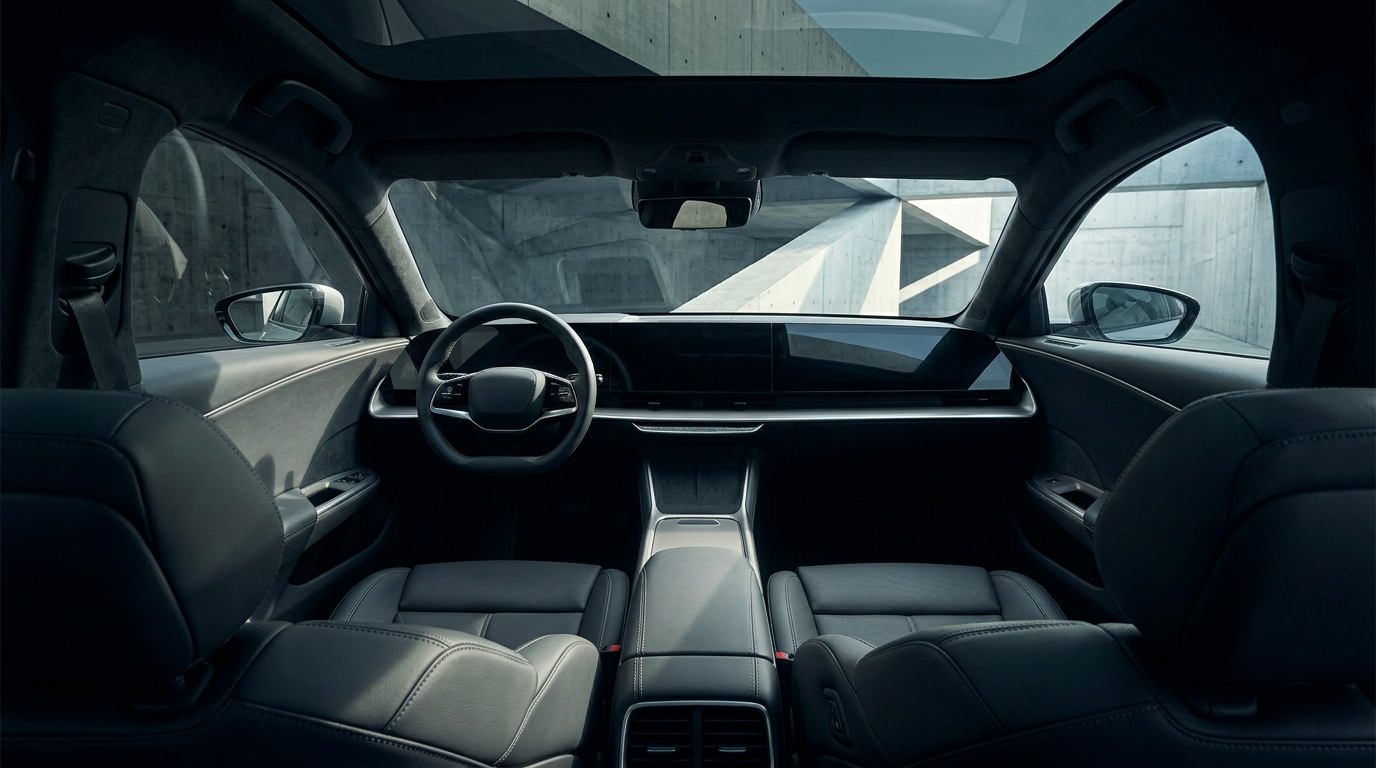
At the heart of the cabin is the optional 39.1-inch "Hyperscreen," a single digital expanse that spans the width of the car. For those who opt against the flagship display, the standard "Superscreen" offers a slightly less imposing array: three distinct panels — a 10.25-inch gauge cluster and twin 14-inch touchscreens — housed under a single sheet of glass. Either way, the result is a cockpit that feels less like a traditional automotive sanctuary and more like a high-saturation digital command center, mirroring the interior of the electric GLC-Class.
The screen as strategy
The Hyperscreen first appeared in the EQS sedan, where its pillar-to-pillar glass panel served as a statement of technological ambition for Mercedes-Benz's flagship electric vehicle. Migrating that interface down to the C-Class — historically the entry point to the brand for millions of buyers — signals that the company views maximalist digital surfaces not as a halo feature but as a core element of its design language going forward.
This trajectory is not unique to Stuttgart. Across the industry, interior design has shifted decisively toward consolidation of controls behind touchscreens. Tesla eliminated nearly all physical buttons years ago. BMW expanded its curved display across the 7 Series and i5. Chinese manufacturers such as NIO and Li Auto have pushed screen sizes further still, sometimes adding rear-seat entertainment panels that rival living-room televisions. The competitive logic is straightforward: screens are cheaper to manufacture at scale than bespoke knobs, switches, and trim pieces, and they can be updated with over-the-air software — a recurring revenue opportunity that physical controls cannot offer.
Yet the C-Class occupies a particular position in this debate. It is the car that historically introduced buyers to Mercedes-Benz's promise of restrained, material luxury — stitched leather, cool metal switchgear, the satisfying click of a rotary dial. Replacing that tactile vocabulary with a luminous slab of glass is a bet that the brand's next generation of customers will associate luxury with digital capability rather than analog craft.
Elegance, redefined or diluted
The tension is real. Safety regulators in Europe have begun scrutinizing the proliferation of touchscreen-dependent controls, with Euro NCAP adjusting its protocols to penalize vehicles that bury critical functions — climate, hazard lights, windshield wipers — behind digital menus. Whether the C-Class's interface design navigates those standards comfortably remains to be seen. At a minimum, the regulatory environment suggests that the industry's screen-first instinct may face friction in the years ahead.
There is also the question of brand coherence. Mercedes-Benz has long positioned itself against rivals by emphasizing sensory richness: the weight of a door handle, the grain of open-pore wood, the damped precision of a column stalk. A dashboard dominated by glass competes with that identity. It does not necessarily contradict it — digital surfaces can be executed with restraint, and the Hyperscreen's integration is more polished than many competitors — but it does shift the register. The cabin becomes a place where attention is drawn to content on a screen rather than to the quality of the environment surrounding it.
By extending the Hyperscreen to its most popular sedan, Mercedes-Benz is making a volume commitment to a design philosophy that remains divisive among the buyers it needs most. The C-Class has always been a bellwether for where the brand believes the mainstream luxury market is heading. Whether that destination is a cockpit of seamless digital sophistication or one that trades hard-won material elegance for the ambient glow of a pixel grid may depend less on engineering and more on what the next generation of buyers actually reaches for when they sit behind the wheel.
With reporting from The Drive.
Source · The Drive