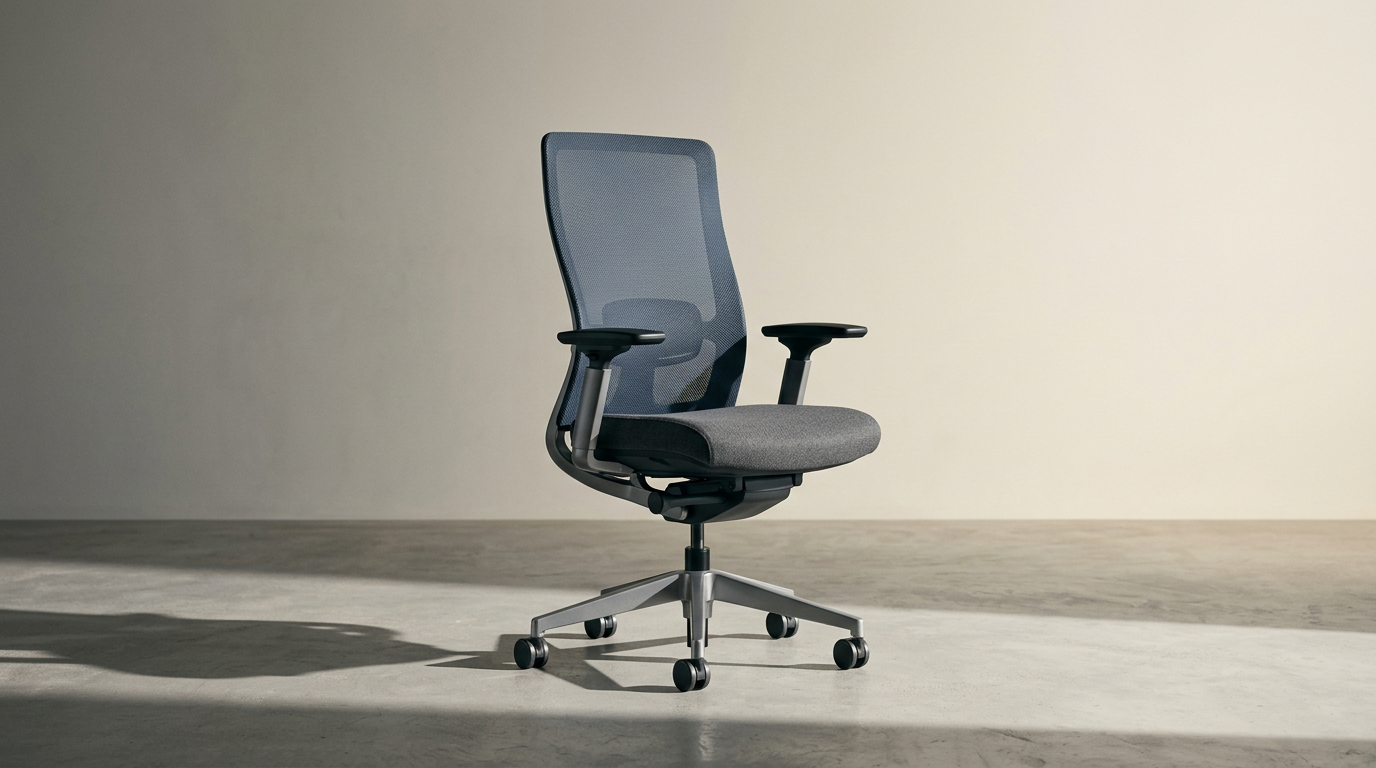
The modern workstation is increasingly defined by the tension between physical stillness and digital activity. As remote work and competitive gaming demand longer periods of seated immersion, the furniture supporting these endeavors has transitioned from simple utility to specialized industrial design. What was once a niche product marketed almost exclusively to esports enthusiasts has become a mainstream category, competing directly with traditional office furniture for a share of the home workspace.
The shift is not merely cosmetic. Prolonged sitting has been widely studied as a contributor to musculoskeletal disorders, particularly in the lumbar and cervical regions of the spine. The average knowledge worker or competitive gamer may spend eight to twelve hours a day in a single chair, a duration that places significant mechanical stress on the body. Against this backdrop, the gaming chair has evolved from an aesthetic statement into a piece of functional equipment whose design choices carry real physiological consequences.
From Aesthetic Outlier to Ergonomic Standard
The early gaming chair market drew heavily from automotive and racing seat design — high-backed shells, aggressive bolstering, and bold color schemes that signaled identity rather than comfort. The visual language was deliberate: it marked the user as part of a digital subculture. But as the boundaries between professional productivity and digital leisure dissolved — accelerated by the global shift to remote work — the market began to prioritize function alongside form.
Current models reflect this maturation. Retractable footrests, once rare, now appear across a range of price points, acknowledging that users frequently shift between upright task postures and reclined rest positions within a single session. Multi-point adjustment systems have become standard rather than premium features, with dedicated lumbar and cervical cushions designed to maintain spinal alignment over extended periods. Color palettes have diversified as well — stark whites, muted pastels, and vibrant pinks signal that the category is courting a broader demographic than the traditional gamer profile. The underlying engineering, however, remains anchored in the same principle: providing a customizable envelope for the human frame that reduces cumulative strain.
This convergence with office ergonomics is notable. Traditional office chair manufacturers like Herman Miller and Steelcase built decades of research into adjustable lumbar support, seat-pan depth, and armrest positioning. The gaming chair segment has absorbed many of these principles, sometimes arriving at similar solutions through a different design lineage. The result is a product category that increasingly competes on ergonomic merit rather than brand allegiance alone.
The Chair as Performance Hardware
For users who prioritize structural integrity and durability, the market offers professional-grade options. Designs like the ThunderX3 TGC12 represent the more robust end of the spectrum, emphasizing high-resistance materials and stability under sustained load. The framing of a chair as "performance hardware" — analogous to a monitor, keyboard, or graphics card — reflects a broader recognition that the physical interface between user and desk is not a trivial variable. In competitive gaming, where reaction time and sustained concentration are decisive, discomfort is a measurable liability. In professional contexts, the calculus is similar: chronic back pain is among the leading causes of lost productivity in sedentary occupations.
The industrial design challenge remains substantial. A chair must accommodate a wide range of body types, sitting habits, and use cases within a single adjustable frame. The tension between universal fit and individual comfort is inherent to the category, and no single product resolves it entirely. What has changed is the seriousness with which the market treats the problem.
As the digital and physical dimensions of work continue to merge, the ergonomics of seating will remain a quiet but consequential variable in the modern workflow. The question is whether the gaming chair segment will continue to converge with established ergonomic science — or whether its design priorities will diverge again as the market fragments further.
With reporting from Olhar Digital.
Source · Olhar Digital